

Law Enforcement Officers Equity Act This bill expands the definition of law enforcement officer under provisions of the Federal Employees Retirement System (FERS) and the Civil Service Retirement System (CSRS). Specifically, the bill expands the definition to include (1) federal employees whose duties encompass the investigation or apprehension of suspected or convicted criminals and who are authorized to carry a firearm; (2) Internal Revenue Service employees whose duties are primarily the collection of delinquent taxes and the securing of delinquent returns; (3) U.S. Postal Inspection Service employees; (4) Department of Veterans Affairs police officers; and (5) certain U.S. Customs and Border Protection employees who are seized-property specialists with duties relating to custody, management, and disposition of seized and forfeited property. The bill deems service performed by an incumbent law enforcement officer on or after the enactment date of this bill to be service performed as a law enforcement officer for retirement purposes. The past service of such incumbents shall be treated as service performed by a law enforcement officer for retirement purposes only if a written election is submitted to the Office of Personnel Management within five years after the enactment of this bill or before separation from government service, whichever is earlier. An incumbent who makes an election before the enactment of this bill may pay a deposit into the Civil Service Retirement and Disability Fund to cover prior service. A law enforcement officer shall not be subject to mandatory separation during the three-year period beginning on the enactment of this bill.
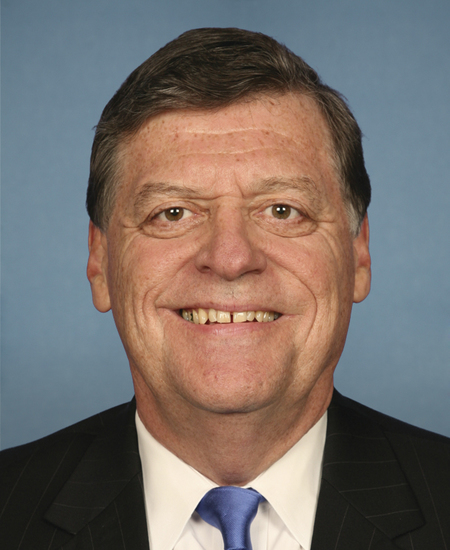
Rep. Tom Cole
Sponsored bills
Fairness for Craft Beverage Producers Act This bill provides additional economic relief to certain beverage manufacturers in response to COVID-19 (i.e., coronavirus disease 2019). Specifically, the bill gives certain beverage manufacturers (e.g., breweries and wineries that derived at least 35% of their gross annual income during either 2019 or 2020 from in-person sales) access to second draw loans under the Paycheck Protection Program. Further, it makes these beverage manufacturers eligible to receive additional months of subsidized principal and interest payments on certain Small Business Administration loans.
"Six Triple Eight" Congressional Gold Medal Act of 2021 This bill directs the Speaker of the House of Representatives and the President pro tempore of the Senate to arrange for the award of a Congressional Gold Medal in honor of the women of the 6888th Central Postal Directory Battalion (commonly known as the Six Triple Eight) in recognition of their pioneering military service, devotion to duty, and contributions to increase the morale of personnel stationed in the European theater of operations during World War II. The medal shall be given to the Smithsonian Institution and made available for display and research.
Chinese Research Funds Accounting Act This bill directs the Government Accountability Office (GAO) to conduct a study on federal funding made available to entities located in China or majority owned or controlled by the Chinese Communist Party for research in the five years prior to enactment of this bill. Not later than 120 days after the enactment of this bill, the GAO shall brief Congress on the data that is available with respect to federal funding made available to such entities for research.
Pre-existing Conditions Protection Act of 2021 This bill reestablishes requirements for private health insurance plans with respect to preexisting conditions, guaranteed enrollment, and discrimination based on health-related factors if they are repealed by another law. In such event, the bill prohibits private health insurance plans from (1) limiting or excluding benefits covering preexisting conditions; (2) denying enrollment to employers or individual applicants, subject to specified limits; (3) establishing rules for eligibility based on an individual's health status; or (4) requiring an individual to a pay higher premium than similarly situated individuals enrolled in the plan based the individual's health status. The bill also prohibits plans from collecting genetic information in connection with issuing health insurance and provides requirements for workplace wellness programs connected to health insurance.
Permanently Repeal the Estate Tax Act of 2021 This bill repeals the federal estate tax, effective for estates of decedents dying after December 31, 2020.
Small Business Tax Fairness and Compliance Simplification Act This bill expands the tax credit for a portion of the employer-paid Social Security taxes for employee cash tips to include beauty service establishments. (Under current law, the credit is limited to tips received for providing, serving, or delivering food or beverages.) The credit applies to tips received in connection with providing beauty services to a customer or client if tipping employees who provide the service is customary. Beauty services include barbering and hair care, nail care, esthetics, and body and spa treatments. The bill also (1) establishes an employer tip reporting safe harbor for beauty service establishments, and (2) specifies reporting requirements for income received from renting space to individuals who provide beauty services. The employer tip reporting safe harbor for beauty service establishments provides an exemption from certain Internal Revenue Service tip examinations for employers who meet certain requirements for educational programs, reporting procedures, compliance with tax law, and recordkeeping.
Family Savings for Kids and Seniors Act This bill provides an annual inflation adjustment after 2021 to the $5,000 tax exclusion for employer-provided dependent care assistance.
Free Speech Fairness Act This bill permits a tax-exempt organization to make certain statements related to a political campaign without losing its tax-exempt status. An organization may not lose its tax-exempt status under section 501(c)(3) of the Internal Revenue Code or be deemed to have participated in, or intervened in any political campaign on behalf of (or in opposition to) any candidate for public office, solely because of the content of any statement that (1) is made in the ordinary course of the organization's regular and customary activities in carrying out its exempt purpose, and (2) results in the organization incurring not more than de minimis incremental expenses.
Rural Maternal and Obstetric Modernization of Services Act or the Rural MOMS Act This bill expands initiatives to address maternal health in rural areas. The bill provides funding through FY2026 for the Health Resources and Services Administration (HRSA) to establish rural obstetric networks. These networks must foster collaboration to improve birth outcomes and reduce maternal morbidity in rural areas. HRSA also must award demonstration grants to medical schools and other health professional training programs to support education and training on maternal health in rural areas. In addition, the bill incorporates maternal health services in certain telehealth grant programs. It also revises various research and other activities of the Department of Health and Human Services that pertain to maternal health. Furthermore, the Government Accountability Office must report on maternal health topics, including health inequities and data issues.