This joint resolution proposes an amendment to the Constitution to require that the Supreme Court consist of nine Justices.
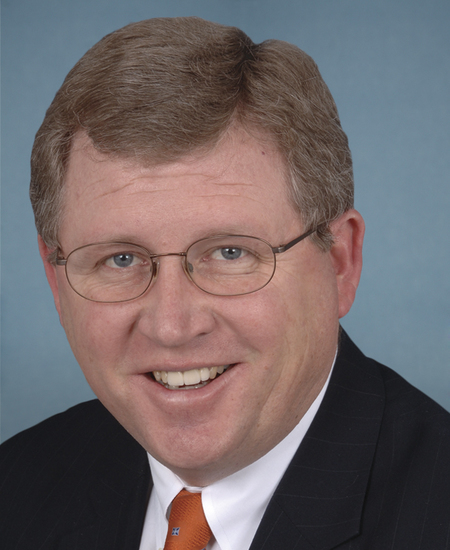
Rep. Frank D. Lucas
Sponsored bills
This resolution honors Officers Brian Sicknick and Howard Liebengood of the U.S. Capitol Police, and it commends the bravery and service demonstrated by officers of the U.S. Capitol Police, the Metropolitan Police Department of the District of Columbia, and the other law enforcement agencies and protective entities that assisted in responding to the January 6, 2021, attack on the U.S. Capitol.
Research Investment to Spark the Economy Act of 2021 or the RISE Act of 2021 This bill authorizes the Departments of Agriculture, Commerce, Defense, Education, Energy, the Interior, Health and Human Services, and Transportation, National Aeronautics and Space Administration (NASA), National Science Foundation, and Environmental Protection Agency to provide support for research regarding COVID-19 (i.e., coronavirus disease 2019) or research disrupted by the COVID-19 pandemic. Support may be used to provide supplemental funding to extend the duration of a grant to a research institution, national laboratory, or individual that was awarded prior to the enactment of this bill, or to expand the purposes of such a grant as specified; issue awards to research the effects of the current pandemic and potential future pandemics; and provide flexibility on awards to account for facility closures or other limitations during the COVID-19 public health emergency. Agencies must provide the support as rapidly as possible. Provided funds shall remain available through FY2021.

Alzheimer's Caregiver Support Act This bill authorizes grants to expand training and support services for families and caregivers of individuals living with Alzheimer's disease or a related dementia. The Department of Health and Human Services may award these grants to community organizations and health care and social service providers.
Hearing Protection Act This bill removes silencers from the definition of firearms for purposes of the National Firearms Act. It also treats persons acquiring or possessing a firearm silencer as meeting any registration and licensing requirements of such Act. The Department of Justice must destroy certain records relating to the registration, transfer, or making of a silencer. The bill also revises the definitions of firearm silencer and firearm muffler under the federal criminal code and includes such items in the 10% excise tax category.
Concealed Carry Reciprocity Act This bill establishes a federal statutory framework to regulate the carry or possession of concealed firearms across state lines. Specifically, an individual who is eligible to carry a concealed firearm in one state may carry or possess a concealed handgun (other than a machine gun or destructive device) in another state that allows its residents to carry concealed firearms. It sets forth requirements for the lawful concealed carry across state lines. The bill preempts most state and local laws related to concealed carry and establishes a private right of action for a person adversely affected by interference with a concealed-carry right established by this bill.
Keystone XL Pipeline Construction and Jobs Preservation Act This bill authorizes the TransCanada Keystone Pipeline to construct, connect, operate, and maintain the pipeline facilities in Phillips County, Montana, for the import of oil from Canada to the United States.
National Right-to-Work Act This bill repeals those provisions of the National Labor Relations Act and the Railway Labor Act that permit employers to make an agreement with a labor union to require employees to join such union as a condition of employment. Currently, at least 27 states have enacted laws prohibiting employers from compelling employees to become members of a union as a condition of employment.
American Innovation and R&D Competitiveness Act of 2021 This bill eliminates the five-year amortization requirement for research and experimental expenditures scheduled to begin in 2022, thus allowing continued expensing of such expenditures in the taxable years in which they are incurred.
Living Donor Protection Act of 2021 This bill prohibits certain insurance carriers from discriminating against, and provides other protections for, living organ donors. Specifically, carriers may not deny, cancel, or otherwise impose conditions on policies for life insurance, disability insurance, or long-term care insurance based on an individual's status as a living organ donor. The bill also expressly specifies that recovery from organ-donation surgery constitutes a serious health condition that entitles eligible employees to job-protected medical leave. In addition, the Department of Health and Human Services must update educational materials on live organ donation to include information about the benefits of live organ donation and about access to insurance for living organ donors.