

Compact Impact Fairness Act of 2021 This bill expands the eligibility of citizens of the Freely Associated States lawfully residing in the United States for certain federal public benefits. Currently, citizens of the Freely Associated States (Micronesia, the Marshall Islands, and Palau) may live, study, and work in the United States as nonimmigrants. However, such individuals are generally ineligible for most federal public benefits, with Medicaid being one exception. Under this bill, such individuals may be eligible for certain federal public benefits, such as benefits under the Temporary Assistance for Needy Families program. Furthermore, current law generally bars individuals from receiving federal means-tested public benefits for the five-year period starting from the individual's entry into the United States. Under this bill, citizens of the Freely Associated States living in the United States shall not be subject to this bar.
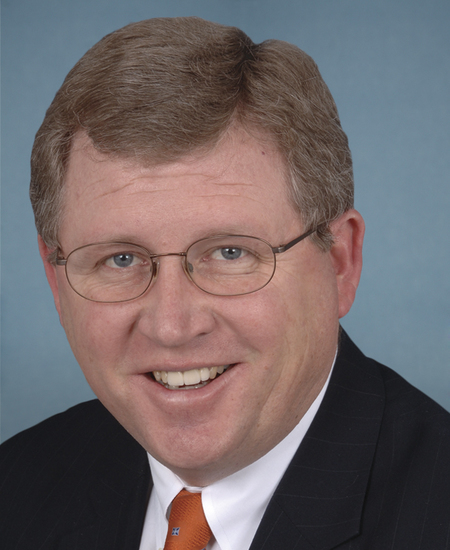
Rep. Frank D. Lucas
Sponsored bills
Broadband for Rural America Act This bill modifies and consolidates Department of Agriculture (USDA) programs for expanding broadband internet in rural areas. Specifically, the bill modifies a program that provides grants, loans, and loan guarantees to support broadband expansion in rural areas. Modifications include revising the criteria used to prioritize applications and projects and changing the name of the program to the ReConnect Rural Broadband Program. Additionally, the bill terminates on June 30, 2022, a Department of Agriculture (USDA) COVID-19 response program that supports broadband expansion in rural areas for distance learning and telemedicine. Any remaining program funds available after the termination date shall be used for the ReConnect Rural Broadband Program. The bill also expands coordination requirements that apply to the Department of Commerce, USDA, the Federal Communications Commission (FCC), and the National Telecommunications and Information Administration. This includes requiring the use of specified FCC maps when assessing a community's access to broadband.
Metropolitan Statistical Area Preservation Act This bill prohibits the Office of Management and Budget (OMB) from establishing, for purposes of designating areas as metropolitan statistical areas (MSAs), a minimum population for the urban area of such MSA that is more than 50,000. The OMB may, for statistical purposes only, establish other statistical area designations with higher minimum population requirements for such urban areas.
Trillion Trees Act This bills establishes a variety of requirements and incentives to plant trees and conduct other land management practices for the purposes of capturing and storing carbon in domestic and international trees and forests. Additionally, the bill provides incentives to research or develop other carbon sequestration tools. Specifically, the bill directs the Department of Agriculture (USDA) to set targets to increase forest carbon stock through January 1, 2100, for the purposes of sequestering and storing carbon in U.S. forests. It also establishes and provides funding for the Trillion Trees Challenge Fund to provide grants to nonfederal entities for activities related to reforestation efforts on public or private lands. In addition, it raises the cap on the Reforestation Trust Fund to enhance forest health in the National Forest System and requires the USDA to establish a Tree City USA Grant Program. The bill also allows the U.S. Agency for International Development to enter into an agreement with a nonprofit organization to establish an International Forest Foundation to promote reforestation and prevent deforestation. Additionally, it establishes requirements and incentives to address seedling shortages and support nurseries. Finally, the bill provides market incentives to research or develop other carbon sequestration tools relating to biochar, sustainable building practices, biochemical and bioplastic products, and biomass energy.
Flexible Financing for Rural America Act This bill allows rural utility service providers to submit to the Department of Agriculture (USDA) a request to adjust the interest rate or modify the terms of certain loans. The request shall include a report summarizing how the adjustment or modification will assist the borrower in providing critical utility services to a rural community. Specifically, on receipt of a request, USDA or the Department of the Treasury (in the case of a loan owned by the Federal Financing Bank) must adjust the interest rate on the loan to match certain interest rates for obligations of comparable maturity to the term remaining on the loan (or a higher rate requested by the borrower), and make modifications to the loan terms as necessary to address changes in the financial position of the borrower due to the COVID-19 public health emergency and to promote the financial sustainability of the borrower. In carrying out the adjustments or modifications, USDA or Treasury shall not impose or collect any fee from, or impose any penalty on, a borrower. The bill also provides funding to implement the adjustments and modifications and for the liquidation of residual intragovernmental amounts owed by the Federal Financing Bank in connection with certain loans.
Innovations in Informal STEM Learning Act This bill requires the National Science Foundation to provide competitive grants to institutions of higher education or nonprofit organizations for research on programming that engages students in prekindergarten through 8th grade in the fields of science, technology, engineering, and mathematics (STEM) to prepare students for STEM degrees or careers.
Fellowships and Traineeships for Early-Career AI Researchers Act This bill directs the National Science Foundation (NSF) to award grants and fellowships to support students and researchers in fields related to artificial intelligence. Specifically, the NSF must award grants to institutions of higher education to establish traineeship programs for graduate students who pursue artificial intelligence-related research leading to a masters or doctorate degree. Among other things, an institution of higher education shall use such grant funds to (1) provide traineeships to students who are pursuing research in artificial intelligence leading to a masters or doctorate degree; and (2) establish scientific internship programs for students receiving traineeships in artificial intelligence at for-profit institutions, nonprofit research institutions, or government laboratories. The NSF shall award fellowships to masters and doctoral students and postdoctoral researchers at institutions of higher education who are pursuing degrees or research in artificial intelligence and related fields, including in the field of technology ethics.
Strengthening MSI Competitiveness in Research and Innovation Act This bill directs the National Science Foundation (NSF) to establish a program to make competitive awards to eligible institutions to support the mission of the NSF and to build institutional research capacity at eligible institutions. To be eligible to receive an award, an institution shall be a historically Black college or university; a Tribal College or University; a minority-serving institution; or an institution of higher education with an established science, technology, engineering, and mathematics (STEM) capacity building program focused on traditionally underrepresented populations in STEM, including Native Hawaiians, Alaska Natives, and Indians. Each eligible institution shall have not more than $50 million in annual federally-financed research and development expenditures for science and engineering as reported through the National Science Foundation Higher Education Research and Development Survey.
Securing American Research From Cyber Theft Act This bill establishes a pilot program and modifies a current program related to cybersecurity for federally supported research and data. The bill directs the National Science Foundation to award grants to establish a pilot program to ensure the security of federally supported research data and to assist regional institutions of higher education and their researchers in complying with regulations regarding the safeguarding of sensitive information and other relevant regulations and federal guidelines. The bill requires the Networking and Information Technology Research and Development Program to provide for improving the security, reliability, and resiliency of computing and networking systems used by higher education and other nonprofit research institutions for the processing, storage, and transmission of sensitive federally funded research and associated data.
Surface Transportation Research and Development Act of 202 1 This bill addresses provisions related to surface transportation research, development, and deployment programs of the Department of Transportation (DOT). Among other provisions, the bill reauthorizes through FY2026 DOT highway research and development programs, including highway safety, technology and innovation deployment, training and education, and intelligent transportation systems; sets forth a program to provide awards to institutions of higher education or nonprofit research organizations to establish regional road weather research and development centers; reauthorizes through FY2026 the University Transportation Centers Program, the Bureau of Transportation Statistics, the public transportation research and development program, the National Cooperative Rail Research Program, the hazardous materials research and development program, and the National Cooperative Freight Transportation Research Program; establishes Centers of Excellence to advance research and development that improves the resilience of regions of the United States to natural disasters, extreme weather, and the effects of climate change on modal and multimodal transportation and infrastructure; directs DOT to carry out and publish the results of a study for the purpose of informing land use and transportation planning for accessible health, food, education, and other essential services and activities; and requires DOT to establish a multimodal national cooperative freight transportation research program, a Heavy Freight Automated Trucking Research Initiative, and an Advanced Transportation Research and Innovation Program.