Maddy summaryThis bill, titled the Stop the SPLC Act of 2026, would remove the tax-exempt status of the Southern Poverty Law Center. By revoking its classification under section 501(c)(3) of the Internal Revenue Code, the legislation would require the organization to pay federal taxes on its income and benefits. The change applies to all taxable years occurring after the bill is enacted.
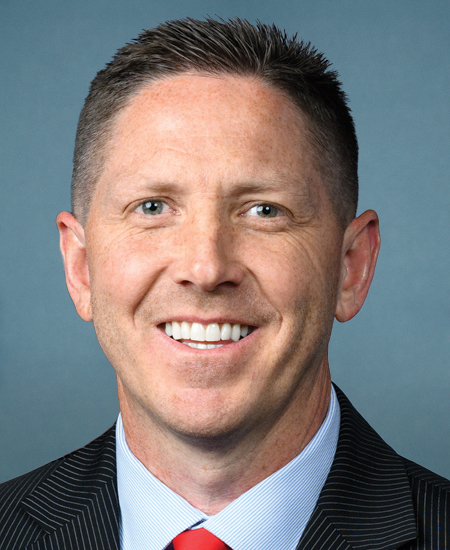
Rep. Josh Brecheen
Sponsored bills
Maddy summaryThis resolution introduces articles of impeachment against U.S. District Court Judge Eleanor Louise Ross, targeting her for three specific allegations of misconduct. The first article charges her with engaging in an undisclosed extramarital affair with a law enforcement officer while on the job, which created a conflict of interest and violated judicial conduct codes. The second article accuses her of attending a partisan political event sponsored by a district attorney's campaign and admitting to drinking alcohol before presiding over a criminal case. The third article alleges that she knowingly made false statements to federal judges during an investigation into her behavior, thereby obstructing an official proceeding and violating federal law.
Maddy summaryThis resolution expresses the House of Representatives' support for Prime Minister Benjamin Netanyahu's proposal to shift the U.S.-Israel relationship from traditional financial military aid to a partnership based on mutual defense cooperation and shared economic investment. The bill highlights Israel's role in recent joint military operations against Iran and calls for a new agreement where both nations collaborate on developing advanced technologies like missile defense and artificial intelligence. Additionally, the text condemns the global rise of antisemitism and reaffirms the special bond between the two countries rooted in shared democratic values. As a non-binding resolution, it does not alter existing laws but serves to formally record the House's stance on these foreign policy priorities.
Maddy summaryThis resolution proposes to officially designate June as "Family Month" to highlight the importance of the traditional nuclear family. It also calls for the House of Representatives to stop recognizing Pride Month, which it argues has replaced the celebration of family values. The bill is sponsored by a group of representatives who believe that strengthening traditional marriage is essential for societal stability and population growth.
Maddy summaryThis bill creates new grounds for deporting non-citizens who are members of or associated with criminal gangs. It defines a "criminal gang" as a group of five or more people whose primary purpose is committing serious crimes like drug offenses, violence, trafficking, or weapons violations. The Secretary of Homeland Security can designate groups as criminal gangs after consultation with the Attorney General, and these designations make gang members ineligible for asylum, temporary protected status, parole, and other immigration benefits. The bill also establishes procedures for reviewing and revoking these designations, with limited judicial review options.
Maddy summaryThe POWER Act requires the Secretary of Energy to submit annual reports to Congress detailing the water and electricity usage of specific data centers. These reports will cover facilities that qualify under recent executive orders for accelerated federal permitting, excluding those owned by federal agencies. The legislation mandates that the data include water consumption from public systems, the source of electricity generation, and connection costs to the bulk-power grid. By collecting this information, the bill aims to ensure that federal subsidies do not support data centers that excessively consume water or rely on public resources without being economically viable.
Maddy summaryHR 5625, the Cashless Bail Reporting Act, requires the Attorney General to publish and regularly update a public list of all states and local governments that allow cashless bail (release without requiring money bonds). This list must be available within 30 days of the bill's enactment and updated quarterly. The bill does not change existing bail laws but increases transparency by making it easier for the public to see where cashless bail is used. It directly affects individuals seeking information about bail practices in different jurisdictions. The key mechanism is a mandatory, publicly accessible database maintained by the federal government.
Maddy summaryThis bill, known as the ASSIMILATION Act, fundamentally restructures the U.S. immigration system by replacing family-based and lottery-based admissions with a merit-based approach that prioritizes economic self-sufficiency and national interest. It directly affects prospective immigrants, current visa holders, and employers by establishing new requirements for entry, employment, and naturalization. Key provisions eliminate the diversity visa lottery, restrict family-sponsored immigration to spouses and minor children, and mandate that all immigrants demonstrate the ability to support themselves without relying on government benefits. The legislation also introduces stricter enforcement measures, such as making visa overstays a criminal offense, expanding E-Verify to all employers, and requiring higher English proficiency and tax compliance for citizenship. Additionally, it tightens asylum rules by adding a transit bar for those passing through other countries and limits parole to specific humanitarian cases rather than broad programs.

Maddy summaryThe In God We Trust Act requires the Administrator of General Services to display the national motto "In God We Trust" on every public building within the United States. This mandate applies to all federal buildings and must be completed no later than one year after the law is enacted. The bill specifies that the motto must be inscribed or displayed in a prominent location on each structure.
Maddy summaryThe CRUSADE Act amends immigration law to require applicants for special immigrant visas to explicitly disavow Sharia law. Under this provision, individuals seeking these specific visas must take an additional oath affirming their commitment to uphold the U.S. Constitution. The bill directly affects foreign nationals applying for special immigrant status by adding a new eligibility requirement related to their legal and religious beliefs. This change does not alter the general immigration process but imposes a specific condition on one category of visa applicants.