

Maddy summaryHR 1818, the Aviation Workforce Development Act, expands tax-advantaged savings plans (529 plans) to cover costs for specific aviation training programs. It allows funds from these plans to pay for tuition, fees, and required materials at FAA-certified aviation maintenance technician schools (Part 147) or commercial pilot training programs (Part 61 or 141). This directly affects students pursuing careers as aircraft maintenance technicians or commercial pilots by making these training costs more affordable through existing tax-advantaged savings. The bill amends the tax code to include these programs under "qualified higher education expenses" for 529 plan distributions.
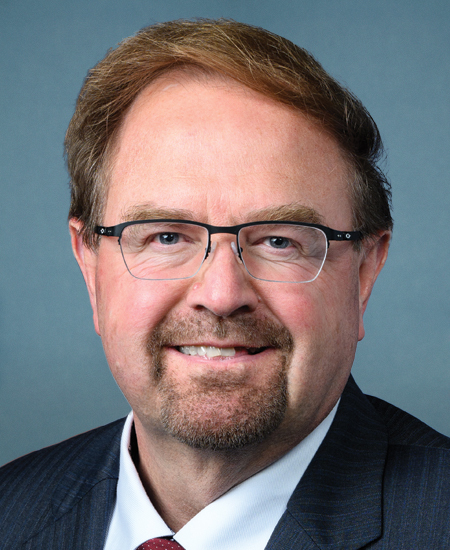
Rep. Chuck Edwards
Sponsored bills
Investing in Our Communities Act This bill reinstates the exclusion from gross income for interest on certain bonds issued to advance the refunding of a prior bond issue. The exclusion was repealed for bonds issued after 2017.
Maddy summaryHR 5, the Parents Bill of Rights Act, would require public schools receiving federal funding to provide parents with greater access to educational information. The bill mandates that schools post curricula online or widely distribute it to parents, include school budgets in report cards, and provide specific information about school activities including violent incidents and plans to eliminate gifted programs. It also guarantees parents the right to meet with teachers twice a year, review library materials, and address school boards. These requirements would apply to all local educational agencies and schools covered by the Elementary and Secondary Education Act. The bill amends existing education laws to strengthen parental transparency and involvement in their children's education.
Maddy summaryThis non-binding resolution states that Congress believes nuclear power is essential as a reliable, clean energy source to support a stable electric grid alongside variable sources like solar and wind. It emphasizes nuclear power's role in achieving clean energy goals, reducing carbon emissions, and advancing U.S. energy independence. The resolution does not create new laws or regulations but formally expresses congressional support for nuclear energy as a necessary component of a "green" grid. It was introduced in March 2023 by multiple lawmakers across party lines.
Maddy summaryHR 1777 establishes a $50 million annual fund (2024-2028) for collaborative defense research between the U.S. and Israel in emerging technologies like artificial intelligence, cybersecurity, directed energy, and automation. The bill directly supports U.S. and Israeli military forces by enabling joint development of new warfare capabilities to address current and future defense challenges. Key provisions include authorizing $50 million per year for collaborative projects, building on existing U.S.-Israel defense partnerships like counter-tunnel and counter-drone systems. This funding aims to strengthen bilateral defense innovation without altering existing military aid structures.
Maddy summaryThis bill creates a new visa category for temporary workers in mobile entertainment, such as carnival and circus staff who travel across the U.S. It directly affects carnival operators, seasonal workers, and food/concession vendors at fairs and festivals. The key provision requires Department of Labor certification to ensure U.S. workers are not displaced and that hiring foreign workers won’t lower wages or working conditions. It defines "mobile entertainment provider" to include traveling carnivals, circuses, and affiliated seasonal services like food concessions at local events.
Let Experienced Pilots Fly Act of 2023 This bill raises the mandatory retirement age for pilots engaged in commercial aviation operations from 65 to 67 years of age, unless the operation takes place in (1) the territorial airspace of a foreign county where such operations are prohibited by the foreign country, or (2) international airspace where such operations are not in compliance with the Annexes to the Convention on International Civil Aviation. The Federal Aviation Administration must also submit a report to Congress on further increasing the age limitation for pilots engaged in commercial aviation operations.
Maddy summaryHR 1613, the Drug Price Transparency in Medicaid Act of 2023, requires Medicaid programs to mandate pass-through pricing for covered outpatient drugs. This means pharmacy benefit managers (PBMs) and managed care entities must pay pharmacies directly for the drug's ingredient cost plus a fixed dispensing fee, eliminating "spread pricing" where PBMs keep profits from the difference between what they pay pharmacies and what Medicaid reimburses. The bill also establishes a national survey of retail pharmacy drug prices to determine average acquisition costs, requiring participating pharmacies to report pricing data to states. These changes apply to Medicaid contracts entered into or renewed 18 months after the bill's enactment, affecting states, PBMs, managed care organizations, and community pharmacies.
Maddy summaryH.J. Res. 26 is a congressional disapproval resolution blocking the District of Columbia Council's approval of its Revised Criminal Code Act of 2022 (D.C. Act 24-789). It directly affects the District of Columbia by preventing the new criminal code from taking effect, as Congress disapproved the Council's action under the Home Rule Act. The resolution formally rejects the Council's enactment of the code, which was transmitted to Congress on January 27, 2023. This procedural action stops the District from implementing the revised criminal code without further congressional action.
Maddy summaryHR 1484, the Pipeline Sabotage and Accident Prevention Act, adds criminal penalties for intentionally damaging or disrupting pipeline infrastructure. It makes it a federal offense to knowingly cause defects in pipes, pumps, or valves (or disrupt operations) in pipelines regulated under existing law, punishable by fines, up to 10 years in prison, or both. The bill specifically protects First Amendment rights, stating its provisions don’t limit lawful protests or free speech. It directly affects individuals who intentionally target pipeline infrastructure, such as vandals or terrorists, by creating clear criminal consequences for such acts. The law focuses on preventing physical harm to critical energy infrastructure through deterrence.