

Maddy summaryThis bill increases loan limits for small manufacturers under two federal programs. It defines "small manufacturer" as a business primarily in U.S. manufacturing sectors (31-33) with all facilities in the U.S. The bill raises the maximum Small Business Administration 7(a) loan limit for these manufacturers from $3.75 million to $7.5 million (capping at $10 million), and doubles the export loan limit from $5 million to $10 million. These changes directly affect qualifying U.S.-based manufacturing businesses seeking federal loan support for operations or exports. The policy modifies specific loan caps without altering other program requirements.
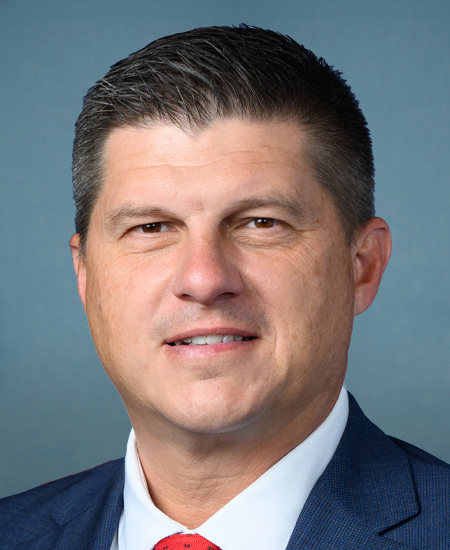
Rep. Brad Finstad
Sponsored bills
Maddy summaryThis bill would amend federal law to strengthen penalties for organized retail crime by expanding definitions of theft to include digital goods, gift cards, and setting a $5,000 aggregate value threshold for charges over a 12-month period. It would establish a new "Organized Retail and Supply Chain Crime Coordination Center" under Homeland Security to coordinate Federal, State, local, and Tribal law enforcement efforts against cross-jurisdictional theft groups. The Center would share information with retailers, transportation companies, and law enforcement agencies, track crime trends, and produce annual reports on organized retail crime. This legislation directly affects retailers, supply chain businesses, and law enforcement agencies, while targeting organized crime groups responsible for a 93% increase in larceny incidents and rising safety concerns for retail employees. The bill aims to address significant financial losses and supply chain disruptions noted in the National Retail Federation's 2023 data.
Maddy summaryThis resolution expresses support for designating the week of May 3 through May 9, 2026, as "National Small Business Week." It aims to honor the contributions of small businesses and entrepreneurs across the United States, acknowledging their role in supporting millions of jobs. The bill does not create new laws or regulations but serves as a formal statement of appreciation from the House of Representatives.
Maddy summaryThis bill expands the review authority of the Committee on Foreign Investment in the United States to include real estate transactions involving specific foreign nations and entities linked to them. It designates certain locations, such as military bases, agricultural land, and critical infrastructure, as "sensitive sites" where purchases or leases by foreign adversaries face stricter scrutiny. Under the new rules, these transactions are presumed to pose an unresolvable national security risk unless the committee provides clear evidence that the threat can be mitigated. The legislation also ensures that existing state laws restricting foreign ownership of farmland remain in effect and requires the committee to issue new regulations within 120 days of enactment.
Maddy summaryThis bill requires federal agencies to analyze indirect economic costs on small businesses when creating new rules, including costs affecting businesses that interact with regulated entities (like suppliers or partners). It creates a new process allowing small businesses to petition the Small Business Administration's Chief Counsel to review agency certifications claiming a rule won't significantly impact them. Agencies must then provide detailed cost analyses, publish guidance online for small business feedback, and face penalties if they fail to cooperate with reviews. The bill does not change existing regulations but adds new review steps for small business input.
Maddy summaryHR 2424, the Modern, Clean, and Safe Trucks Act of 2025, repeals a 12% federal excise tax on new heavy trucks, tractors, and trailers. This tax currently adds significant costs - $7,000+ for trailers, $20,000+ for clean diesel trucks, and up to $50,000 for advanced technology trucks - discouraging replacement of older, less efficient vehicles. The bill directly affects truck manufacturers, dealers, and fleet operators by removing this cost barrier, making newer, cleaner models more affordable. It aims to accelerate the adoption of modern trucks with improved safety and environmental features, particularly benefiting electric and alternative-fuel vehicles that face higher upfront costs.
Maddy summaryThis bill directs the Secretary of the Interior to conduct a feasibility study for expanding the Lewis and Clark Regional Water System to provide municipal, rural, and industrial water service across Iowa, Minnesota, and South Dakota. The study, to be developed with the local water system organization (Lewis and Clark Regional Water System, Inc.), will assess project viability and recommend whether construction should proceed and determine the local cost-sharing share (minimum 25% of total costs). Federal funding for the study is capped at 50% of costs, with $10 million authorized and a 10-year deadline for completion. The resulting report must be submitted to Congress and made public, but the bill does not authorize construction itself.
Maddy summaryThe Supporting Energy and Economic Development (SEED) Act extends tax credits for biodiesel and renewable diesel production through 2029. It prevents taxpayers from receiving both the production credit and the fuel use credit for the same fuel, ensuring only one benefit is claimed. These changes apply to fuel sold or used after the bill becomes law.
Maddy summaryHJRES 140 is a procedural resolution seeking congressional disapproval of a Bureau of Land Management (BLM) rule published in the Federal Register (88 Fed. Reg. 6308, January 31, 2023). The resolution targets Public Land Order No. 7917, which proposed withdrawing federal lands in Cook, Lake, and Saint Louis Counties, Minnesota. If passed, this resolution would block the BLM rule from taking effect by invoking the disapproval process under Chapter 8 of Title 5, U.S. Code. It directly affects the implementation of the land withdrawal proposal but does not alter the underlying land status or create new policy.
Maddy summaryThe MATCH Act requires U.S. agencies to align export controls on semiconductor manufacturing equipment with allied nations to prevent adversaries from accessing critical technology. It mandates a 150-day period for diplomatic efforts to secure countrywide denial policies from allied suppliers, after which U.S. jurisdiction would extend to equipment exported from countries not complying with these controls. The bill specifically targets semiconductor manufacturing equipment that the U.S. cannot currently produce in high volume and includes a list of Chinese companies deemed to warrant comprehensive restrictions. If allies fail to implement matching controls, the Act would allow the U.S. to regulate equipment exported from non-compliant allied countries and restrict servicing of restricted items at facilities in adversary nations. The legislation includes a sunset provision that expires five years after enactment, with annual reporting requirements to Congress on progress and compliance.