

Maddy summaryThe Medicare Access to Rural Anesthesiology Act changes how Medicare pays for anesthesia services at specific small rural hospitals and critical access hospitals. To qualify for these changes, a hospital must be located in a rural area, have fewer than 800 surgeries requiring anesthesia, and employ or contract with no more than one full-time anesthesiologist who agrees not to bill Medicare separately for those services. Once a hospital meets these criteria, anesthesia care provided by an anesthesiologist there will be paid based on the hospital's actual costs rather than a fixed fee, and it will be classified as part of the hospital's inpatient services instead of a separate billable service. The law also requires the Department of Health and Human Services to update its regulations to reflect these new payment rules.
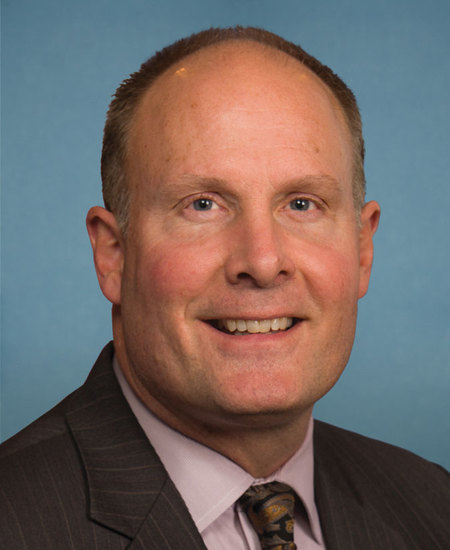
Rep. John R. Moolenaar
Sponsored bills
Maddy summaryThis bill requires Medicare Advantage plans to implement electronic pre-approval systems for medical services by 2028 and meet transparency reporting standards starting in 2027. Plans must publicly report data on approval/denial rates, appeal outcomes, response times, and technology use for pre-approval requests, including details on how denials relate to clinical criteria. It establishes a 24-hour response timeframe for certain requests and mandates annual reviews of pre-approval requirements based on data and input from seniors and providers. The law directly affects Medicare Advantage plans, seniors enrolled in these plans, and healthcare providers who submit pre-approval requests. These changes aim to make the pre-approval process faster, more transparent, and more accountable for seniors seeking covered medical services.
Protecting Privacy in Purchases Act This bill prohibits payment card networks from using merchant codes that distinguish firearms retailers from general-merchandise retailers or sporting-goods retailers. The Department of Justice must enforce this bill and report annually on the resulting investigations and cases.
Maddy summaryHR 3194, the LOCOMOTIVES Act, prevents states from setting their own emissions standards for locomotives used in interstate commerce. It amends the Clean Air Act to clarify that federal emissions rules exclusively apply to locomotives providing common carrier railroad transportation for hire (like commercial freight or passenger services across state lines), excluding these from state regulation. This directly affects railroads operating interstate services and state environmental agencies that previously could establish stricter local rules for such locomotives. The bill does not change the actual emissions requirements but shifts regulatory authority solely to the federal government for this specific category of locomotives.
Maddy summaryThe Jewish American Security Act aims to combat antisemitism by strengthening protections for Jewish students, securing Jewish communities, and increasing transparency regarding online hate speech. For educational institutions receiving federal funds, the bill mandates the creation of specific coordinators to handle discrimination complaints, requires annual training on handling antisemitism, and establishes a new federal clearinghouse to share best practices for campus safety. To support physical security, the legislation expands grant funding for nonprofit organizations and directs the Attorney General to provide resources for law enforcement agencies protecting houses of worship. Additionally, the act requires major online platforms with over 50 million monthly users to submit detailed reports to the Federal Trade Commission on how they detect, remove, and moderate antisemitic content.
Maddy summaryThis resolution formally acknowledges Michigan's contributions to the United States as the nation celebrates the 250th anniversary of the Declaration of Independence. It recognizes that Michigan became the 26th state in 1837 and highlights the lasting impact its residents have had on the country's success. The measure encourages all citizens to reflect on the ideals of the Founding Fathers and the fight for independence. As a commemorative action, the bill does not create new laws or change existing policies but serves to honor historical events and state achievements.
Maddy summaryThe Shandra Eisenga TB Study Act of 2026 directs the Department of Health and Human Services to conduct a study on creating a standardized test for detecting tuberculosis in human cadaver tissue. This initiative aims to improve donor screening and transplant safety by evaluating current scientific knowledge, testing methodologies, and potential implementation barriers. The study will involve collaboration with various health agencies and stakeholders, with a focus on diverse populations and multiple collection sites. By the end of 2029, the department must submit a report to Congress detailing its findings and recommending necessary steps to develop or implement this new testing strategy.
Maddy summaryThe Cloud Security Act amends existing laws to allow cloud service providers to share specific customer data with the U.S. government under certain conditions. This permission applies when the provider believes in good faith that a customer is using advanced cloud computing resources or artificial intelligence models to benefit a designated foreign entity. The bill defines these advanced technologies by specific technical metrics, such as the number of parameters in AI models and the processing power of computer chips, while limiting the shared information to only what is necessary for verification. By creating these exceptions, the legislation enables the Department of Commerce to monitor and report on the use of sensitive technology by foreign actors without requiring a separate warrant for each instance.
Maddy summaryThe Securing Agriculture's Workforce Act of 2026 modernizes the H-2A visa program by transferring administrative authority to the Department of Homeland Security and introducing a unified online platform to streamline applications for employers and workers. Key provisions include establishing new housing standards with mandatory inspections, creating a system for staggered worker entry and exit, and allowing workers to transfer between employers without losing their status. The bill also defines specific job classifications for wage calculations, expands the scope of covered agricultural activities, and provides legal protections for employers who document the employment of workers seeking visa status. Additionally, it requires agencies to develop a heat illness prevention plan and allows for contract termination due to natural disasters.
Maddy summaryThe Veterans STAND Act requires the Department of Veterans Affairs to provide annual preventative health assessments to veterans with spinal cord injuries or disorders. These assessments cover risks for health complications, chronic pain management, dietary needs, prosthetic equipment, and access to assistive technologies like spinal cord neuromodulation devices. The VA must consult with medical specialists and device manufacturers when creating guidelines and submit yearly reports to Congress on veterans' use of these services and devices. This policy directly affects veterans with spinal cord injuries by ensuring regular, tailored health evaluations to improve long-term management and independence.