

Maddy summaryThe Tuskegee Airmen Memorial Act of 2026 authorizes the organization Tuskegee Airmen, Inc. to build a commemorative monument on federal land in Washington, D.C., honoring the original Tuskegee Airmen who served in World War II. This legislation allows the group to accept private donations and cover all costs for the project without using federal funds, while requiring any leftover money to be deposited into specific government accounts. The bill also mandates that the memorial be constructed in compliance with existing federal standards for commemorative works.
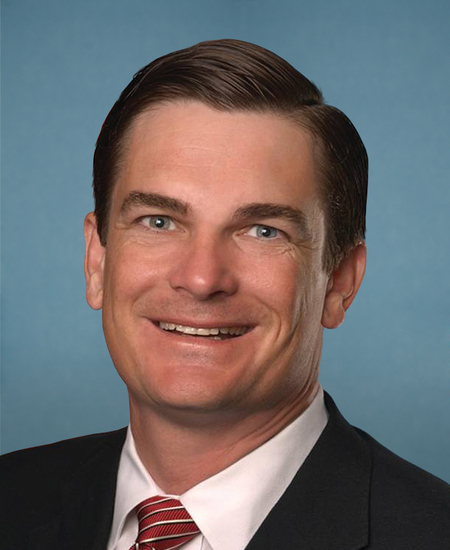
Rep. Austin Scott
Sponsored bills
Maddy summaryThis bill requires pharmacy benefits managers (PBMs) administering prescription drug benefits for federal employee health plans to reimburse pharmacies at specific rates, including the national average drug cost plus a small percentage or $50, whichever is lower. It prohibits PBMs from favoring their own pharmacies, restricting patient choice, or reducing pharmacy payments after claims are processed. The bill establishes $10,000 civil penalties for violations, with debarment from federal health plans after 10 penalties in 10 years. This directly affects PBMs, in-network pharmacies, and federal health benefit plans covering millions of federal employees and their families. The law aims to ensure fair reimbursement practices and maintain pharmacy choice under the Federal Employees Health Benefits Program.
Maddy summaryThis bill names the Department of Veterans Affairs multispecialty clinic at 1263 Cobb Parkway NW in Marietta, Georgia, as the "Colonel Michael H. Boyce Department of Veterans Affairs Multispecialty Clinic." It is a ceremonial resolution with no policy changes or funding impacts - it solely updates the facility's official designation in government records. The clinic itself remains unchanged, and the bill does not alter services, funding, or operations for veterans.
Maddy summaryThis bill, known as the Daughters of the American Revolution Membership Integrity Act, amends federal law to explicitly limit membership in the Daughters of the American Revolution to adult human females. It defines a female as someone who naturally possesses or would have the reproductive system capable of producing ova for fertilization, regardless of any congenital anomalies or medical disruptions. By adding this specific definition to the organization's governing code, the legislation clarifies the genealogical and biological requirements for joining the group. The change directly affects the organization's eligibility rules but does not alter its internal operations or funding.
Maddy summaryThe Medicare Access to Rural Anesthesiology Act changes how Medicare pays for anesthesia services at specific small rural hospitals and critical access hospitals. To qualify for these changes, a hospital must be located in a rural area, have fewer than 800 surgeries requiring anesthesia, and employ or contract with no more than one full-time anesthesiologist who agrees not to bill Medicare separately for those services. Once a hospital meets these criteria, anesthesia care provided by an anesthesiologist there will be paid based on the hospital's actual costs rather than a fixed fee, and it will be classified as part of the hospital's inpatient services instead of a separate billable service. The law also requires the Department of Health and Human Services to update its regulations to reflect these new payment rules.
Maddy summaryHR 7651, the Chloe Cole Act of 2026, prohibits healthcare providers from performing certain medical interventions on minors under 18 aimed at altering physical development to align with gender identity. These "covered interventions" include puberty blockers, hormone treatments, and specific surgeries, but exclude medically necessary care for conditions like disorders of sexual development or traumatic injuries. The bill creates a federal civil lawsuit right for affected minors or their parents against providers who perform such interventions, allowing claims for damages including emotional distress and punitive awards, with strict liability for providers after the law's enactment. It explicitly allows exceptions for legitimate medical treatments and requires providers to prove such exceptions apply if challenged.
Protecting Privacy in Purchases Act This bill prohibits payment card networks from using merchant codes that distinguish firearms retailers from general-merchandise retailers or sporting-goods retailers. The Department of Justice must enforce this bill and report annually on the resulting investigations and cases.
Maddy summaryThis House resolution sets the procedural rules for debating and passing four separate pieces of legislation: two major budgets for the 2027 fiscal year, a Social Security update, and a commemorative resolution. The first budget allocates funds for the Department of Defense and military construction, while the second provides funding for national security and the Department of State. The resolution also establishes specific time limits and debate structures for each bill, ensuring that points of order are waived to streamline the legislative process. Additionally, it mandates that the Social Security bill adopt a specific substitute text and that a resolution honoring the Working Families Tax Cuts be considered without intervention.
Maddy summaryThe Birthright Citizenship Clarification Act of 2026 would amend federal law to change how citizenship at birth is determined for children born in the United States. Under this proposal, a child born in the U.S. to parents who are present temporarily or unlawfully would not automatically receive citizenship, while also preserving historical exceptions for children of foreign diplomats and those born on foreign ships. The bill specifically defines temporary presence to include holders of student, work, tourist, and other nonimmigrant visas, as well as participants in the Visa Waiver Program. These changes would apply only to individuals born after the law takes effect, leaving the citizenship status of those born before that date unchanged.
Maddy summaryThis bill redesignates the Ocmulgee Mounds National Historical Park as the Ocmulgee Mounds National Park within the National Park System. It establishes specific protections for traditional cultural and religious sites, ensuring access for tribes with ancestral connections to the area, and requires the park manager to consult with Indian tribes on management issues. The legislation also authorizes fishing on park waters under state and federal laws while allowing the Secretary to create safety zones where fishing is restricted. Additionally, the bill mandates that approximately 134 acres of land held by the Muscogee (Creek) Nation be placed into federal trust for the tribe, provided the land is not used for gambling.