

Building Resources and Access for Veterans' Mental Health Engagement Act of 2025 or the BRAVE Act of 2025 This bill addresses mental health services and care provided by the Department of Veterans Affairs (VA), including matters related to personnel, Vet Center administration, care for women veterans, and access to care. The bill authorizes the VA to waive the licensure or certification requirement for individual licensed professional mental health counselor appointees for a reasonable period of time. The bill also extends the Staff Sergeant Parker Gordon Fox Suicide Prevention Grant Program and increases the maximum annual grant amount. The VA must provide Vet Centers with guidance for assessing outreach activities and implement processes to periodically assess the extent to which (1) veterans and eligible members of the Armed Forces experience barriers to obtaining services at Vet Centers, and (2) Vet Center staff may encounter barriers to providing services. Among other requirements, the VA must also survey and host listening sessions with women veterans to gauge the effectiveness of the VA’s suicide prevention, lethal-means safety, and mental health resources and messaging campaigns; initiate efforts to modify the Recovery Engagement and Coordination for Health-Veterans Enhanced Treatment (REACH VET) program to incorporate risk factors weighted for women; annually offer a mental health consultation to veterans who are receiving compensation for a service-connected disability relating to a mental health diagnosis; and implement a pilot program to provide access to mental health residential treatment programs for veterans with a spinal cord injury or disorder.
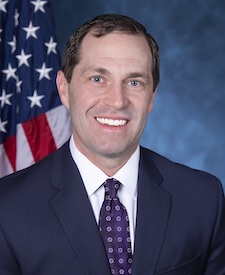
Rep. Jason Crow
Sponsored bills
Maddy summaryThe Fire Innovation Unit Act establishes a 7-year federal pilot program to test and deploy new wildfire prevention, detection, and response technologies. It connects private companies, nonprofits, and universities (covered entities) with government agencies like FEMA, tribal fire departments, and land management agencies (covered agencies) to jointly test technologies in real-world scenarios. Key provisions include identifying priority technology areas - such as remote sensing, safety equipment, community resilience tools, and autonomous systems - and requiring annual reports to Congress on costs, effectiveness, and procurement barriers. The program aims to accelerate the adoption of proven, cost-effective technologies through public-private partnerships, with the pilot ending seven years after enactment.
Give Kids a Chance Act of 2025 This bill expands the Food and Drug Administration’s (FDA’s) authority with respect to research on rare pediatric diseases, including by permitting the FDA to take enforcement action against drug sponsors that fail to satisfy pediatric study requirements and by reauthorizing programs that support pediatric research. Specifically, the bill modifies requirements relating to molecularly targeted pediatric cancer investigations to permit research on new drugs in combination with active ingredients that have already been approved, provided certain conditions are met; permits the FDA to take enforcement action against drug sponsors that fail to comply with pediatric study requirements, if such sponsors demonstrated a lack of due diligence in satisfying the requirement; renews the FDA’s authority to award priority review vouchers to sponsors of new products intended to treat rare pediatric diseases through September 30, 2029; and reauthorizes through FY2027 certain funding for the National Institutes of Health to support priority pediatric research. The bill also provides statutory authority for the FDA’s interpretation of the orphan drug exclusivity period. The bill specifies, consistent with FDA regulations, that the seven-year market exclusivity period for drugs for rare diseases or conditions (i.e., orphan drugs) prohibits the approval of the same drug for the same approved use or indication with respect to the disease or condition. (In Catalyst Pharmaceuticals, Inc. v. Becerra , a court rejected the FDA’s interpretation and held that orphan drug exclusivity extends to all uses or indications for the disease or condition.)
Maddy summaryThis bill expands Medicare coverage to include genetic counseling services provided by licensed or certified genetic counselors, effective January 1, 2027. It defines "covered genetic counseling services" as those furnished by qualified counselors under state law or certification, with payments set at 80% of the lesser of the actual charge or 85% of the physician fee schedule. Medicare beneficiaries seeking genetic counseling will gain access to these services through covered providers, while preventing balance billing for these specific services. The bill does not restrict physicians from billing for similar services under existing Medicare rules.
Maddy summaryHR 6036 ensures veterans who served in female cultural support teams (FCS) during 2010-2021 receive proper military records and veterans benefits. The bill requires the military to add FCS service to individual records and count it toward retirement pay, while treating this service as "engagement in combat" for disability claims. Veterans can now submit supplemental claims for service-connected disabilities like PTSD or brain injuries, with the VA improving claim processing and outreach. It also mandates a study to identify other veterans with similar unrecorded service and a report on covered claims by gender and record status. This directly affects women who served in FCS teams but were previously excluded from combat-related benefits.
Maddy summaryHRES 581 is a procedural resolution that establishes rules for the House to consider H.R. 185, the Epstein Files Transparency Act. It waives all points of order against the bill, adopts a specific amendment (the full text of the Epstein Files Transparency Act), and limits debate to one hour equally divided between the Judiciary Committee's chair and ranking minority member. The resolution also requires the Attorney General to release unclassified DOJ records related to Jeffrey Epstein within 30 days, with limited exceptions for privacy or national security.
Maddy summaryThis bill would require Medicare to cover early detection screening tests for Alzheimer's disease and related dementias starting January 1, 2028. It defines eligible tests as FDA-cleared genomic blood tests, blood product analyses, or equivalent medical imaging methods (like protein expression or whole genome sequencing) that detect pre-symptomatic or early-stage conditions. Medicare beneficiaries would receive this coverage without cost-sharing for these specific screenings. The bill amends Medicare coverage rules to explicitly include these tests under Section 1861(nnn) of the Social Security Act.
Maddy summaryThe Global Respect Act (HR 6151) requires the U.S. President to publicly list foreign officials responsible for severe human rights violations against LGBTQI individuals, including torture, prolonged detention, or violence based on sexual orientation or gender identity. It mandates denying visas and entry to listed individuals and requires annual reports on the list's updates and impacts. The bill also directs the State Department to track global violence against LGBTQI people and update annual human rights reports to include discrimination based on sexual orientation or gender identity. These provisions directly affect foreign government officials and entities implicated in such abuses, aiming to increase accountability through U.S. visa restrictions.
Maddy summaryHR 6106, the CLEAR Path Act, restricts former senior U.S. government officials from lobbying foreign governments of designated "countries of concern" for 5 years after leaving office. It applies specifically to individuals who held Senate-confirmed positions (like agency heads) and later represent foreign governments before U.S. officials with intent to influence decisions. Key mechanisms include requiring agencies to provide written notice of these restrictions upon appointment and termination, and establishing a process where the Secretary of State must seek congressional approval via a specific joint resolution to add or remove countries from the "concern" list. The restrictions sunset after 5 years from the bill's enactment, though they apply retroactively to conduct occurring before that date.
Maddy summaryHR 6107, the PAID OFF Act of 2025, modifies the Foreign Agents Registration Act (FARA) by closing exemptions for foreign agents representing corporate or government entities owned by specific countries identified as security concerns. It prevents these entities from using FARA exemptions, requiring them to register as foreign agents. The bill also creates a new process where the Secretary of State can propose adding or removing countries from the "country of concern" list, but only with Congress approving a specific joint resolution. These changes expire after five years from the bill's enactment. The bill directly affects foreign entities seeking to avoid FARA registration when representing certain governments or state-owned corporations.