

Maddy summaryHR 5913, the Community Investment and Prosperity Act, amends two existing banking regulations by increasing a percentage threshold from 15% to 20% in two specific legal provisions. It revises the Revised Statutes (12 U.S.C. 24) and the Federal Reserve Act (12 U.S.C. 338a), specifically altering the fifth sentence of designated paragraphs. These changes directly affect how national banks and financial institutions calculate certain regulatory requirements under federal law. The bill makes a technical adjustment to existing banking rules without creating new programs or altering broader community investment policies.
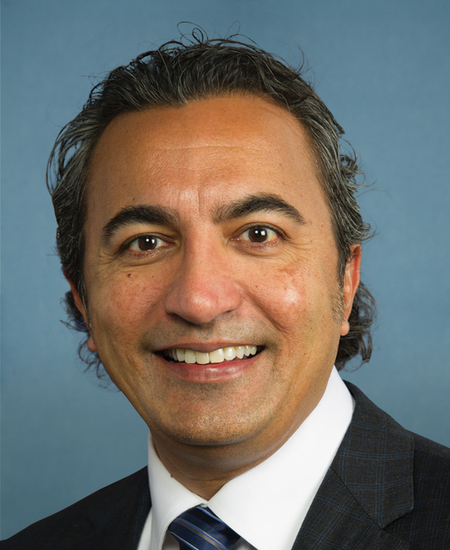
Rep. Ami Bera
Sponsored bills
Maddy summaryHRES 846 is a symbolic resolution designating October 2025 as National Domestic Violence Awareness Month. It expresses the House's support for raising awareness about domestic violence and its impacts, and calls for continued congressional attention to ending domestic violence through existing programs. The resolution does not create new laws, allocate funding, or directly affect any specific groups - it is purely a statement of support. It references statistics on domestic violence prevalence but focuses on awareness rather than policy changes.
Maddy summaryThis non-binding resolution (HRES 844) expresses the U.S. House of Representatives' support for designating October 2025 as "Crime Prevention Month." It encourages federal agencies to fund evidence-based crime prevention programs - like youth mentorship, mental health services, and neighborhood safety initiatives - and urges state/local governments to adopt strategies such as Crime Prevention Through Environmental Design. The resolution also commends community workers and calls on all citizens to participate in public safety activities during October. It has no legal effect but aims to raise awareness and foster collaboration across communities, government, and private sectors to reduce crime.
Maddy summaryHRES 824 is a ceremonial House resolution recognizing the religious and historical significance of Diwali, the festival of lights. It acknowledges Diwali’s meaning across Hindu, Sikh, and Jain traditions - symbolizing light over darkness, good over evil, and marking spiritual milestones like Guru Hargobind’s release and Lord Mahavira’s Nirvana. The resolution expresses respect for Indian-Americans and the global Indian diaspora, highlighting Diwali’s role in U.S. religious diversity. As a non-binding recognition, it does not create new laws, policies, or funding, but formally honors the cultural observance.
Maddy summaryHR 5736, the PAVE Act, requires Medicare beneficiaries aged 65 and older to receive penicillin allergy verification during their initial preventive physical exam and annual wellness visit. The bill mandates that healthcare providers identify patients reporting a penicillin allergy, evaluate whether the reported reaction was a true allergy, explain the health risks of a false allergy label, and refer to specialists when needed. This verification process, effective January 2027, aims to correct false allergy labels - over 90% of which are inaccurate - improving antibiotic choices and patient outcomes. It directly affects seniors covered by Medicare who have self-reported penicillin allergies, with no cost to patients for this service.
Maddy summaryThis bill adds Medicare coverage for multi-cancer early detection screening tests (blood or biological tests analyzing cell-free DNA) starting January 1, 2028. It directly affects Medicare beneficiaries aged 68 and older (starting in 2028, with the age limit increasing by 1 year annually), requiring tests to be FDA-cleared and deemed reasonable/necessary by the Secretary for early cancer detection across multiple organ sites. Payment will initially match current stool DNA test rates before 2031, then shift to a lower rate or new payment system after 2031, with limits preventing more than one test per year. The bill explicitly states it does not alter coverage for existing cancer screenings like breast, colorectal, or prostate cancer tests.
Maddy summaryHR 5429, the HUD-USDA-VA Interagency Coordination Act, requires the heads of the Department of Housing and Urban Development (HUD), the Department of Agriculture (USDA), and the Department of Veterans Affairs (VA) to create a formal agreement for sharing housing-related research and data. It mandates that these departments jointly submit a report within 180 days of enactment detailing ways to improve collaboration on housing programs, which must first be published in the Federal Register for 30 days of public comment. The bill does not create new benefits or programs but focuses on improving coordination between three federal agencies that administer housing assistance. It directly affects the operational procedures of HUD, USDA, and VA, not specific individuals or communities.
Maddy summaryThis bill prevents federal agencies from terminating employees during a government shutdown caused by a lapse in discretionary funding. It prohibits removals of civil service employees at any agency affected by a funding gap, and if an employee is wrongfully removed, they can return to their job with back pay once funding resumes. The law directly protects all federal employees covered by the civil service system during shutdowns. It applies automatically to any funding lapse, requiring automatic reinstatement without needing separate legal action.
Maddy summaryThis resolution designates September 22-28, 2025, as "Asian American and Native American Pacific Islander-Serving Institutions Week" to honor institutions that serve Asian American, Native Hawaiian, and Pacific Islander students. It recognizes these colleges and universities as critical providers of higher education, noting they enroll 46% of AANHPI undergraduates despite comprising only 7% of U.S. institutions. The resolution emphasizes their role in supporting low-income, first-generation students and preserving cultural heritage, while calling for national recognition through community activities during the designated week. It is a symbolic gesture with no funding or policy changes attached.
Maddy summaryThis bill creates a pathway to permanent residency for certain college graduates who entered the U.S. as children under specific nonimmigrant visa categories (excluding H-1B, L-1, etc.). To qualify, applicants must have been lawfully present for 10 years total (including 8 years as a dependent child), graduated from a U.S. college, and not be inadmissible. It also changes how "child status" is determined for immigration purposes - using specific dates instead of age to prevent "age-outs" for dependents of long-term visa holders - and preserves priority dates for family members. These changes apply to individuals who entered the U.S. before age 21 and maintained lawful status under qualifying visas.