

Maddy summaryThe Silver Shield Act of 2025 establishes a new U.S. government program to monitor how foreign countries use American military equipment and services. It requires the U.S. to obtain written agreements from recipient nations before arms sales, prohibiting the use of U.S. weapons to commit civilian harm or violate international humanitarian law (like genocide or war crimes). The program mandates 180-day investigations into alleged violations and automatically makes violators ineligible for future U.S. arms transfers. This directly affects foreign governments receiving U.S. military aid, adding accountability measures to existing arms export rules.
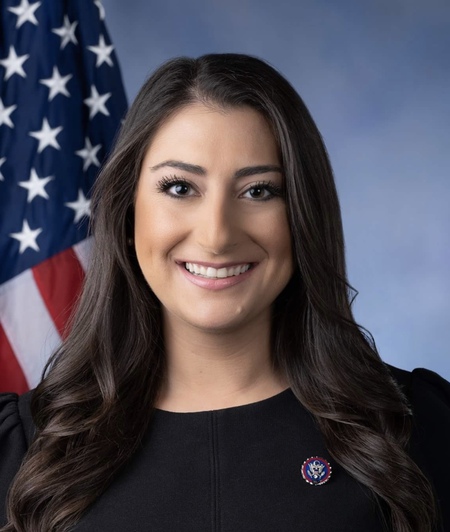
Rep. Sara Jacobs
Sponsored bills
Maddy summaryHCONRES 44 is a symbolic resolution recognizing a health and safety emergency for children linked to the Trump administration's climate policies. It claims these policies - unleashing fossil fuel production, blocking renewable energy, and suppressing climate science - disproportionately harm children through increased air pollution, extreme weather, and denied access to climate data. The resolution calls for reversing these policies, restoring the EPA's mission, and ensuring climate action aligns with protecting children's rights. It does not enact new laws or change policy, but serves as a formal congressional statement of concern.
Maddy summaryThis bill would require cosmetic suppliers to provide brand owners with detailed safety information about ingredients, including environmental and health hazards, chemical properties, and testing results. It creates a new FDA list of "nonfunctional constituents" (chemicals with no purpose in the product but potentially harmful to health or the environment) and mandates testing for these substances. Suppliers must provide certificates of analysis showing levels of these substances before selling to brand owners. The bill also establishes recordkeeping requirements for the entire cosmetic supply chain to facilitate recalls or investigations. These requirements apply to cosmetic manufacturers, suppliers, and brand owners, with the FDA responsible for implementation and enforcement.
Maddy summaryThis bill would fund research into health impacts from chemicals in cosmetics used by communities of color and professional salon workers, with $7.5 million allocated for each research area. It requires cosmetic manufacturers to provide safety data sheets in multiple languages (English, Spanish, Vietnamese, Chinese, Korean) for salon products containing hazardous chemicals. The bill establishes two national resource centers to provide education, training, and culturally appropriate materials about safer cosmetic choices for underserved populations. It also regulates synthetic braids as cosmetics under FDA safety standards, requiring warning labels if safety standards aren't met.
Maddy summaryThis bill would require cosmetic brand owners to disclose all ingredients, including fragrances and flavors, on their websites and product packaging. Starting 1 year after enactment, brand owners must list all ingredients in descending order on their websites, including the functional purpose of fragrance ingredients. By 2 years after enactment, product packaging must list all ingredients and include a link to health information for products containing certain hazardous chemicals identified in EPA, California, EU, and other official lists. The bill creates a master list of hazardous chemicals that the Food and Drug Administration must maintain and update, which would be publicly available. This affects all cosmetic manufacturers and brand owners selling products in interstate commerce, giving consumers more transparency about potentially harmful ingredients.
Maddy summaryThe Toxic-Free Beauty Act of 2025 bans 15 specific harmful chemicals and contaminants in cosmetic products, directly affecting manufacturers and retailers selling cosmetics in the U.S. market. It prohibits ingredients like formaldehyde, mercury, certain parabens, phthalates, and triclosan, while setting strict limits for contaminants such as lead and 1,4-dioxane in products. The law includes a non-preemption clause allowing states to maintain or enforce stricter rules than federal standards, and the ban will take effect for products introduced into interstate commerce starting January 1, 2027. This legislation aims to reduce consumer exposure to chemicals linked to health risks by defining key terms like "contaminant" and "intentionally added ingredient."
Maddy summaryThis bill creates a new Office of Security Assistance within the State Department to improve coordination and effectiveness of security assistance programs. It establishes a Coordinator for Security Assistance who will oversee planning, monitoring, and evaluation, and requires all relevant State Department bureaus and diplomatic posts to designate personnel for coordination. The bill mandates new training for personnel on security assistance processes, creates a common database to track all security assistance programs, and requires regular assessments of program effectiveness. It also establishes a framework for planning security assistance based on country-specific assessments and requires annual reporting to Congress. These changes aim to improve the strategic use of U.S. security assistance to promote U.S. security interests and partner capacity.
Maddy summaryThis bill (HR 4372) requires the Department of Defense to shorten reporting timelines for cost overruns on major defense acquisition programs, cutting the deadline from "when a report is submitted" to 30 days after the report is issued. It adds new rules for designating "end items" costing over $500 million each as separate subprograms for reporting, mandates including full life-cycle operations/support costs in reports, and creates stricter termination rules for programs with repeated cost breaches. Specifically, programs exceeding cost thresholds twice must be terminated within 90 days of reassessment, and all breach reports must be posted publicly on a DoD website. The bill directly affects DoD acquisition programs over $500 million, aiming to improve transparency and congressional oversight of defense spending.
Maddy summaryHR 4382 authorizes the U.S. Mint to produce commemorative coins for the 2028 Los Angeles Olympics/Paralympics and 2034 Salt Lake City Winter Olympics/Paralympics. It specifies gold, silver, and half-dollar coin designs with defined mintage limits (e.g., up to 100,000 $5 gold coins for each event), all bearing inscriptions like "2028" or "2034" and standard coin features. A surcharge ($5-$50 per coin) is added to sales, with all funds directed to the respective Olympic committees to support event hosting and legacy programs like youth sports. The bill ensures no net cost to the government by requiring surcharge revenues to cover all design, production, and marketing expenses before funds are disbursed.
Maddy summaryThis bill establishes two new programs to address water quality issues in the Tijuana River and New River watersheds, which flow from Mexico into California. It requires the Environmental Protection Agency to develop action plans for pollution prevention, including projects to manage wastewater, stormwater, debris, sediment, and contaminants that flow across the border. The bill authorizes $50 million annually from 2026-2036 for these programs, with funding to support projects that improve water quality, protect public health, and enhance natural habitats in affected communities. The programs will coordinate with Mexican and U.S. agencies, including the International Boundary and Water Commission, to implement projects addressing transboundary flows that impact coastal communities in Imperial Beach, San Diego, Calexico, and the Imperial Valley.