

Maddy summaryThis bill increases federal funding for Impact Aid, which supports school districts that serve students on federal property (like military bases) or have high numbers of children with disabilities. It authorizes specific annual funding amounts for four key areas: payments for federal property acquisition, basic support for heavily impacted districts, aid for children with disabilities, and school construction. The funding grows incrementally each year from 2026 through 2031, with total annual amounts rising from $85 million to $250 million for property payments, and from $1.49 billion to $2.35 billion for basic district support. This directly affects school districts in communities with significant federal land or federal facility presence.
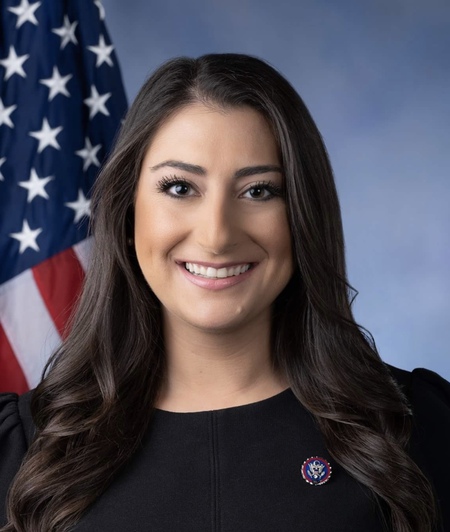
Rep. Sara Jacobs
Sponsored bills
Maddy summaryHR 1510, the Due Process Continuity of Care Act, expands Medicaid eligibility to cover individuals in jail or custody while awaiting trial or disposition of charges, at a state's option. This allows states to provide Medicaid benefits to this population without requiring them to be convicted first. The bill provides $50 million in planning grants to states to develop implementation plans, including assessing healthcare needs, recruiting providers (especially for behavioral health and substance use treatment), and creating electronic billing systems for correctional facilities and outpatient providers. States must also consult with stakeholders like jails, providers, and Medicaid advocates before finalizing their plans.
Maddy summaryThis bill requires the EPA to establish guidelines for indoor air contaminants like radon, formaldehyde, and carbon monoxide that affect schools and childcare facilities. It mandates a national assessment of indoor air quality in these buildings, with updates every five years, and provides technical assistance to schools and childcare providers to implement air quality improvements. The EPA must publish science-based guidelines with recommended concentration limits for key contaminants and support voluntary building certifications for healthier indoor environments. These provisions directly impact local schools, childcare centers, and state/local governments responsible for building maintenance and health standards.
Maddy summaryThis bill prohibits Members of Congress, their spouses, and dependent children from owning or trading certain investments, including stocks, commodities, and derivatives (referred to as "covered investments"). It requires affected individuals to divest these investments within 90-180 days, with specific exemptions for Treasury bonds, diversified mutual funds, small business interests, and family trusts meeting strict conditions. Violations incur penalties of 10% of the investment's value plus disgorgement of profits, paid directly to the U.S. Treasury. The law applies to all covered individuals during federal service, with exceptions for investments acquired through inheritance or occupational trading (e.g., a spouse’s finance job).
Maddy summaryThis bill permanently establishes the Coordinator for Afghan Relocation Efforts (CARE) within the State Department, expanding their role to prioritize family reunification for U.S. military personnel and veterans with Afghan allies. It mandates the Coordinator to collect detailed data on Afghan applicants (including special immigrant visa seekers, refugees, and parolees), vetting timelines, and pending family reunification cases into a centralized database. The Coordinator must report this data to Congress every 90 days to ensure transparency and inform policy decisions. The law directly affects Afghan allies and their families seeking U.S. relocation, particularly those connected to U.S. military service.
Maddy summaryThe SUN Act (HR 4998) requires the President to submit a detailed report to Congress within 15 days whenever National Guard members are deployed domestically for non-disaster purposes under specific laws. The report must include the legal basis for the deployment, evidence of reduced violence, input from local law enforcement, total costs, and a certification that the deployment won’t interfere with disaster response capabilities. It applies to all domestic uses of the National Guard except for responses to natural disasters under the Stafford Act. The bill aims to enhance congressional oversight of military deployments on U.S. soil.
Maddy summaryThis bill requires the U.S. Department of Commerce to issue an annual report to Congress on export license applications and end-use checks for specific foreign entities. The report must include details like applicant names, item descriptions (including export control codes), end-user locations, license decisions, and results of compliance checks, while protecting confidential information. It specifically applies to entities in certain countries (Country Group D:5) listed on U.S. export control sanctions lists. The goal is to increase transparency in export licensing without disclosing sensitive enforcement details.
This bill designates the facility of the United States Postal Service located at 1444 Main Street in Ramona, California, as the "Archie Moore Post Office Building".
Maddy summaryThis bill extends the expiration date for a provision allowing certain vehicles to use High Occupancy Vehicle (HOV) lanes without meeting standard occupancy requirements. Specifically, it amends federal law to change the deadline from September 30, 2025, to September 30, 2031. The change directly affects drivers and vehicle operators who currently qualify for this exemption under existing rules. It is a procedural reauthorization, not a policy change, maintaining the current HOV lane exemption rules for an additional six years.
Maddy summaryHR 4901, the WWII Nurses Congressional Gold Medal Act, authorizes a Congressional Gold Medal to honor Army and Navy nurses who served during World War II. The bill recognizes their critical service under combat conditions, including field hospital care in 6 continents, internment as prisoners of war, and contributions to saving lives (with fewer than 4% of treated soldiers dying from wounds). The medal, designed by the Treasury Secretary, will be displayed at specific military museums and historical sites like the National World War II Museum, as directed by Congress. Bronze duplicates may be sold to cover costs, with proceeds deposited into the U.S. Mint fund.