United States Army Rangers Veterans of World War II Congressional Gold Medal Act This bill provides for the award of a single Congressional Gold Medal to the U.S. Army Rangers Veterans of World War II in recognition of their dedicated service during World War II.
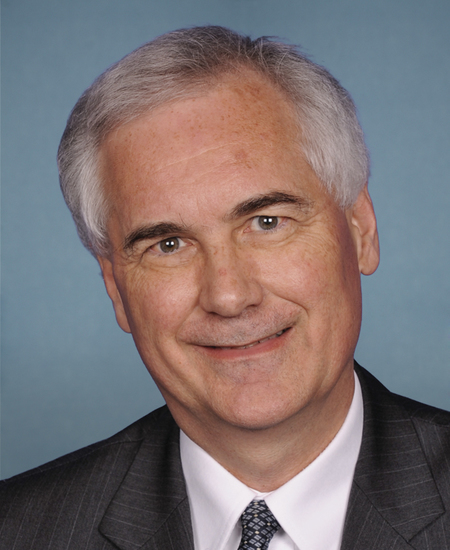
Rep. Tom McClintock
Sponsored bills
Timely ReAuthorization of Necessary Stem-cell Programs Lends Access to Needed Therapies Act of 2021 or the TRANSPLANT Act of 2021 This bill modifies and reauthorizes through FY2026 the C.W. Bill Young Cell Transplantation Program, which provides support to patients who need a potentially life-saving bone marrow transplant or umbilical cord blood transplant. The bill also requires the Department of Health and Human Services to conduct a periodic review of the science of using adult stem cells and birthing tissues in therapeutic treatments. In addition, the Government Accountability Office must report on the regenerative medicine workforce.
This bill prohibits federal funding for the Corporation for Public Broadcasting after FY2023.
This bill prohibits the use of federal funds for National Public Radio or radio-content acquisition.
This resolution recognizes that the national debt is a threat to national security and that deficits are unsustainable, irresponsible, and dangerous. It also commits to (1) restoring regular order to the appropriations process, and (2) addressing the fiscal crisis faced by the United States.
Ghost Army Congressional Gold Medal Act This bill directs the Speaker of the House of Representatives and the President pro tempore of the Senate to award a Congressional Gold Medal to the 23rd Headquarters Special Troops and the 3133d Signal Service Company, known as the Ghost Army , collectively, in recognition of its service during World War II.
Recognizing the Protection of Motorsports Act of 2019 or the RPM Act of 2019 [ sic ] This bill authorizes the modification of a vehicle's air emission controls for vehicles that are not legal for operation on a street or highway and are used solely for competition.
Stopping Border Surges Act This bill modifies immigration law provisions relating to unaccompanied alien minors and to asylum seekers. For certain unaccompanied inadmissible alien children, generally those not at risk of being trafficking victims nor having a fear of persecution, the Department of Homeland Security (DHS) shall repatriate the child. Currently, only inadmissible unaccompanied aliens from neighboring countries are subject to repatriation, and DHS has discretion whether to repatriate. When HHS releases an unaccompanied child to an individual, it shall provide DHS with certain information about that individual, including Social Security number and immigration status. The bill amends the definition of credible fear of persecution to require that such fear can be established by statements that are more probable than not. The bill also imposes certain rules relating to credible fear interviews, including requirements for recordings and interpreters. If an alien is granted asylum because of fear of persecution in a country, the alien shall be deemed to have renounced asylum status by returning to that country, if there has been no change in the country's conditions. The bill also (1) expands the definition of what constitutes a frivolous asylum application, (2) imposes additional limitations on eligibility for asylum, (3) shortens the deadline for applying for asylum, and (4) extends the time period an alien seeking asylum must wait before receiving employment authorization. Any individual who knowingly and willfully makes materially false statements or uses fraudulent documents in asylum-related proceedings shall be fined or imprisoned up to 10 years, or both.

Gun Owner Registration Information Protection Act This bill prohibits federal funding of, or support for, state databases that list (1) firearms lawfully owned or possessed by individuals, or (2) individuals who lawfully own or possess firearms.
Regulations from the Executive in Need of Scrutiny Act of 20 21 This bill revises provisions relating to congressional review of agency rulemaking. Specifically, the bill establishes a congressional approval process for a major rule. A major rule may only take effect if Congress approves of the rule. A major rule is a rule that results in (1) an annual effect on the economy of $100 million or more; (2) a major increase in costs or prices for consumers, individual industries, government agencies, or geographic regions; or (3) significant adverse effects on competition, employment, investment, productivity, innovation, or the ability of U.S.-based enterprises to compete with foreign-based enterprises. In addition, the bill establishes a congressional disapproval process for a nonmajor rule. A nonmajor rule may only take effect if Congress does not disapprove of the rule.