

Freedom from Mandates Act This bill nullifies certain executive orders regarding COVID-19 safety and prohibits the Departments of Labor and Health and Human Services (HHS) from taking specified actions with respect to vaccination against COVID-19. Specifically, the bill nullifies Executive Order 14042 (relating to ensuring adequate COVID-19 safety protocols for federal contractors) and Executive Order 14043 (requiring COVID-19 vaccination for federal employees). Labor may not issue any rule requiring employers to mandate vaccination of employees against COVID-19 or requiring testing of employees who are unvaccinated. HHS may not (1) require a health care provider, as a condition of participation in the Medicare or Medicaid program, to mandate vaccination of employees against COVID-19 or require testing of employees who are unvaccinated; or (2) otherwise penalize such a provider for failure to mandate such vaccination or require such testing.
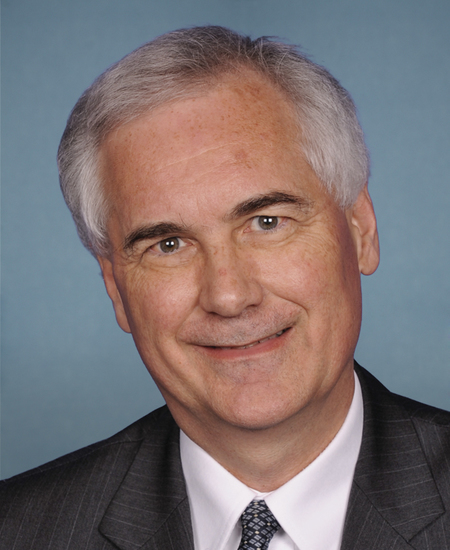
Rep. Tom McClintock
Sponsored bills
This resolution opposes the enactment of any federal law that voids state laws that prohibit employers from requiring workers to join a union as a condition of employment.
Puppies Assisting Wounded Servicemembers for Veterans Therapy Act or the PAWS for Veterans Therapy Act This bill implements a program and a policy related to service dog therapy for veterans. Specifically, the bill requires the Department of Veterans Affairs (VA) to implement a five-year pilot program to provide canine training to eligible veterans diagnosed with post-traumatic stress disorder as an element of a complementary and integrative health program. Eligible veterans are those who are enrolled in the VA health care system and have been recommended for participation by a qualified mental health care provider or clinical team. The VA must seek to enter agreements containing specified elements with accredited nongovernmental entities that have demonstrated ability to provide canine training. Veterans who participate in the program are authorized to adopt the dog they assisted in training if their health provider determines it is in the best interest of the veteran. The VA must establish processes to document and track the progress of participating veterans with respect to health benefits and improvements. The Government Accountability Office must brief Congress and submit a report on the program. The bill also authorizes the VA to provide service dogs to veterans with mental illnesses, regardless of whether they have a mobility impairment.
This resolution condemns the President's failure to heed military and intelligence advisors about the speed and nature of the Taliban offense in Afghanistan and urges the President to commit to maintaining the evacuation operation as long as necessary to evacuate any U.S. citizen, lawful permanent resident, or Afghan partner who requests evacuation assistance .
Water Supply Permitting Coordination Act This bill makes the Bureau of Reclamation the lead agency for the purpose of coordinating all permitting and related activities required to construct certain new surface-water storage projects. Additionally, Reclamation is authorized to accept and expend funds contributed by a nonfederal public entity to expedite the evaluation of a permit for such a project.
Tree Spiking Mitigation Act of 2021 This bill directs the Forest Service and the Bureau of Land Management (BLM) to coordinate to take necessary actions to ensure the detection, identification, and, as determined to be appropriate, mitigation of tree spiking devices located on federal lands. A tree spiking device includes spikes, nails, or other objects hammered, driven, fastened, or otherwise placed into or on any timber to impede logging. To carry out such activities, the Forest Service and the BLM shall prioritize areas in which (1) incidences of tree spiking devices have occurred, or (2) the Forest Service and the BLM suspect that there are tree spiking devices. No later than 90 days after the enactment of this bill, the Forest Service and the BLM shall, where appropriate, update safety guidelines and training protocols to include the awareness, detection, identification, and mitigation of tree spiking devices.
Fair Sugar Policy Act of 20 21 This bill makes several modifications to the Department of Agriculture's sugar program. Among other modifications, the bill decreases the rate for price support loans, repeals the marketing allotments, revises the administration of import quotas, and repeals the Feedstock Flexibility Program.
Resilient Federal Forests Act This bill modifies and sets forth provisions regarding forest management activities on National Forest System, public, and tribal lands. The bill provides for, among other things the Departments of Agriculture (USDA) and Interior to conduct fireshed management projects in fireshed management areas, certain categorical exclusions for various purposes, the balancing of the short- and long-term effects of forest management activities while considering injunctive relief, USDA and Interior to establish their own discretionary arbitration pilot programs as an alternative dispute resolution process for forest management activities, increasing the maximum term for a stewardship end result contract to 20 years, demonstration projects to support the development and commercialization of biochar on Indian forest lands or rangelands and in nearby communities by providing reliable supplies of feedstock from federal lands, the decommissioning of certain Forest Service Roads within designated high fire-prone areas, repealing of the Eastside Screens requirements on National Forest System lands, making the Northwest Forest Plan Survey and Manage Mitigation Measure Standards and Guidelines inapplicable to any National Forest System lands or public lands, development of a protection plan for giant sequoia trees on National Forest System lands and public lands, and permanent rights of access to the Oregon and California Railroad grant lands and the Coos Bay Wagon Road grant lands for private landowners issued reciprocal road rights-of-way.
Action Versus No Action Act This bill limits the scope of certain environmental assessments or impact statements related to forest management activities on National Forest System lands or public lands suitable for timber production to a consideration only of the effects of the forest management activity and the alternative of no action. Specifically, the bill applies to assessments or impact statements prepared by the Department of Agriculture (USDA), with respect to National Forest System lands, or the Department of the Interior, with respect to public lands, for forest management activities that meet at least one of the criteria specified. In the case of the alternative of no action, USDA or Interior shall consider whether to evaluate the effect of no action on, among other things, forest health, wildfire potential, insect and disease potential, and timber production; and the implications of a resulting decline in forest health, loss of habitat diversity, wildfire, or insect or disease infestation on potential losses of life and property, domestic water supply in the project area, and wildlife habitat loss.
Active Forest Management, Wildfire Prevention and Community Protection Act This bill establishes forest management, forest conservation, and wildfire prevention programs and activities. The bill establishes a collaborative prescribed fire program, an incentive program for large, cross-boundary prescribed fires, a program to remove or treat bark beetle-killed or infested trees, the Restoration and Resilience Partnership Program, and Forest Reserve Revenue Areas to generate revenue for counties. The bill also provides for, among other things the removal of certain trees or parts of those trees that come within 500 feet of an electric power line as hazard trees, the selection and implementation of landscape-scale forest restoration projects, removing the maximum term limits on stewardship end result contracting projects, study of only two alternatives (action vs. nonaction) in proposed collaborative forest management activities, the balancing of the long- and short-term effects of forest management activities on the affected ecosystem while considering injunctive relief, categorical exclusions from certain environmental requirements for specified forest management activities, and the expansion of the fire regime areas outside the wildland-urban interface for which a collaborative restoration project may be conducted.