

Resident Physician Shortage Reduction Act of 2021 This bill increases the number of residency positions eligible for graduate medical education payments under Medicare for qualifying hospitals, including hospitals in rural areas and health professional shortage areas. Current law provides for an increase of up to 200 positions per fiscal year beginning in FY2023, with a total increase of 1,000 positions; each hospital may receive up to 25 additional positions. The bill provides for an additional increase of 2,000 positions per fiscal year from FY2023-FY2029; during this period, each hospital may receive up to 75 additional positions in total under the bill and current law. Additionally, one-third of the positions that are made available under the bill must be allocated to hospitals that are already operating above applicable resident limits. The bill also requires the Government Accountability Office to report on strategies to increase the diversity of the health professional workforce, including with respect to representation from rural, low-income, and minority communities.
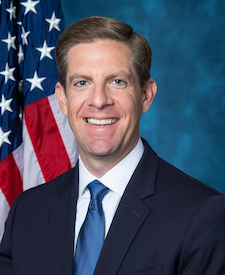
Rep. Mike Levin
Sponsored bills
Willie O'Ree Congressional Gold Medal Act This bill provides for the award of a Congressional Gold Medal to Willie O'Ree or, if unavailable, to a member of his family, in recognition of his contributions and commitment to hockey, inclusion, and recreational opportunity.
Delivering Envelopes Judiciously On-time Year-round Act or the DEJOY Act This bill requires the U.S. Postal Service (USPS) to maintain the service standards for first-class mail that were in effect on January 1, 2021. The Postmaster General proposed in March 2021 a 10-year restructuring plan for the USPS that would lengthen the permissible mail-delivery window.
End Oil and Gas Tax Subsidies Act of 2021 This bill limits or repeals certain fossil fuel oil and gas subsidies for oil companies. Specifically, it increases to seven years the amortization period for geological and geophysical expenditures; repeals the tax credits for producing oil and gas from marginal wells and for enhanced oil recovery; repeals the tax deduction for the intangible drilling and development costs of oil and gas wells; repeals percentage depletion; repeals the tax deduction for tertiary injectant expenses; repeals the passive loss exception for working interests in oil and gas property; denies the tax deduction for income attributable to domestic production activities for oil and gas activities; prohibits the use of the last-in, first-out (LIFO) accounting method by major integrated oil companies; limits the foreign tax credit for dual capacity taxpayers (i.e., taxpayers who are subject to a levy of a foreign country or U.S. possession and receive specific economic benefits from such country or possession); and expands the definition of crude oil for purposes of the excise tax on petroleum and petroleum products to include any oil derived from a bitumen or bituminous mixture (tar sands), and any oil derived from kerogen-bearing sources (oil shale).
Carbon Cost Act of 2021 This bill requires the Government Accountability Office to coordinate with the National Academy of Sciences to study alternatives for a nonpartisan congressional office or agency to make science-based projections of the effect of federal legislation on global greenhouse gas emissions.
Colonel Young Oak Kim Congressional Gold Medal Act This bill directs the Speaker of the House of Representatives and the President pro tempore of the Senate to arrange for the posthumous award of a Congressional Gold Medal in commemoration of Colonel Young Oak Kim, in recognition of his achievements and contributions to heroism, leadership, and humanitarianism.
Emmett Till and Mamie Till-Mobley Congressional Gold Medal Act of 2021 This bill provides for the posthumous presentation of a Congressional Gold Medal in commemoration of Emmett Till and Mamie Till-Mobley. After the award the medal shall be given to the National Museum of African American History and Culture.
Protecting Americans from Dangerous Algorithms Act This bill limits a social media company's immunity from liability if it promotes certain content on its platform. Specifically, the bill removes this immunity from a social media company with more than 10 million monthly users if it utilizes an algorithm, model, or other computational process to amplify or recommend content to a user that is directly relevant to a claim involving (1) interference with civil rights, (2) neglect to prevent interference with civil rights, or (3) acts of international terrorism.
Children and Media Research Advancement Act or the CAMRA Act This bill requires the National Institutes of Health to fund research regarding the effects of media on infants, children, and adolescents. Such research must examine the impact of media (e.g., social media, television, video games) on cognitive, physical, and social-emotional development.
This resolution recognizes the disparity between wages paid to men and women, and its impact on women, families, and the nation and reaffirms Congress' commitment to supporting equal pay and to narrowing the gender wage gap.