

Maddy summaryHR 4398, the Veteran Burial Timeliness and Death Certificate Accountability Act, requires Veterans Affairs (VA) physicians or nurse practitioners to certify the death of a veteran who dies of natural causes within 48 hours of learning of the death. This directly affects veterans' families, who previously faced delays of up to eight weeks in burial and access to survivor benefits due to slow death certifications. The bill mandates annual reports to Congress on VA compliance with the 48-hour rule, including statistics on delays and their causes. The key change is establishing a strict timeline for death certification to prevent unnecessary delays in honoring veterans' final arrangements.
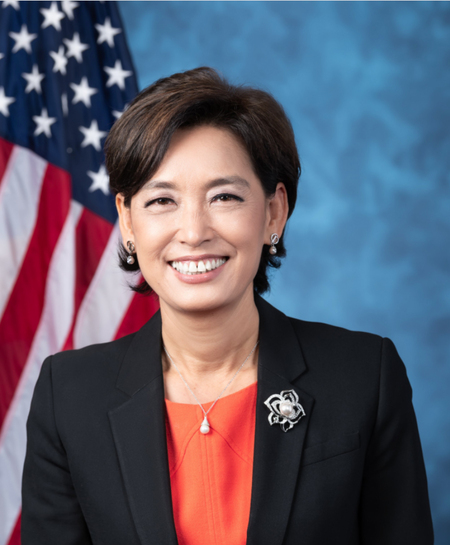
Rep. Young Kim
Sponsored bills
Maddy summaryHR 3300 amends a permit requirement under the Federal Water Pollution Control Act to exempt certain aerial fire suppression applications from needing a permit. It specifically allows the use of fire control products listed on the Forest Service's current Qualified Products List without a permit during wildfire operations. This directly affects wildland firefighters and federal agencies like the Forest Service when deploying approved suppression materials. The change streamlines access to critical firefighting tools during emergencies by removing a specific regulatory barrier.
Maddy summaryHR 5351, the NSF AI Education Act of 2025, creates new funding mechanisms to expand artificial intelligence education. It authorizes scholarships and fellowships covering tuition, fees, and stipends for undergraduate and graduate students in AI-related fields, with priority for programs teaching AI in K-12 schools, advanced manufacturing, and agriculture. The bill also establishes up to eight regional "Centers of AI Excellence" at community colleges and career schools to develop AI curricula, build industry partnerships, and create student job pathways. Additionally, it funds research grants to develop K-12 AI teaching materials and supports professional development for educators and industry professionals to integrate AI into classrooms.
Creating Resources for Every American To Experiment with Artificial Intelligence Act of 2025 or the CREATE AI Act of 2025 This bill establishes a national program to provide U.S. researchers, educators, and students with access to artificial intelligence (AI) data, computational resources, educational tools and services, and testbeds. The program, to be known as the National Artificial Intelligence Research Resource (NAIRR), must be established by the National Science Foundation (NSF) to improve U.S. AI research capacity and spur the strategic development of AI capabilities. NAIRR may accept and use donated resources from the private sector and federal agencies. Those eligible to use NAIRR resources are (1) researchers, educators, and students based in the United States and affiliated with a U.S. institution of higher education, nonprofit, executive agency, or other specified entity; and (2) employees of U.S. executive agencies or federally funded research and development centers with a demonstrable mission need. NSF must select a nongovernmental organization to operate NAIRR (i.e., an operating entity ) through a competitive and transparent process. The operating entity must ensure that a significant percentage of the annual allotment of computational resources is provided to projects primarily focused on AI privacy, ethics, safety, security, risk mitigation, or trustworthiness. The operating entity must also establish minimum security requirements for all individuals interacting with NAIRR. The operating entity may establish a fee schedule for access to NAIRR, which must include a free tier of access and must ensure that the primary purpose of NAIRR is to support research.
Maddy summaryThe REG Act of 2026 amends four major financial laws to require regulators to assess whether new rules, when combined with existing or proposed ones, would promote the public interest. Specifically, it adds language to the Securities Act, Securities Exchange Act, Investment Company Act, and Investment Advisers Act to mandate this cumulative review process. The bill directly affects federal agencies responsible for overseeing securities markets and investment firms by changing how they evaluate proposed regulations. This change aims to ensure that individual rules are not approved without considering their broader impact on the financial system when stacked alongside other measures.
Maddy summaryThis bill redesignates the existing National Parks and Public Land Legacy Restoration Fund as the America's Legacy Restoration Fund to address deferred maintenance on federal lands. It directs revenue from recreation fees and a portion of energy development income into the fund, which must be used primarily for repairing critical infrastructure like roads, trails, and buildings managed by agencies such as the National Park Service and the Forest Service. The legislation establishes strict rules requiring that most funds go toward non-transportation projects, mandates transparency through public dashboards tracking project status, and sets aside a small percentage for matching private donations. Additionally, the bill increases entrance fees for foreign visitors to ensure they contribute to the fund, while prohibiting the use of these specific funds for land acquisition or employee bonuses.
Maddy summaryHR 2978, the GUARD Act, allows state, local, and tribal law enforcement agencies to use existing federal grant funds for investigating elder financial fraud, "pig butchering" investment scams, and general financial fraud. The bill directs these funds toward hiring specialized staff, training on blockchain tools and transnational fraud, purchasing investigative software, improving data collection, and creating financial sector liaisons to coordinate with banks. It requires annual reports from law enforcement on fund usage and outcomes, and mandates federal agencies to submit comprehensive reports to Congress on scam statistics, enforcement actions, and funding allocation. The legislation directly affects law enforcement agencies and aims to strengthen efforts against fraud targeting vulnerable populations, particularly elderly individuals.
Maddy summaryThe VA Emergency Transportation Act expands the types of care the Department of Veterans Affairs can reimburse for veterans by formally including emergency transportation alongside emergency treatment. Specifically, the bill allows the VA to pay for ambulance or air ambulance rides provided by non-VA providers that transport a veteran to a facility for emergency care or from a non-VA facility to a VA or other federal facility. This change updates existing laws to ensure that transportation costs are covered when they are part of the necessary emergency services furnished to a veteran.
Maddy summaryThis bill directs the government auditor (Comptroller General) to study how wildfire prevention programs operate across different land ownerships - including federal, state, tribal, and private lands. The study will examine current federal rules, funding access, and specific wildfire mitigation activities from the 2003 Healthy Forests Restoration Act. It will identify barriers and opportunities to improve cross-boundary collaboration, with a report due to Congress within two years. The bill itself does not create new programs or funding, only requiring this analysis.
Maddy summaryHR 2675, the Protecting Our Courts from Foreign Manipulation Act of 2025, requires parties and their lawyers in federal civil cases to disclose any foreign funding tied to case outcomes. It mandates written disclosure of foreign funders' identities (including country of origin) and certification about funding sources, while banning foreign states or sovereign wealth funds from funding litigation. The law also requires annual reports to Congress detailing foreign-funded cases, including amounts and jurisdictions. This directly affects parties using foreign-funded litigation, courts handling such cases, and foreign entities seeking to influence U.S. courts through financial support.