

Maddy summaryHRES 864 is a ceremonial resolution honoring U.S. veterans on Veterans Day 2025. It does not create new laws or policies but formally recognizes veterans' service and sacrifice, calling on all Americans to observe Veterans Day. The resolution references historical context about Veterans Day's origins (from Armistice Day to honoring all veterans) but contains no concrete policy changes. It directly addresses the general public, urging them to participate in the observance. As a non-binding resolution, it affects no specific individuals or groups through legislative action.
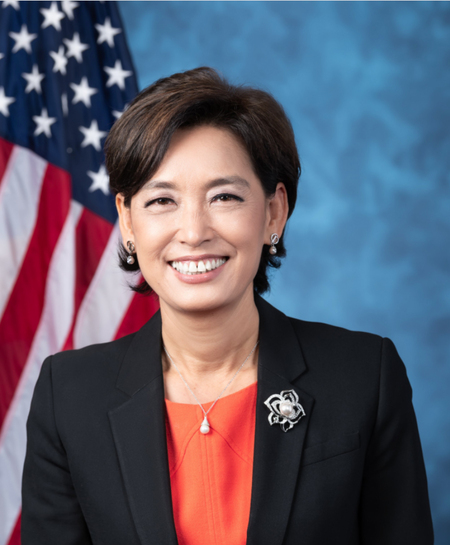
Rep. Young Kim
Sponsored bills
Maddy summaryThe North Korean Human Rights Reauthorization Act of 2025 reauthorizes U.S. programs supporting human rights in North Korea through 2030, extending funding and reporting requirements from previous timelines. It mandates annual reports to Congress on U.S. efforts to improve human rights conditions, including coordination with international partners and support for nongovernmental organizations. The bill directs diplomatic actions urging China to halt forced returns of North Korean refugees, allow UNHCR access to refugees in China, and address refugee resettlement. It also requires the State Department to report on efforts to appoint a Special Envoy for North Korean Human Rights and expands U.S. support for information access into North Korea. These provisions directly affect U.S. foreign policy implementation, international humanitarian coordination, and the protection of North Korean refugees.
Maddy summaryHR 5913, the Community Investment and Prosperity Act, amends two existing banking regulations by increasing a percentage threshold from 15% to 20% in two specific legal provisions. It revises the Revised Statutes (12 U.S.C. 24) and the Federal Reserve Act (12 U.S.C. 338a), specifically altering the fifth sentence of designated paragraphs. These changes directly affect how national banks and financial institutions calculate certain regulatory requirements under federal law. The bill makes a technical adjustment to existing banking rules without creating new programs or altering broader community investment policies.
Maddy summaryHR 5276, the Community Bank LIFT Act, modifies rules to make it easier for smaller community banks to use a simplified capital calculation method. It raises the asset threshold for qualifying banks from $10 billion to $15 billion and lowers the required capital ratio from 8-10% to 6-8%. The bill also requires federal banking agencies to review the Community Bank Leverage Ratio framework within 150 days, focusing on simplifying the process and encouraging more small banks to adopt it. This directly affects community banks with assets under $15 billion that currently face more complex capital rules.
Maddy summaryThis non-binding resolution (HRES 844) expresses the U.S. House of Representatives' support for designating October 2025 as "Crime Prevention Month." It encourages federal agencies to fund evidence-based crime prevention programs - like youth mentorship, mental health services, and neighborhood safety initiatives - and urges state/local governments to adopt strategies such as Crime Prevention Through Environmental Design. The resolution also commends community workers and calls on all citizens to participate in public safety activities during October. It has no legal effect but aims to raise awareness and foster collaboration across communities, government, and private sectors to reduce crime.
Maddy summaryHR 5813, the Women’s Health and Cancer Rights Modernization Act of 2025, requires health insurance plans to cover all medically necessary breast or chest wall reconstruction services following breast cancer treatment, including mastectomy or breast-conserving surgery. It mandates coverage for every reconstruction method (like implants, tissue flaps, or future recognized techniques), symmetrical surgery for the other breast, custom prostheses, and treatment of complications like lymphedema. Health plans must ensure at least one in-network provider for each reconstruction type, provide annual written notices to patients about this coverage, and cannot deny coverage or penalize providers for following these requirements. This applies to group and individual health insurance plans, with no effect on stricter state laws requiring broader coverage.
Maddy summaryHRES 819 is a non-binding House resolution recognizing the contributions of the Indian American community (over 5.2 million people in the U.S.) and condemning recent racism against them. It specifically highlights their achievements - such as high educational attainment and roles in fields like medicine, law, and public service - and notes a doubling of reported harassment incidents targeting South Asians, including Hindus and Sikhs. The resolution formally acknowledges the community's cultural, economic, and scientific impact on the U.S. and condemns all hate, discrimination, and violence against Indian Americans and the broader South Asian community. As a symbolic gesture, it does not create new laws or policies but expresses congressional support for addressing anti-Indian racism.
Maddy summaryHRES 795 is a non-binding resolution condemning Hamas for the October 7, 2023, attacks that killed over 1,200 people, took 251 hostages (including Americans), and involved sexual violence. It demands Hamas immediately surrender and release all remaining hostages - specifically noting 48 people still held, including two U.S. citizens. The resolution also affirms Israel’s right to self-defense, calls for humanitarian aid to reach Palestinians, and condemns global antisemitism following the attacks. As a symbolic congressional statement, it does not create new laws or alter policies.
Maddy summaryThis bill adds Medicare coverage for multi-cancer early detection screening tests (blood or biological tests analyzing cell-free DNA) starting January 1, 2028. It directly affects Medicare beneficiaries aged 68 and older (starting in 2028, with the age limit increasing by 1 year annually), requiring tests to be FDA-cleared and deemed reasonable/necessary by the Secretary for early cancer detection across multiple organ sites. Payment will initially match current stool DNA test rates before 2031, then shift to a lower rate or new payment system after 2031, with limits preventing more than one test per year. The bill explicitly states it does not alter coverage for existing cancer screenings like breast, colorectal, or prostate cancer tests.
Maddy summaryThe Pray Safe Act of 2025 establishes a federal Clearinghouse within the Department of Homeland Security to provide houses of worship, faith-based organizations, and nonprofit groups at risk of threats with evidence-based safety resources. The Clearinghouse will publish online best practices for security planning, facility safety, and incident response, while listing existing federal and state grant programs to help these organizations implement these measures. It requires annual updates based on user feedback and includes a centralized resource section for contacts like Protective Security Advisors and Fusion Centers. The program expires four years after enactment and does not create new funding but coordinates existing federal and state safety resources.