

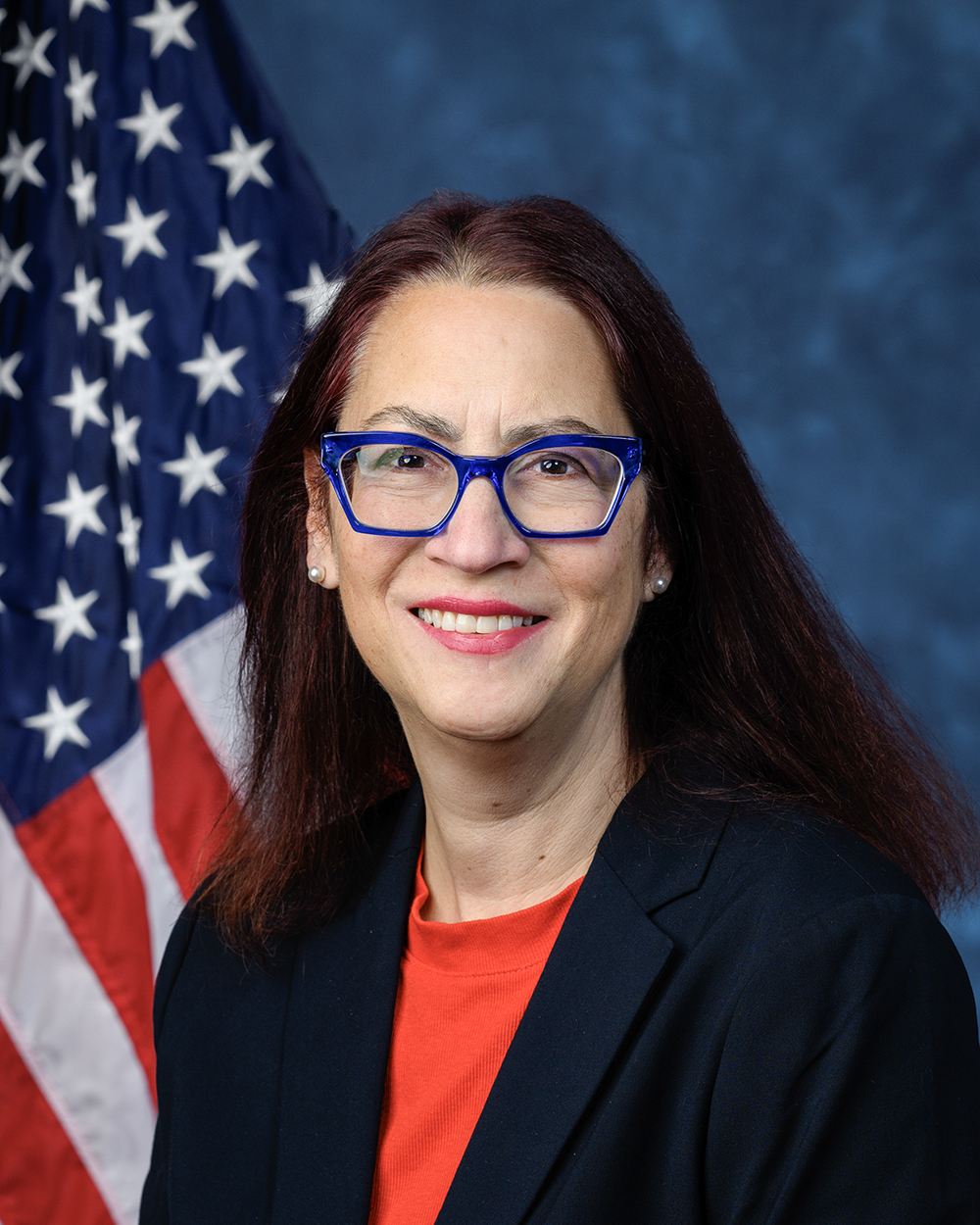
Photo of Laura Friedman
D United States House · District 30 · California On the 2026 ballot

Rep. Laura Friedman

Compare
Total votes
650
all sessions
Attendance
99%
4 missed
Higher than 83% of chamber peers
With party
97%
of cast votes
Near the chamber average
Bipartisan score
1%
crosses aisle rarely
Near the chamber average
Sponsored
338
bills & resolutions
Near the chamber average
Committees
7
assignments
338 bills and resolutions

Sponsored bills

Total
338
Primary
11
Co-sponsor
327
This page
338
matching current filters
Co-sponsor HR 2882
In committee · Ohio House · Co-sponsor
Central Coast of California Conservation Act of 2025

Maddy summaryHR 2882 prohibits the U.S. Secretary of the Interior from issuing oil or gas leases for exploration, development, or production in the Central California Planning Area. This bill directly affects federal leasing decisions in that specific coastal region, preventing new fossil fuel extraction activities. The key provision amends the Outer Continental Shelf Lands Act to permanently ban such leasing in the defined area. The bill creates a clear policy change by eliminating future oil and gas development opportunities on federal waters along California's central coast.

In committee Apr 10, 2025 1 co-sponsor
Co-sponsor HR 2840
In committee · Ohio House · Co-sponsor
Housing Supply Frameworks Act

Maddy summaryThe Housing Supply Frameworks Act (HR 2840) directs the Department of Housing and Urban Development (HUD) to create federal guidelines and best practices for state and local governments to reform zoning rules that restrict housing supply. It focuses on practical changes like reducing parking minimums, allowing more housing types (e.g., duplexes, accessory dwellings), streamlining approval processes, and increasing density near transit - aiming to address a nationwide housing shortage affecting cost-burdened households. The guidelines, developed with public input from planners, developers, and community groups, are intended to help states and localities voluntarily adopt reforms that increase housing availability across income levels. States and localities that adopt these recommendations must report progress to Congress within five years, though the bill does not mandate specific changes or provide direct housing construction funds.

In committee Apr 10, 2025 1 co-sponsor
Co-sponsor HR 2862
In committee · Ohio House · Co-sponsor
Southern California Coast and Ocean Protection Act

Maddy summaryHR 2862 prohibits the federal government from leasing offshore areas in Southern California for oil and gas exploration or production. It directly affects oil and gas companies seeking permits in the Southern California Planning Area, as defined in the federal 2024-2029 Outer Continental Shelf leasing program. The bill amends the Outer Continental Shelf Lands Act to block all future leases in this region, preventing new drilling projects in the specified offshore waters. This is a concrete policy change that halts federal leasing decisions in the area without altering existing leases or operations.

In committee Apr 10, 2025 1 co-sponsor
Co-sponsor HR 2820
In committee · Ohio House · Co-sponsor
California Clean Coast Act of 2025

Maddy summaryHR 2820, the California Clean Coast Act of 2025, prohibits new oil and gas leasing and related activities in federal waters off California's coast starting from its enactment date. This directly affects oil and gas companies seeking to develop new offshore resources in California’s outer Continental Shelf areas. The bill preserves existing leases issued before the law’s effective date but bans all future preleasing, leasing, and related activities in those waters. It represents a permanent federal policy change for California’s coastal offshore regions, with no impact on current leaseholders.

In committee Apr 10, 2025 1 co-sponsor
Co-sponsor HR 2849
In committee · Ohio House · Co-sponsor
West Coast Ocean Protection Act of 2025

Maddy summaryHR 2849, the West Coast Ocean Protection Act of 2025, prohibits federal oil and gas exploration, development, and production on the outer Continental Shelf off the coasts of California, Oregon, and Washington. It directly affects oil and gas companies seeking leases in four specific planning areas: Washington/Oregon, Northern California, Central California, and Southern California. The bill amends existing law to block the Secretary from issuing any leases or authorizations for these activities in those designated zones. This creates a permanent ban on offshore drilling in these regions, replacing previous federal leasing plans.

In committee Apr 10, 2025 1 co-sponsor
Co-sponsor HR 2763
In committee · Ohio House · Co-sponsor
American Family Act

Maddy summaryThe American Family Act (HR 2763) establishes a new refundable child tax credit that provides monthly payments to eligible families with children. It would pay $300 per month for each child under age 6 and $360 per month (120% of $300) for each child age 6 or older, with income limits of $150,000 for joint filers and $112,500 for other filers. The bill creates a "period of presumptive eligibility" to determine eligibility for monthly payments, allowing families to receive advance payments based on information from previous tax returns. This would directly affect millions of families with children who meet the income requirements, providing more consistent financial support throughout the year rather than an annual tax credit.

In committee Apr 9, 2025 1 co-sponsor
Co-sponsor HR 2799
In committee · Ohio House · Co-sponsor
Closing the Bump Stock Loophole Act of 2025

Maddy summaryHR 2799, the Closing the Bump Stock Loophole Act of 2025, prohibits the sale, possession, and modification of devices that increase the firing rate of semi-automatic firearms to mimic machine guns (commonly called "bump stocks"). It specifically bans manual, power-driven, or electronic devices designed to speed up firing, as well as modified firearms that achieve this effect. Owners of pre-existing modified firearms must register them within 120 days of the law's enactment, with exemptions for government entities and firearms already lawfully modified and registered before the bill passes. The bill does not restrict standard semi-automatic firearms or require registration of unmodified guns.

In committee Apr 9, 2025 1 co-sponsor
Co-sponsor HR 2794
In committee · Ohio House · Co-sponsor
NO FAKES Act of 2025

Maddy summaryThe NO FAKES Act of 2025 establishes legal rights for individuals to control how their voice and visual likeness are used in digital replicas, which are defined as highly realistic computer-generated representations readily identifiable as a specific person. The bill requires authorization from the individual or their designated right holder before using their likeness in digital replicas, with specific rules for minors (limiting licenses to 5 years) and post-mortem rights (allowing 10 years of protection with possible 5-year renewals). It creates civil liability for unauthorized use of digital replicas or for distributing products/services designed to create such replicas without authorization, with penalties ranging from $5,000 to $750,000 per violation depending on the entity involved. Online services are provided safe harbor protections if they follow procedures for handling takedown notices and have designated agents for copyright issues, while also including exemptions for news, commentary, criticism, and historical uses. The law preempts most state laws regarding digital likeness rights but has exceptions for certain historical uses, news, and sexually explicit content.

In committee Apr 9, 2025 1 co-sponsor
Co-sponsor HR 2743
In committee · Ohio House · Co-sponsor
Raise the Wage Act of 2025

Maddy summaryThe Raise the Wage Act of 2025 gradually increases the federal minimum wage from $9.50 to $17.00 per hour over six years, with annual adjustments based on median wage growth. It raises the base wage for tipped workers from $6.00 to $17.00 per hour, phasing out their separate minimum wage structure by 2029. The bill also eliminates special minimum wage certificates for disabled workers after 2029, requiring employers to pay the standard minimum wage. These changes apply to most covered workers, including tipped employees and those under 20, with specific transition timelines for each group.

In committee Apr 8, 2025 1 co-sponsor
Co-sponsor HR 2710
In committee · Ohio House · Co-sponsor
People Over Parking Act of 2025

Maddy summaryHR 2710, the People Over Parking Act of 2025, removes requirements for developers to provide a set number of parking spots for new or substantially rebuilt residential, retail, commercial, or industrial buildings located within 0.5 miles of a qualifying public transit point. It directly affects property owners and local governments by giving developers sole discretion over parking provision in these areas, overriding conflicting state or local parking mandates. The bill defines "covered public transit points" as fixed guideway access (like train stations) or bus stops with two or more frequent routes (15-minute peak interval), excluding most standard bus stops. This policy change aims to reduce parking requirements near transit, potentially lowering development costs and land use for parking.

In committee Apr 8, 2025 1 co-sponsor
Showing 231 to 240 of 338 bills
Previous 1 23 24 25 34 Next