

Protect Our Letter Carriers Act of 2025 This bill requires or authorizes certain actions related to the U.S. Postal Service (USPS). The bill requires the Department of Justice to appoint an assistant U.S. attorney in each judicial district to coordinate and supervise the investigation and prosecution of various crimes related to postal services (for example, assault on a postal service employee, breaking into a post office, or obstruction of mails). The bill also requires the U.S. Sentencing Commission to amend sentencing guidelines to provide that the assault or robbery of a postal employee shall be treated the same as the assault of a law enforcement officer. Additionally, the bill authorizes appropriations for the USPS to install high security collection boxes and replace older versions of the universal mailbox key with electronic versions.
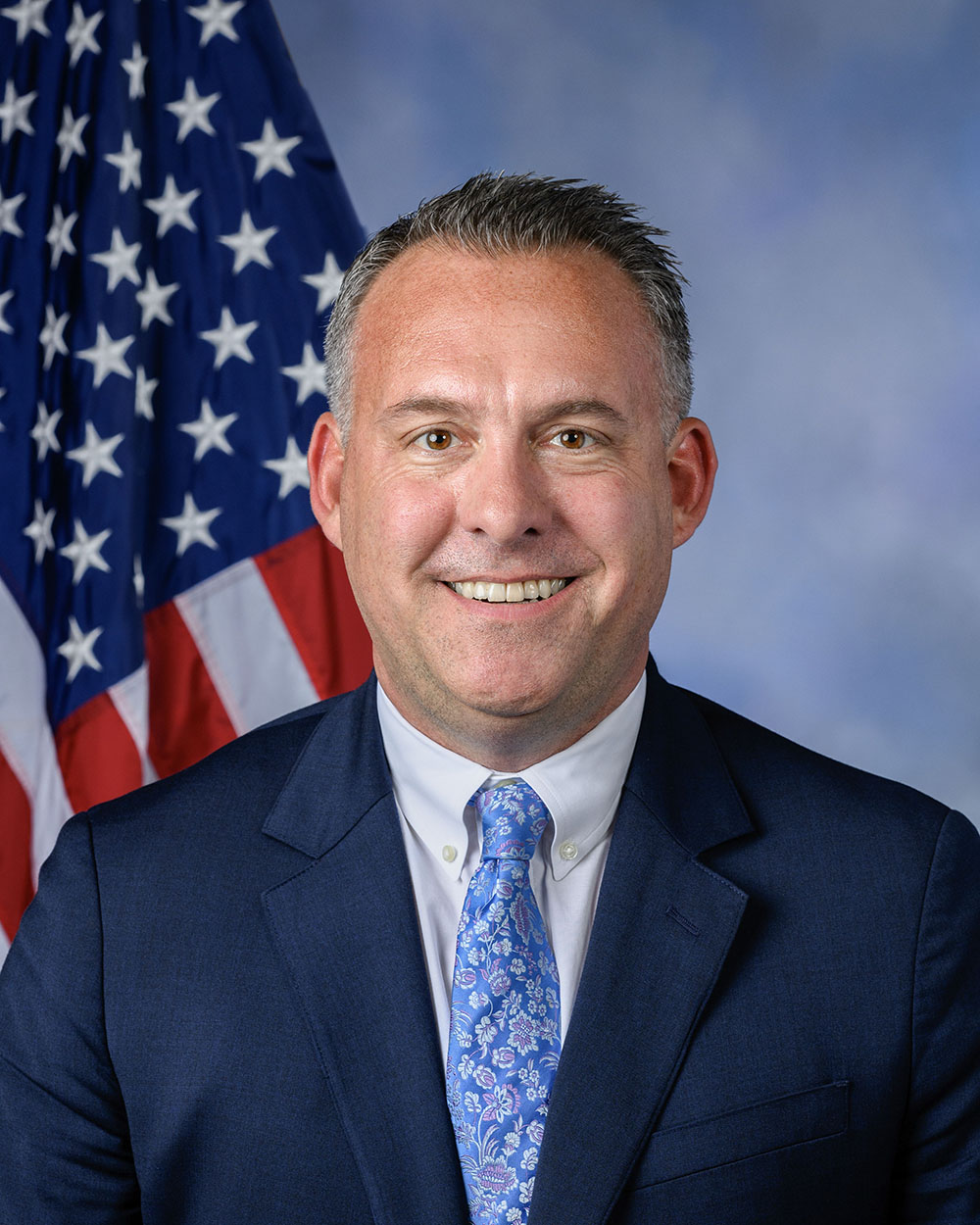
Rep. Adam Gray
Sponsored bills
Maddy summaryHR 1046, the Marc Fischer Memorial Act, requires the Bureau of Prisons to implement digital mail scanning technology at all federal prisons to detect fentanyl and other synthetic drugs in inmate mail. It mandates a strategy within 90 days of an evaluation, including 100% scanning of all mail, digital copies of mail to inmates within 24 hours, and physical mail delivery within 30 days for non-contaminated items. The bill directly affects federal prison staff, inmates, and the Bureau of Prisons by aiming to reduce drug-related overdoses and alleviate staff workload tied to mail processing. Implementation must be completed within three years, with annual reports tracking detected drugs and strategy efficiency. The legislation focuses on concrete technological and procedural changes to enhance safety, referencing a successful pilot program at two facilities.
Maddy summaryThe ORPHAN Cures Act (HR 946) adjusts how the government calculates approval timelines for certain rare disease treatments under the Drug Price Negotiation Program. It clarifies that periods when a drug was previously designated as an "orphan drug" (for rare diseases) won't count toward the timeline for price negotiations. The bill also broadens the definition of "rare disease" to cover multiple conditions simultaneously, aligning with existing federal law. This directly affects manufacturers of orphan drugs by potentially extending their exclusivity periods before price negotiations begin.
Maddy summaryThis resolution expresses the House of Representatives' position that Congress should take steps to prevent the privatization of the United States Postal Service (USPS), ensuring it remains a federal independent agency. It highlights USPS’s constitutional role, self-sustaining nature (relying on service revenue, not taxpayer funds), and critical functions - serving 168 million addresses daily, supporting rural communities, and underpinning e-commerce. The resolution opposes privatization, noting it would raise prices, reduce services, and harm the $1.9 trillion mailing industry. As a non-binding resolution, it reflects the House’s stance but does not create new law or policy.
Maddy summaryHR 764, the Global Health, Empowerment and Rights Act, removes two barriers for foreign nongovernmental organizations (NGOs) seeking U.S. foreign assistance. It ensures these organizations cannot be denied funding solely because they provide health services (like counseling and referrals) using non-U.S. government funds, as long as those services comply with local laws. The bill also requires that foreign NGOs face the same rules on using non-U.S. funds for advocacy and lobbying as U.S. NGOs receiving similar aid. This directly affects international health-focused NGOs working in countries where U.S. aid is provided.
This bill increases the annual limit on the tax credit for qualified railroad track maintenance expenses (also referred to as the short line railroad tax credit) and expands eligibility for claiming the credit. Under current law, the tax credit is limited each tax year to $3,500 multiplied by the sum of the number of miles of railroad track owned or leased by the taxpayer (miles owned or leased) and the number of railroad track miles assigned to the taxpayer by a Class II or III railroad (miles assigned). This bill increases the annual limit to $6,100 multiplied by the sum of miles owned or leased and miles assigned. The $6,100 amount used in the calculation of the tax credit limit is adjusted for inflation for tax years beginning after 2025. The bill also expands eligibility for the tax credit to include gross expenses for maintaining railroad tracks owned or leased as of January 1, 2024. Under current law, the tax credit is limited to gross expenses for maintaining railroad tracks owned or leased as of January 1, 2015.
Maddy summaryHR 337 redirects $3 million annually from unobligated funds to support groundwater recharge, aquifer storage, and water source substitution projects. It authorizes $3 million per year for fiscal years 2026-2031 to be transferred to the Secretary for these specific water management initiatives. The bill directly affects state and local water agencies implementing these projects by providing dedicated funding. It does not create new programs but reallocates existing unobligated funds from the Infrastructure Investment and Jobs Act. The key mechanism is the annual transfer of $3 million for these water storage and supply projects.
Maddy summaryHJRES 4 proposes a constitutional amendment to require a three-fifths vote (60 Senators) to end debate on most Senate legislation, instead of the current simple majority for cloture. This would directly affect Senate procedure by making it harder to advance bills without broad consensus, applying to all pending legislation except presidential nominations. The key provision changes the threshold for ending debate from a simple majority to 60 votes, as specified in the proposed constitutional text. If passed, this would alter how the Senate manages floor time for bills, though it would require ratification by 38 states to become law.