

Maddy summaryHB 56 increases penalties for drivers who flee from law enforcement and engage in stunt driving, while also requiring police agencies to provide specific training on motor vehicle pursuits. The bill expands the definition of aggravated vehicular homicide to include deaths or serious injuries caused by reckless or negligent driving in construction zones, even if the offense was only a minor speeding violation. Additionally, it reclassifies certain driving-related fees to be collected by county clerks and directs those funds toward title administration costs and clerical pay supplements. These changes apply to anyone operating vehicles such as cars, motorcycles, and utility trucks, with stricter consequences for repeat offenders or those driving without a valid license.
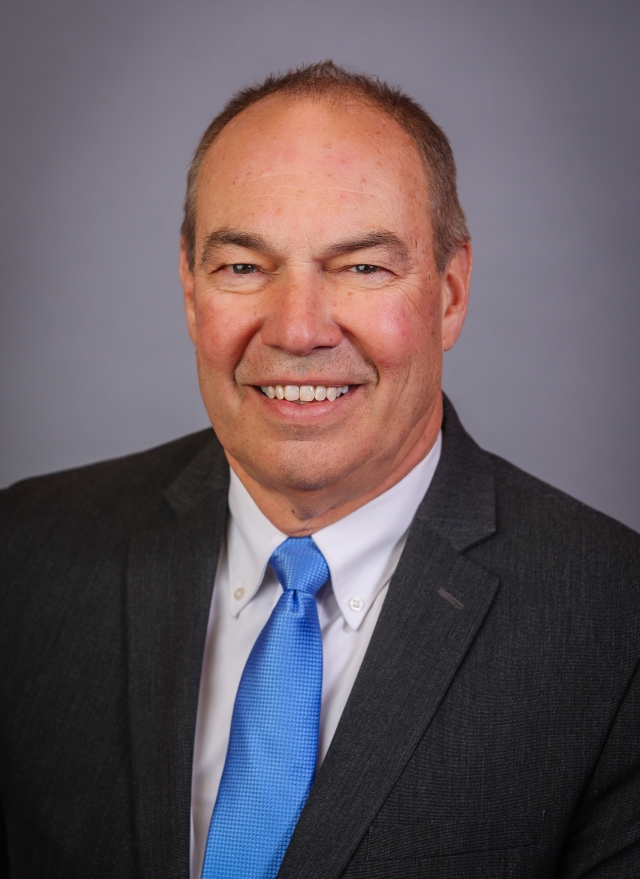
Rep. Bob Peterson
Sponsored bills
Maddy summaryHB 179 clarifies how time limits work in lawsuits involving vicarious liability, such as when an employer is held responsible for an employee's actions. The bill removes the rule that pauses a lawsuit's deadline if the defendant leaves the state or hides, but it keeps this pause in effect for standard statutes of limitations while excluding specific statutes of repose. Additionally, the law simplifies who must be sued in these cases by allowing plaintiffs to sue the primarily liable employee without necessarily including the employer, except in medical, dental, legal, and other professional malpractice claims. This change aims to streamline legal proceedings and overrule a previous court decision regarding how these time limits are calculated.
Maddy summaryThis bill officially designates a specific stretch of highways in Greene and Brown counties as the Brigadier General Charles Young Memorial Historical Corridor. It defines the corridor by naming three connected sections of United States Routes 42, 68, and 62, along with the Simon Kenton Bridge. The legislation also authorizes the state director of transportation to place markers along these roads to indicate their new name. This change is primarily commemorative and does not alter traffic rules, funding, or other operational aspects of the highways.
Maddy summarySB 56 ratifies the Interstate Massage Compact, allowing Ohio to join an agreement with other states to create a multistate licensing system for massage therapists. This new framework aims to increase public access to services, improve safety, prevent fraud, and assist military families by enabling licensed professionals to practice across state lines with a single authorization. The bill establishes an Interstate Commission to oversee the program, facilitates the sharing of disciplinary and investigative information between states, and ensures that a therapist's home state retains authority to enforce its own laws even when the professional is working in another member state.
Maddy summaryHB 250 directs the state to update academic standards and model curricula for grades K-12 in subjects including English, math, science, social studies, technology, financial literacy, fine arts, foreign languages, and physical education. The bill specifically requires that social studies standards cover the original texts of the Declaration of Independence, the Northwest Ordinance, and the U.S. and Ohio Constitutions, while also mandating that financial literacy and entrepreneurship standards include concepts related to free market capitalism. Additionally, the legislation establishes a separate Military Enlistment diploma seal fund and makes administrative corrections regarding the State Board of Education versus the Director of Education and Workforce.
Maddy summaryThis bill formally recognizes the Ohio District 7 Area Agency on Aging for receiving the 2024 USAging Aging Achievement Award. It highlights the agency's specific contributions, such as launching educational livestream programs like "Fall-Free Fridays" and "Functional Fridays" to help the community prevent falls and manage daily health challenges. The legislation praises the staff and volunteers for their dedication to service and integrity while directing the House Clerk to send an official copy of the resolution to the agency. Ultimately, the measure serves as a ceremonial commendation rather than enacting new laws or policies.
Maddy summaryThis bill authorizes Ohio to join the Social Work Licensure Compact, a national agreement that allows licensed social workers to practice across multiple states with a single license. The primary mechanism involves replacing the need for separate state licenses with a multistate authorization, provided the worker holds an unencumbered license in their home state. Key provisions include creating a shared data system to track licensure and disciplinary actions, establishing rules for mutual recognition of licenses, and ensuring that social workers remain accountable to the laws of the state where they are currently providing care. The legislation also specifically supports military families by facilitating practice in remote locations and encourages the use of telehealth to improve access to services.
Maddy summaryHB 195 creates a new adaptive mobility dealer license to regulate businesses that sell electric personal assistive mobility devices and low-speed micromobility devices. The bill amends existing vehicle definitions to explicitly exclude these specific devices from the standard "vehicle" and "motor vehicle" categories used in state law. By establishing a distinct classification, the legislation allows dealers to operate under a separate license tailored to the unique needs of adaptive mobility equipment rather than general vehicle sales regulations. This change directly affects businesses selling mobility aids and ensures these items are handled through a specialized licensing framework.
Maddy summaryHB 269 designates a portion of State Route 7 in Muskingum County as the "Sgt Bradley J. Harper USMC Memorial Highway" to honor a Marine. The bill also amends the law governing the "ALS Awareness" specialty license plate fund, specifying that contributions collected for this plate must be transferred to the ALS Association of Ohio. These funds are restricted to supporting programs that provide assistance, education, and clinical trial access to individuals with ALS, while explicitly prohibiting their use for abortion-related activities. The legislation is effective as of August 9, 2024.
Maddy summaryThis bill requires hospitals in the state to publish a list of standard charges for services that patients can schedule in advance, known as shoppable services. Hospitals must make this list available in a machine-readable format and update it to include at least 400 services within two years, increasing to 500 services within four years. The legislation also restricts hospitals from selling or using personal data collected from their online price tools for targeted advertising. Additionally, the state health director is tasked with monitoring compliance and maintaining a public list of hospitals that fail to meet these new requirements.