

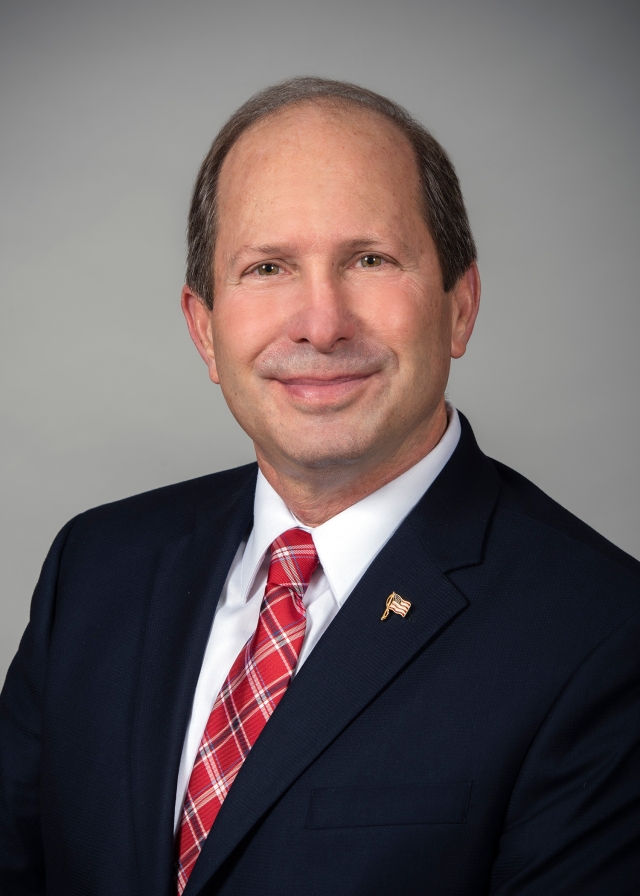
Maddy summaryThis bill formally recognizes Elliot Forhan for his distinguished service as a member of the Ohio House of Representatives. It designates him as an esteemed representative and directs the House Clerk to send an official copy of the resolution to him. The measure serves as a commemorative gesture honoring his legislative work and community leadership rather than enacting new laws or policies.
Sponsored bills
Maddy summaryThis bill formally recognizes Mike Loychik for his distinguished service as a member of the Ohio House of Representatives. It honors his background as a U.S. Air Force veteran, business owner, and community leader who served constituents in Trumbull, Ashtabula, and Knox counties. The resolution commends his work on various committees and his leadership roles, including co-chairing the Sportsmen's Caucus for Ohio. Finally, it directs the House Clerk to send an official copy of this commendation to Loychik.
Maddy summaryHB 602 exempts home education learning pods from county and township zoning restrictions that would otherwise limit where they can be located. The bill prevents local zoning boards from imposing extra rules specifically targeting these groups, though it maintains the requirement that properties must still meet general zoning standards applicable to all buildings. Additionally, the legislation updates definitions within child care regulations to clarify terms such as "child care," "child day camp," and "chartered nonpublic school." These changes directly affect families organizing home education pods and local governments responsible for zoning and child care oversight.
Maddy summaryThis bill designates the first week of October as "Ohio Stormwater Awareness Week" to highlight the importance of managing rainwater runoff. The primary effect is to establish an annual timeframe for public education and awareness campaigns regarding stormwater issues. It does not alter existing laws or create new regulations but serves as a symbolic designation to encourage community engagement. The measure directly impacts state agencies and local organizations that might use this week to promote environmental stewardship.
Maddy summaryHB 79 allows electric distribution utilities to create and submit plans for energy efficiency and demand reduction programs to the Public Utilities Commission. To get approval, utilities must provide detailed information about their proposed programs, including costs, expected energy savings, and how they will be funded without double-charging customers. The bill also defines specific terms like "behavioral energy savings" and requires utilities to include plans for improving smart grid technology and managing peak demand. Once approved, these portfolios enable utilities to help residential and business customers save energy while ensuring the programs remain cost-effective and fair.
Maddy summaryHB 349 creates a program called EnergizeOhio to encourage the development of natural gas pipelines and related infrastructure by offering two main types of support to local governments and development organizations. First, it allows municipalities and counties to request that specific areas be designated as incentive zones, which would exempt up to 75% of qualifying property within those zones from certain taxes if the director determines that a lack of natural gas infrastructure is hurting local economic growth. Second, the bill establishes a loan fund that can provide interest-free loans for up to five years to help eligible entities purchase or lease land easements for building these pipelines, with the expectation that the loans will be repaid using revenue from selling or leasing those easements. Local governments must apply for these designations and loans, and the director of development is responsible for reviewing applications, making decisions, and managing the fund.
Maddy summaryThis bill prohibits state agencies and local government units from using public money to buy U.S. or Ohio flags that were not manufactured in the United States. It directly affects government entities such as county offices, townships, and municipal corporations by restricting their purchasing choices for these specific flags. The law requires that any flag acquired with taxpayer funds must be produced domestically, ensuring that the purchase supports U.S. manufacturing.
Maddy summaryHB 661 establishes new regulations for imitation meat and egg products, requiring schools and the Department of Education and Workforce to adopt policies that prevent the purchase of foods misbranded as meat or eggs or cultivated-protein products. The bill amends existing state codes to mandate these restrictions, aiming to ensure accurate labeling and consumer protection regarding alternative protein sources. By setting clear procurement standards, the legislation directly affects educational institutions and state agencies responsible for food purchasing decisions.
Maddy summaryHB 654, known as the STORK Act, proposes changes to Ohio's personal income tax code by creating a new exemption and credit specifically for conceived children. The bill would also redefine how "adjusted gross income" is calculated for state tax purposes by adding certain interest and dividends while deducting others, such as those related to federal tax-exempt obligations and specific social security benefits. Additionally, the legislation expands deductions for medical care insurance and long-term care expenses, including adjustments for dependents who do not meet standard federal income limits. These provisions aim to align state tax calculations more closely with federal definitions while offering targeted relief for families and specific financial situations.
Maddy summaryHB 637 amends Ohio's Public Expression Protection Act to strengthen legal safeguards for individuals communicating on matters of public concern. The bill defines specific legal terms and clarifies which court orders are immediately appealable to prevent delays in protecting free speech rights. It establishes a mandatory expedited process that requires courts to pause most legal proceedings, such as discovery and hearings, for up to 60 days while a claimant argues that a lawsuit violates their free speech or press rights. However, the law excludes lawsuits against government officials acting in their official capacity and cases involving the sale of goods or services. Additionally, the bill allows courts to grant limited exceptions for urgent threats to public health or safety and permits limited discovery if specific information is needed to prove the free speech claim.