

Maddy summaryHB 250 directs the state to update academic standards and model curricula for grades K-12 in subjects including English, math, science, social studies, technology, financial literacy, fine arts, foreign languages, and physical education. The bill specifically requires that social studies standards cover the original texts of the Declaration of Independence, the Northwest Ordinance, and the U.S. and Ohio Constitutions, while also mandating that financial literacy and entrepreneurship standards include concepts related to free market capitalism. Additionally, the legislation establishes a separate Military Enlistment diploma seal fund and makes administrative corrections regarding the State Board of Education versus the Director of Education and Workforce.
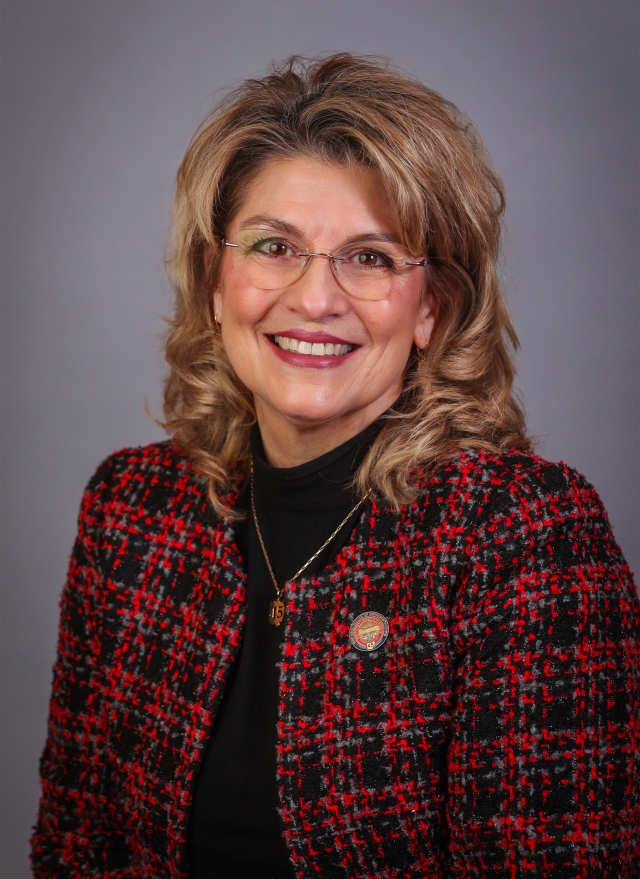
Rep. Jennifer Gross
Sponsored bills
Maddy summaryThis bill authorizes Ohio to join the Social Work Licensure Compact, a national agreement that allows licensed social workers to practice across multiple states with a single license. The primary mechanism involves replacing the need for separate state licenses with a multistate authorization, provided the worker holds an unencumbered license in their home state. Key provisions include creating a shared data system to track licensure and disciplinary actions, establishing rules for mutual recognition of licenses, and ensuring that social workers remain accountable to the laws of the state where they are currently providing care. The legislation also specifically supports military families by facilitating practice in remote locations and encourages the use of telehealth to improve access to services.
Maddy summaryHB 269 designates a portion of State Route 7 in Muskingum County as the "Sgt Bradley J. Harper USMC Memorial Highway" to honor a Marine. The bill also amends the law governing the "ALS Awareness" specialty license plate fund, specifying that contributions collected for this plate must be transferred to the ALS Association of Ohio. These funds are restricted to supporting programs that provide assistance, education, and clinical trial access to individuals with ALS, while explicitly prohibiting their use for abortion-related activities. The legislation is effective as of August 9, 2024.
Maddy summaryThis bill requires hospitals in the state to publish a list of standard charges for services that patients can schedule in advance, known as shoppable services. Hospitals must make this list available in a machine-readable format and update it to include at least 400 services within two years, increasing to 500 services within four years. The legislation also restricts hospitals from selling or using personal data collected from their online price tools for targeted advertising. Additionally, the state health director is tasked with monitoring compliance and maintaining a public list of hospitals that fail to meet these new requirements.
Maddy summaryHB 477 updates Ohio's Aeronautics Law to officially include seaplane bases, heliports, vertiports, and spaceports alongside traditional airports. The bill expands legal definitions to cover these newer facilities and requires the Department of Transportation to approve their use for commercial purposes before they operate. It also mandates that pilots operating aircraft in the state must hold a valid license and present it upon request, while maintaining existing rules for public access to publicly funded aviation sites.
Maddy summaryThis Ohio Senate Resolution urges the U.S. Congress and the Department of Veterans Affairs to prioritize mental health care for military personnel and veterans suffering from PTSD and other service-related stress disorders. The bill calls for prompt and comprehensive diagnosis and treatment, emphasizing that only qualified medical professionals should approve such care. It also requests that the government fully implement recommendations to consider mental health conditions before separating service members for misconduct and advocates for correcting discharge records for those separated due to mental health issues. Additionally, the resolution states that a veteran's civilian income should not affect their eligibility for healthcare benefits.
Maddy summaryHB 378 expands the definition of a qualifying homestead to include surviving spouses of service members who were killed in the line of duty, allowing them to receive a full property tax exemption. The bill specifically defines "killed in the line of duty" to cover deaths from injuries sustained during service, including heart attacks or illnesses caused by service-related stress. To be eligible, the surviving spouse must occupy the home and acquire ownership after the service member's death, provided the deceased was not discharged under dishonorable conditions. This legislation aims to provide financial relief to families of fallen service members by reducing their real estate tax burdens.
Maddy summaryThis bill requires state agencies, political subdivisions, and nonresidential construction contractors to use the E-Verify system to confirm the identity and legal work eligibility of their employees. It applies to public contractors and subcontractors working on construction or maintenance projects, as well as private employers with 75 or more workers and nonresidential construction companies. While the law mandates verification for all new hires and assigned workers, it allows for a waiver if an employee's status was previously confirmed by the same employer. Contracts that do not include these verification provisions are considered void, and agencies found in violation face a fine of five thousand dollars per incident.
Maddy summaryThis bill is a commemorative resolution honoring Jacob J. Derbin, a veteran and Euclid Police Department officer who passed away. It formally expresses the Ohio House of Representatives' condolences to his family and acknowledges his service and character. The resolution directs the House Clerk to send an official copy of the document to Derbin's family as a gesture of respect.
Maddy summaryThis bill proposes adding a new section to the Ohio Constitution to ban individuals holding citizenship in any country other than the United States from serving in elected public offices. The amendment requires the Secretary of State to verify a candidate's citizenship status and would apply to all elected positions within the state and its local political subdivisions. If passed by a two-thirds vote in the legislature and approved by voters, the rule would take effect immediately upon adoption.