

Maddy summaryThe bill HB 1564 relates to Indian child welfare in North Dakota but lacks specific details in the provided context about its provisions or changes to the law. It proposes amendments to several sections of the North Dakota Century Code concerning Indian child welfare procedures. Without further information on the exact amendments or their impact, the concrete policy changes cannot be described. The summary cannot specify who is directly affected or detail key mechanisms, as the official abstract only states the bill's general subject area. For a complete understanding, the full text of the bill or its detailed summary would be required.
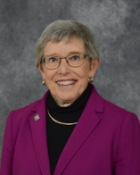
Sen. Judy Lee
Sponsored bills
Relating to virtual-currency kiosks; and to amend and reenact section 13‑09.1‑44 of the North Dakota Century Code, relating to virtual-currency kiosks.
Relating to a commercial entity's liability for publishing or distributing sexual material harmful to a minor; to provide a penalty; and to provide for application.
Maddy summarySB 2138 allocates $250,000 from North Dakota's general fund to the Department of Health and Human Services for grants to organizations providing care for elderly residents in rural areas. The funding is designated for the 2025-2027 biennium to support these providers directly. This is a funding measure, not a new policy, and specifically targets rural care organizations. The bill was signed into law on April 7, 2025.
Maddy summaryHB 1473 would create a new legal restriction in North Dakota for drug manufacturers by adding a subsection to section 43-15.3-08 of the state's Century Code. The bill prohibits specific actions by drug manufacturers that are not currently covered under existing law and establishes penalties for violations. It directly affects pharmaceutical companies operating in North Dakota by imposing new compliance requirements. The exact prohibited acts and penalty structure are defined within the new subsection of the state code.
Maddy summarySB 2255 amends North Dakota's Century Code to revise the qualifications, term length, and duties of the state health officer. The bill directly affects the state health officer position and the process for appointing and overseeing that role. Key provisions include updating the requirements for who can serve as health officer, the duration of their term, and the specific responsibilities they must perform. This procedural update refines the legal framework governing the position without altering the core public health functions of the role.
Maddy summarySB 2292 amends North Dakota law to update the reimbursement process for medical screenings and examinations following sexual assault. The bill revises subsection 3 of section 12.1-34-07 in the North Dakota Century Code. This change directly affects sexual assault victims in the state by modifying how their medical expenses related to the assault are handled. The key provision is the specific legal amendment to the reimbursement mechanism, though the exact procedural details are not specified in the provided abstract.
Maddy summarySB 2259 repeals North Dakota Century Code section 44-04-16, which previously governed the handling of "blanks and records." This change affects entities that previously followed this specific code section, such as government offices or record-keepers. The bill’s sole mechanism is the removal of the existing legal provision from the state code, with no new requirements or provisions added. It does not alter other laws or create new obligations.
Maddy summarySB 2191 authorizes a legislative study to examine health care services provided in local correctional facilities. The bill itself does not change existing policies or directly affect any individuals; it only creates a process for lawmakers to review current healthcare practices in jails. The study would assess how health care is delivered, potentially identifying gaps or inefficiencies. This is a procedural measure to gather information, not a policy change, and no specific mechanisms or outcomes are defined in the bill.
Maddy summarySB 2190 would expand North Dakota's medical assistance program to cover five specific services: family training for behavioral therapy support, dental screenings and assessments, dental case management for special populations (like children, elderly, and medically fragile individuals), asynchronous teledentistry to improve access, and applied behavioral analysis (ABA) therapy for behavioral issues. These services would directly affect medical assistance recipients, particularly those with special healthcare needs or in underserved communities. The bill explicitly states these new benefits would not apply to Medicaid expansion programs. The provisions aim to integrate oral health care with general health services and reduce barriers to dental and behavioral support.