

Maddy summarySB 714 prohibits corporal punishment (physical punishment) in all North Carolina public schools, making it the first statewide statutory ban despite no current school districts using it. The bill requires schools to report detailed data on any corporal punishment administered - including student race, gender, disability status, and reasons - to the State Board of Education annually. It also mandates parental notification and written explanations for any rare instances where it might still occur, while clarifying that physical restraint under federal law and reasonable force are excluded. The law applies starting the 2025-2026 school year and aligns with existing practices where all 115 school districts already prohibit the practice.
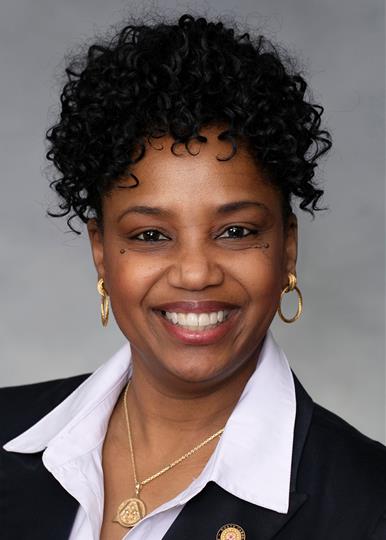
Sen. Kandie Smith
Sponsored bills
Maddy summarySB 722 creates the Online Safety Division within North Carolina’s Department of Justice, the Cyberbullying Unit at the State Bureau of Investigation, and an Online Child Safety Commission. It directly affects major digital platforms with over 5 million users in North Carolina and $25 million in annual revenue, requiring them to implement parental notification systems, disable manipulative design features ("dark patterns"), and provide robust privacy tools for children. Platforms must submit annual Child Impact Assessments detailing risks to minors, limit data collection for children, prohibit targeted advertising, and default to strict privacy settings. The law authorizes civil penalties of up to $500,000 per violation for noncompliance, with funding of $5 million for 2025-2026 allocated to establish these new state units.
Maddy summarySB 719 creates the North Carolina Victims of Crime Assistance (NC VOCA) Fund and a competitive grant program to support victim services. It establishes a fund within the Department of Public Safety, administered by the Governor’s Crime Commission, to award grants (up to $1 million per organization annually) to public agencies or nonprofits providing direct assistance to crime victims. The grants must address victims’ emotional, physical, financial, or safety needs, with recipients required to report on fund usage and victims served. This program is funded partly by increased criminal court fees ($147.50 in district court, $154.50 in superior court), with $0.95 from each fee directed to the fund, directly benefiting victims of crime across North Carolina through eligible service providers.
Maddy summarySB 729 clarifies that North Carolina public schools may conduct routine health screenings (such as vision, hearing, dental, and developmental screenings) without parental consent. Schools must still notify parents at the start of each school year about which screenings will be offered and share the results with them. This applies to all public schools in North Carolina and affects parents of students in all grades. The bill specifically excludes these screenings from the parental consent requirement that applies to other health services, while maintaining notice requirements.
Maddy summarySB 712, the "Caring for Our Caregivers Act," provides two key benefits for specific frontline workers. First, it exempts income earned by qualifying workers (including firefighters, EMTs, law enforcement, child care staff, teachers, and corrections officers) from North Carolina's state income tax. Second, it allocates $165 million annually to fund subsidized child care for families where at least one parent works in one of these qualifying roles, with priority given to child care workers. These provisions apply to taxable years beginning January 1, 2025, and the child care program starts July 1, 2025, for workers earning under $125,000 annually and working at least 30 hours weekly. The bill targets direct financial relief for essential service workers facing high childcare costs.
Maddy summarySB 725 establishes the Foster Care and Education Council in North Carolina to improve educational outcomes for youth in foster care. The 27-member council, jointly led by the Department of Public Instruction (DPI) and Department of Health and Human Services (DHHS), includes representatives from child welfare agencies, foster care advocates, education stakeholders, and youth with lived experience. The council’s key duties include reviewing federal and state education laws, analyzing data on foster youth academic performance (including race/ethnicity breakdowns), and developing policy recommendations to address barriers like school instability, transportation access, and coordination gaps. It specifically aims to ensure foster youth can stay in their school of origin and resolve disputes over educational decisions without cost barriers. The bill does not create new funding but mandates coordination between existing state agencies to implement these recommendations.
Maddy summarySB 721 requires North Carolina judges to issue a criminal summons instead of an arrest warrant for criminal charges filed by non-law enforcement individuals (like regular citizens), unless the charge involves domestic violence. Exceptions allow warrants if police confirm the facts, if police investigation would burden the complainant, or if other specified conditions exist. This law directly affects citizens who file criminal charges and changes how such cases are processed. It takes effect October 1, 2025, for all charges filed on or after that date.
Maddy summarySB 715 appropriates $500,000 to create a grant program for North Carolina community colleges. The program provides up to $20,000 per college to upgrade equipment and facilities needed to produce student ID cards that meet state voting requirements (G.S. 163-166.16). It directly affects community colleges that lack voter-acceptable student IDs, removing financial barriers to providing these cards. Colleges must submit plans for fund use by August 15, 2025, and the State Board of Elections must approve the IDs before they can be used for voting.
Maddy summarySB 717 (North Carolina) increases penalties for assault by strangulation by creating three new felony classifications based on injury severity. It establishes a Class F felony for strangulation causing serious bodily injury (defined as risk of death, disfigurement, permanent impairment, or prolonged hospitalization), a Class H G felony for strangulation causing physical injury, and a Class H felony for strangulation without specified injury. The law directly affects individuals convicted of strangulation assaults in North Carolina, defining "strangulation" as pressure on the throat/neck or obstruction of nose/mouth. The bill takes effect June 1, 2025, applying to offenses committed on or after that date.
Maddy summarySB 720 revises definitions in North Carolina's public utility law to establish a Clean Energy and Energy Efficiency Portfolio Standard (CEPS). It defines key terms like "clean energy facility," "renewable energy certificate," and "energy efficiency measure" to create a framework for utilities to meet clean energy and efficiency goals. The bill requires electric power suppliers to comply with these standards, protecting ratepayers (utility customers) from unjust or unreasonable fees. This directly affects public utilities, electric power suppliers, and their customers across North Carolina.