

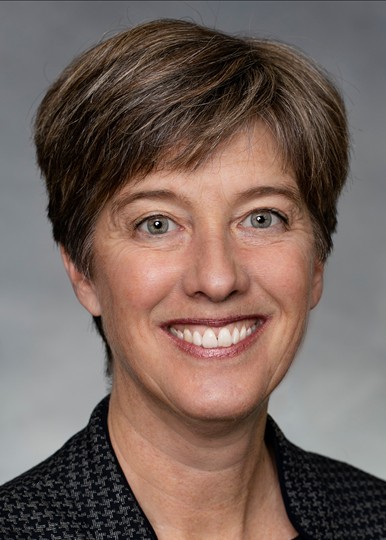
Photo of Julie Mayfield
D North Carolina Senate · District 49 On the 2026 ballot

Sen. Julie Mayfield

Compare
Total votes
1,345
all sessions
Attendance
94%
78 missed
Near the chamber average
With party
97%
of cast votes
Near the chamber average
Bipartisan score
2%
crosses aisle rarely
Near the chamber average
Sponsored
414
bills & resolutions
Near the chamber average
Committees
8
assignments
414 bills and resolutions

Sponsored bills

Total
414
Primary
57
Co-sponsor
357
This page
414
matching current filters
Primary SB 381
In committee · North Carolina Senate · Lead sponsor
Equality for All.

Maddy summarySB 381 expands North Carolina's anti-discrimination protections to cover housing and employment. It adds sexual orientation, gender identity, military/veteran status, and genetic information to the list of protected characteristics in housing (e.g., rentals, sales, loans) and employment (for employers with 15+ staff). The bill prohibits specific discriminatory actions like refusing housing based on protected status, denying employment opportunities, or making biased land-use decisions. It directly affects residents, renters, job seekers, and businesses operating in these sectors across the state.

In committee Mar 24, 2025 0 co-sponsors
Co-sponsor SB 384
In committee · North Carolina Senate · Co-sponsor
2025 Safe Drinking Water Act.

Maddy summarySB 384 requires North Carolina's Commission for Public Health to establish safe limits for specific toxic chemicals in drinking water by October 2025. It targets chemicals like PFAS, PFOA, PFOS, hexavalent chromium, and 1,4-Dioxane - known or suspected carcinogens - mandating limits based on scientific evidence and ensuring they do not exceed federal EPA standards. The law also requires annual reviews of new research to update these limits as needed. This directly affects all North Carolina residents who rely on public water systems, with special consideration for children, infants, and pregnant people.

In committee Mar 24, 2025 1 co-sponsor
Primary SB 334
In committee · North Carolina Senate · Lead sponsor
Repeal the NC Drug Tax.

Maddy summarySB 334 repeals North Carolina's drug tax, which was levied on certain pharmaceutical products. It directly affects taxpayers who paid this tax on medications subject to the levy. The bill removes the tax provision from state law but does not change existing tax liabilities or refund claims for taxes paid before the repeal took effect. This is a straightforward repeal with no new provisions or mechanisms.

In committee Mar 20, 2025 0 co-sponsors
Primary SB 326
In committee · North Carolina Senate · Lead sponsor
Economic Security Act.

Maddy summarySB 326, the Economic Security Act, raises North Carolina's minimum wage to $22 per hour starting January 1, 2026, with annual inflation adjustments based on the Consumer Price Index. It requires employers to provide paid sick leave, paid family medical leave, and workplace safety protections, while mandating equal pay for equal work regardless of gender. The bill also increases the tipped minimum wage, ends wage theft, prohibits employers from asking about criminal history on job applications ("ban the box"), and expands unemployment benefits for workers. These provisions directly affect all private and public employers and employees across North Carolina, including gig economy workers and essential workers.

In committee Mar 19, 2025 0 co-sponsors
Co-sponsor SB 226
died · North Carolina Senate · Co-sponsor
Align Benefits for Firefighters with Cancer.

Maddy summarySB 226 expands eligibility for death benefits under North Carolina's Public Safety Employees' Death Benefits Act to include firefighters who die from specific cancers. It adds any cancer diagnosed after January 1, 2022, that qualified a firefighter for benefits under the Firefighters' Cancer Insurance Program (or its predecessor, the Health Benefits Pilot Program) to the list of cancers presumed to be "killed in the line of duty." This means firefighters receiving cancer benefits under the program will automatically qualify for death benefits if they later die from that cancer. The bill also permanently establishes the Cancer Insurance Program as the successor to the pilot program and allocates $2 million annually for related death benefits starting July 1, 2025.

died Mar 17, 2025 1 co-sponsor
Co-sponsor SB 265
In committee · North Carolina Senate · Co-sponsor
Protecting Our Community Act.

Maddy summarySB 265, the "Protecting Our Community Act," regulates hemp-derived consumable products (like edibles or vapes with ≤0.3% delta-9 THC) and bans them on school grounds. It requires businesses to verify buyers' ages (no sales to under 21), mandates independent lab testing for THC levels, and defines terms like "distributor" and "final form product." The law directly affects hemp product manufacturers, sellers (including online retailers), and schools, which must prohibit these items on campus. Key provisions include mandatory child-resistant packaging at point-of-sale and restrictions on selling to minors, aiming to limit youth access while creating new regulatory requirements for the industry.

In committee Mar 12, 2025 1 co-sponsor
Co-sponsor SB 259
died · North Carolina Senate · Co-sponsor
School Psychologist Omnibus.

Maddy summarySB 259, the School Psychologist Omnibus, aims to improve the number and quality of school psychologists in North Carolina public schools. It provides $8.1 million for 2025-2026 to increase school psychologists' salaries by $650 monthly plus 12% for those with NCSP credentials, and allocates $5 million for a grant program offering signing bonuses (up to $5,000) to recruit psychologists, requiring a one-year commitment. Another $5 million funds an internship program with stipends for psychology students and supervisor bonuses, while $5 million supports a virtual training program at Appalachian State University. These provisions directly affect school psychologists, school districts, and psychology training programs across North Carolina.

died Mar 11, 2025 1 co-sponsor
Co-sponsor SB 233
In committee · North Carolina Senate · Co-sponsor
Make Corporations Pay What They Owe.

Maddy summarySB 233, titled "Make Corporations Pay What They Owe," would repeal a specific provision (Section 42.2) from a 2021 law (S.L. 2021-180) that was phasing out North Carolina's corporate income tax. This bill does not create new taxes but stops the planned reduction of corporate tax rates, meaning corporations would continue paying the current rate instead of a lower rate scheduled to take effect. It directly affects corporations subject to North Carolina's corporate income tax, as the repeal prevents the phaseout from proceeding. The bill is purely procedural, with no additional provisions or mechanisms beyond this repeal.

In committee Mar 6, 2025 1 co-sponsor
Co-sponsor SB 247
died · North Carolina Senate · Co-sponsor
Redirect Crisis Pregnancy Center Funds.

Maddy summarySB 247 redirects $6.25 million annually from crisis pregnancy centers to evidence-based maternal and infant health programs administered by North Carolina's Department of Health and Human Services, starting July 2025. It requires the State Auditor to audit Carolina Pregnancy Care Fellowship by March 2026 and mandates detailed reporting from all crisis pregnancy centers receiving state funds. These centers must disclose service types, demographics of clients, funding sources, and whether they misrepresent as medical facilities. The bill aims to increase transparency and reallocate resources toward proven maternal health initiatives.

died Mar 6, 2025 1 co-sponsor
Co-sponsor SB 246
died · North Carolina Senate · Co-sponsor
Create 13,000 Jobs Serving People With I/DD.

Maddy summarySB 246 increases North Carolina's Medicaid Innovations Waiver slots by 5,000 for the 2025-2026 fiscal year and another 5,000 for 2026-2027, directly serving approximately 19,000 people with intellectual or developmental disabilities (I/DD) currently on a waiting list. The bill allocates $134 million (2025-2026) and $357.34 million (2026-2027) in state funds to cover a state match for federal funds, enabling these slots to be distributed based on waitlist length. It requires that direct care workers receive at least $20 per hour and ensures unused slots are redistributed to providers meeting wage and service capacity standards. This policy aims to reduce the waiting list, support caregivers in returning to work, and stimulate local economies through new jobs and community-based services.

died Mar 6, 2025 1 co-sponsor
Showing 101 to 110 of 414 bills
Previous 1 … 10 11 12 … 42 Next