

Maddy summarySB 448 removes two key barriers to Medicaid eligibility for North Carolina workers with disabilities under the "Health Coverage for Workers with Disabilities" program. It eliminates the federal limits on unearned income (like Social Security benefits) and countable assets (savings) that previously disqualified people from maintaining Medicaid coverage while working. The bill requires the state to seek federal CMS approval within 90 days to remove these limits, with implementation effective after CMS approval (targeting a July 2025 effective date). This change directly affects individuals with disabilities who currently face penalties for saving money or receiving certain benefits while enrolled in Medicaid, allowing them to retain healthcare coverage without losing eligibility due to income or asset thresholds. The state will provide $165,000 annually in funding for implementation starting July 2025.
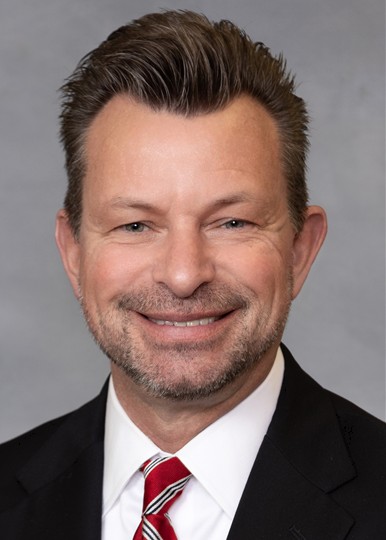
Sen. Tim Moffitt
Sponsored bills
Maddy summarySB 426, the Student Borrowers' Bill of Rights, requires the North Carolina Commissioner of Banks to license and regulate student loan servicers operating in the state, directly affecting borrowers who took out loans for education at North Carolina institutions or for in-state school expenses. The bill mandates that all student loan servicers (excluding banks, credit unions, state entities, and certain educational institutions) obtain a license through the Nationwide Multistate Licensing System, ensuring fair treatment and clear accountability. It establishes a Student Loan Ombudsman position to handle borrower complaints and defines key terms like "servicer" and "overpayment" to clarify protections. The law aims to prevent unfair practices by standardizing servicer conduct and providing borrowers with a formal complaint pathway.
Maddy summarySB 428 (Water Transfer Regulations) requires permits for large-scale transfers of surface water between North Carolina's river basins. It mandates a certificate from the state commission for transfers exceeding 2 million gallons per day (or increases of 25%+ for existing transfers), with exceptions for facilities operational by July 1993. The bill establishes public hearing requirements, including meetings in source and receiving basins, and requires applicants to evaluate alternatives to transfers. It directly affects water users, local governments, and utilities planning cross-basin water transfers. The law aims to regulate water movement between drainage areas while maintaining existing infrastructure.
Maddy summarySB 373 (Vaccination Schedule Variance/Minors) prohibits healthcare providers (including doctors, physician assistants, and nurses) from refusing to treat minors or their parents/guardians solely because they choose to delay or vary from the CDC's recommended vaccination schedule. The bill ensures minors cannot be discriminated against for this reason, while clarifying that mandatory vaccination requirements under state law (G.S. 130A-152) still apply. Violations would be considered unprofessional conduct by licensing boards. The law requires the Medical Board and Nursing Board to adopt implementing rules, with the main provision effective October 1, 2025.
Maddy summarySB 380 amends North Carolina's administrative procedure law to make it easier for trade and business associations to challenge agency rules on behalf of their members. The bill creates a presumption that these groups have legal standing to seek declaratory rulings (court interpretations of agency rules) unless the agency provides specific written reasons to the contrary. It also requires agencies to respond to such requests within 45 days, or the request is treated as denied for judicial review. The law applies to declarations requested on or after July 1, 2025, and directly affects business groups seeking to contest agency actions.
Maddy summarySB 374 requires businesses and individuals to obtain licenses or permits to install, inspect, repair, or service portable fire extinguishers and specific fire suppression systems (including kitchen, industrial, and engineered systems) in North Carolina. Businesses must get a firm license, while individuals must get an individual permit, both issued by the State Fire Marshal. The bill exempts routine visual inspections by fire chiefs, fire marshals, or employees of firms working on their own systems. It also mandates standardized service tags with detailed work dates and gives the State Fire Marshal authority to set installation standards and fees. This applies to systems required by state or local fire safety rules.
Maddy summarySB 376 increases funding for North Carolina's State Auditor's Office to enhance oversight of state government finances. The bill allocates $95,000 one-time for recruitment, $3 million for audit infrastructure, and $1 million for office space in 2025-2026, plus $6.7 million annually for 70 new staff, $500,000 for salary increases, and $5 million yearly for technology upgrades. These funds aim to expand audit capacity, improve fraud detection, and modernize systems for better accountability of taxpayer funds. The State Auditor must report on fund usage, including audit results and efficiency gains, by December 2025.
Maddy summaryThis bill requires all public school districts and state agencies to carry comprehensive insurance coverage (covering all types of damage beyond just fire) for public education and state properties, effective July 2025. Public education boards must join the State Public Education Property Insurance Fund unless they secure equivalent coverage and receive a waiver from the State Fire Marshal. It also creates tuition waivers for advanced fire/rescue training courses at the North Carolina Emergency Training Center, funded by state money. Additionally, the bill modernizes fire marshal operations, clarifies inspection authority, and updates insurance fund procedures.
Maddy summarySB 365 creates a new Class F felony for entering someone's property without legal justification during a declared state of emergency in an affected county and damaging or taking another person's temporary housing. It specifically targets acts against temporary shelters like tents, mobile homes, or vehicles used as emergency housing, excluding permanent structures. The law imposes felony penalties for these actions and allows victims to seek triple damages plus legal costs. It applies only to counties within an emergency area during an active state of emergency, as defined by existing state law, and takes effect December 1, 2025.
Maddy summarySB 366 increases Medicaid payment rates for personal care services to $7.50 per 15-minute increment and private duty nursing to $16.25 per 15-minute increment. It directly affects healthcare providers who deliver these services to Medicaid beneficiaries through programs like personal care services and private duty nursing. The bill allocates $119.2 million annually in state funds (with matching federal funds) to cover the rate increases for the 2025-2027 fiscal biennium. The changes take effect July 1, 2025.