

Maddy summarySB 747, titled "AI Learning Agenda," creates North Carolina's Office of Artificial Intelligence Policy within the Department of Commerce and establishes an AI Learning Laboratory program. The bill requires state agencies to inventory all AI tools they use or plan to use by 2026, including details on vendor, function, data sources, and risks. Businesses can apply to participate in the Learning Laboratory, where they may receive reduced penalties during testing (called "regulatory mitigation") in exchange for sharing data and findings with the Office. The Office must publish annual reports on AI policy findings and recommend legislation to address regulatory gaps or barriers.
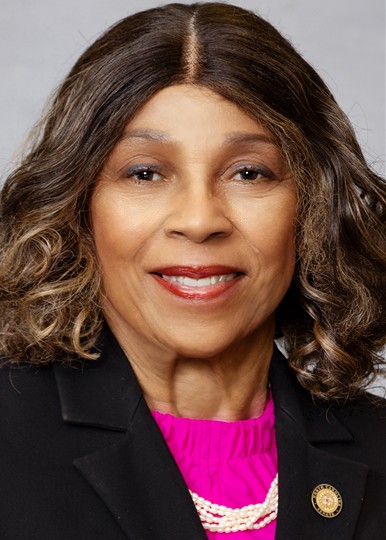
Sen. Joyce Waddell
Sponsored bills
Maddy summarySB 732 requires North Carolina's Department of Commerce to measure economic well-being using specific, publicly reported metrics like poverty rates, living wage job access, housing/childcare costs relative to income, and concentrated poverty areas. The bill appropriates $200,000 annually (2025-2027) to conduct bi-annual analyses and submit reports to the General Assembly by January 31 each odd-numbered year. These reports must include data on hardship, cost burdens, education costs, and neighborhood conditions across all counties. The law directly affects how state policymakers assess economic progress, shifting focus from market metrics alone to people's lived experiences. It does not change existing laws but establishes a framework for measuring policy impacts on residents' economic security.
Maddy summarySB 745 allows North Carolina child care centers operating under voluntary enhanced requirements to increase maximum group sizes for infants (0-12 months) from 10 to 12 children and for toddlers (12-24 months) from 12 to 15 children, while maintaining stricter staff-to-child ratios (e.g., 1:4 for infants). It also aligns nap time supervision rules for one-year-olds with existing rules for two-year-olds, requiring visible supervision by a staff member present in the room. The bill directly affects licensed child care centers seeking flexibility under voluntary enhanced licensing standards. These changes aim to provide capacity options without reducing staff ratios, effective upon enactment.
Maddy summarySB 743 appropriates $20.44 million in state funds to the Town of Davidson for emergency services, effective July 1, 2025. The bill directs the funds specifically for: constructing a new fire station ($17 million), purchasing an emergency vehicle ($3 million), buying police safety equipment ($100,000), and replacing breathing apparatus ($340,000). These allocations are intended to directly support Davidson's fire department, police department, and community safety infrastructure. The funding comes from the state's General Fund as a one-time grant, not recurring annual support.
Maddy summarySB 746 establishes a 11-member Study Committee on Automation and the Workforce to examine how automation impacts North Carolina's labor market, with specific focus on low-income and minority workers. The committee will review effects of AI, robotics, self-service technologies, and software on jobs, analyze education gaps and systemic barriers, and recommend strategies to support affected workers through retraining and new economic opportunities. It must submit its first report to the Governor by the 2027 General Assembly, including specific policy proposals for mitigating negative impacts. This bill creates a study mechanism, not new laws or programs, to inform future state action.
Maddy summarySB 738 establishes North Carolina's Digital Content Provenance Initiative to combat misinformation from AI-generated content. It requires state agencies to implement cryptographic verification (like digital watermarks) for all official communications, create a public registry tracking content origins, and develop public education tools to help residents identify synthetic media. The $500,000 allocated for Phase I (effective July 2025) will fund technical standards, partnerships with tech companies, and election-related safeguards. This directly affects state agencies creating digital content and aims to protect residents' ability to verify information during elections and public discourse.
Maddy summarySB 483, "The Children First Act," expands affordable child care access for North Carolina families by increasing financial assistance eligibility to 85% of the state median income and raising subsidy rates to match 2023 market costs. It allocates $50 million annually for subsidies and $15 million for grants to establish new child care facilities in rural or underserved areas, targeting "child care deserts." The bill also creates an employer child care credit and includes workforce licensing reforms to address staffing shortages. These provisions directly affect low-to-moderate-income families, child care providers, and employers seeking to support working parents.
Maddy summaryThis bill requires judges to find probable cause that giving notice would endanger lives before issuing no-knock search warrants. It also mandates officers to wait after announcing their presence for occupants to respond or for officers to verify if forced entry is necessary. These changes apply to all law enforcement executing search warrants in North Carolina, directly affecting how officers enter homes during searches. The bill amends North Carolina General Statutes §§ 15A-244(b) and 15A-249(b) to clarify these procedures.
Maddy summarySB 692 reduces the copayment rate for subsidized child care in North Carolina from 10% to 5% of a family's gross income. This directly affects low-income families who qualify for state-subsidized child care services. The bill amends existing law to lower the percentage parents pay for care, while maintaining the same blended and part-time care calculations (83% and 75% of full-time copayments, respectively). The change takes effect on July 1, 2025.
Maddy summarySB 656 exempts natural hair care services, blow-dry styling, and makeup artistry from mandatory licensing under North Carolina's Cosmetic Art Board. It converts the existing mandatory natural hair care specialist license into a voluntary certificate and expands where these services can be offered. The bill specifically defines "natural hair care" as tension-based techniques (like twisting or wrapping hair) without chemical treatments, "blow-dry styling" as using mechanical devices without chemicals or haircutting, and "makeup artistry" as cosmetic application without other licensed services. These changes directly affect service providers and businesses offering these specific cosmetic services, reducing regulatory barriers.