

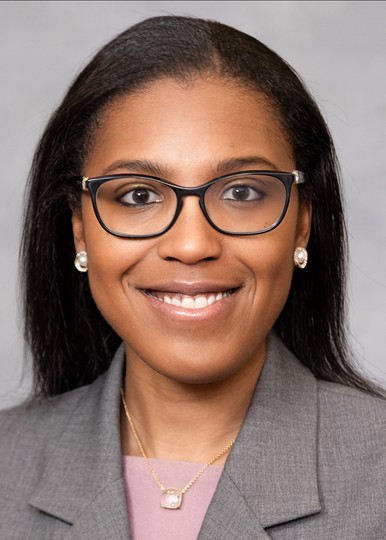
Photo of DeAndrea Salvador
D North Carolina Senate · District 39 On the 2026 ballot

Sen. DeAndrea Salvador

Compare
Total votes
1,345
all sessions
Attendance
77%
314 missed
Lower than 84% of chamber peers
With party
98%
of cast votes
Near the chamber average
Bipartisan score
1%
crosses aisle rarely
Near the chamber average
Sponsored
492
bills & resolutions
Higher than 83% of chamber peers
Committees
8
assignments
492 bills and resolutions

Sponsored bills

Total
492
Primary
55
Co-sponsor
437
This page
492
matching current filters
Co-sponsor SB 348
In committee · North Carolina Senate · Co-sponsor
Home Comfort Act.

Maddy summarySB 348, the "Home Comfort Act," provides $7 million annually for home modifications (like ramps, grab bars, and widened doorways) to help seniors aged 65+ with household incomes at or below 250% of the federal poverty level safely age in place. It also allocates $42.25 million yearly to expand in-home care services, including home health agency support and a $500 monthly stipend for family caregivers meeting income criteria. The bill funds a statewide resource guide and online portal to help seniors access aging-in-place programs, with priority given to rural communities. These provisions directly affect eligible seniors and their caregivers through concrete financial assistance and service expansions.

In committee Mar 20, 2025 1 co-sponsor
Co-sponsor SB 347
In committee · North Carolina Senate · Co-sponsor
Supporting Parents Who Serve.

Maddy summarySB 347 allows North Carolina legislators experiencing childbirth, adoption, stillbirth, or miscarriage (a "triggering event") to vote remotely via a designated proxy. A legislator must file a written "voting designation" with the clerk, appoint a party leader as their proxy, and access real-time session streams. The proxy must vote in the chamber after over half the chamber has voted, and the arrangement lasts up to 16 weeks. This policy change enables legislators to fulfill constitutional voting duties while caring for newborns or managing family events, without altering voting outcomes or other legislative processes.

In committee Mar 20, 2025 1 co-sponsor
Co-sponsor SB 338
In committee · North Carolina Senate · Co-sponsor
NC Farmland and Military Protection Act.

Maddy summarySB 338, the NC Farmland and Military Protection Act, prohibits adversarial foreign governments (as designated by the U.S. Department of Commerce) from purchasing, leasing, or holding interests in agricultural land or land within 25 miles of military installations in North Carolina. The bill defines agricultural land as land used for farming (excluding up to 250 acres leased for research) and lists specific military bases like Fort Bragg and Camp Lejeune. Transfers violating the law are void, with compliance responsibility resting solely on the foreign government and the state - not other parties. The bill also allocates $50,000 for a farmland inventory starting July 1, 2025, and takes full effect for new land acquisitions on January 1, 2026.

In committee Mar 20, 2025 1 co-sponsor
Co-sponsor SB 353
In committee · North Carolina Senate · Co-sponsor
The Second Chance Coding Act.

Maddy summarySB 353, the Second Chance Coding Act, requires North Carolina's Division of Juvenile Justice to create a program teaching coding and computer skills to juveniles in youth development centers. The program must include specialized courses, industry certification opportunities, and workforce connections like mentorship and job placement to help these youth transition into careers after release. Implemented by January 1, 2026, with $250,000 in funding for 2025-2026, the bill aims to reduce recidivism by improving job prospects. It directly affects youth committed to juvenile facilities, focusing on concrete skill-building rather than speculative outcomes.

In committee Mar 20, 2025 1 co-sponsor
Co-sponsor SB 350
In committee · North Carolina Senate · Co-sponsor
Marijuana Justice and Reinvestment Act.

Maddy summarySB 350, the Marijuana Justice and Reinvestment Act, would legalize recreational cannabis for adults 21 and older in North Carolina, allowing possession of up to 2 ounces of cannabis, 15 grams of concentrate, or products containing no more than 2,000mg THC. It establishes a regulatory framework requiring licenses for cultivation, manufacturing, and retail sales, with mandatory lab testing, potency labeling, and restrictions on advertising. The bill directly affects North Carolina residents over 21, cannabis businesses, and communities disproportionately impacted by past cannabis prohibition - addressing the ACLU finding that Black individuals were 3.6 times more likely to be arrested for possession than white individuals despite similar usage rates. Key provisions include creating three funds to reinvest tax revenue into affected communities for substance abuse treatment, education, and business support, while requiring licensed businesses to prioritize diversity, fair wages, and community investment.

In committee Mar 20, 2025 1 co-sponsor
Co-sponsor SB 351
In committee · North Carolina Senate · Co-sponsor
Right to Start Act.

Maddy summarySB 351, the Right to Start Act, allows new businesses (corporations, S corporations, LLCs, partnerships, and other entities) less than five years old with under $5,000 in net income to defer their state income tax payment for one year. It also requires state agencies to prioritize contracting with businesses operating under five years and mandates the Department of Administration to collect and report annual data on these contracts, including demographic and geographic breakdowns. The bill directly affects small, newly formed businesses seeking tax relief and state procurement decisions. Key provisions include the tax deferral eligibility criteria and the data collection/reporting requirements for state contracts.

In committee Mar 20, 2025 1 co-sponsor
Co-sponsor SB 324
In committee · North Carolina Senate · Co-sponsor
2025 Safe Drinking Water Act.

Maddy summarySB 324, the 2025 Safe Drinking Water Act, requires North Carolina's Commission for Public Health to establish safe limits for harmful chemicals in drinking water by October 2025. It directly affects all North Carolina residents by mandating maximum contaminant levels (MCLs) for specific toxins like PFAS, PFOA, PFOS, hexavalent chromium, and 1,4-Dioxane - chemicals linked to cancer or serious health risks. The bill directs the Commission to base these limits on scientific evidence from other states and federal agencies, ensuring protections for vulnerable groups like children and pregnant people, while aligning with U.S. Environmental Protection Agency standards. The law also requires annual reviews to update these limits as new health science becomes available.

In committee Mar 19, 2025 1 co-sponsor
Co-sponsor SB 322
In committee · North Carolina Senate · Co-sponsor
Utility Worker Protection Act.

Maddy summarySB 322, the Utility Worker Protection Act, increases penalties for assaulting utility or communications workers who are visibly identifiable (e.g., wearing company-logo uniforms or hats) while performing their duties. It specifically targets assaults against workers providing electricity, natural gas, telecommunications, or internet services. The bill reclassifies such assaults as Class 1 misdemeanors, raising the punishment level for these offenses. This change applies to incidents occurring on or after December 1, 2025. The law does not affect prosecutions for offenses committed before that date.

In committee Mar 19, 2025 1 co-sponsor
Co-sponsor SB 325
In committee · North Carolina Senate · Co-sponsor
Create Dept. of Housing and Comm. Development.

Maddy summarySB 325 establishes North Carolina's Department of Housing and Community Development as a unified cabinet-level department, replacing fragmented housing and community development functions across state agencies. The department includes four divisions: Community Development (focusing on revitalization and broadband access), Housing (managing affordable housing, homelessness, and disaster resilience), Operations, and a Policy and Legislative Office. It directly affects low- to moderate-income residents through housing programs and community development initiatives, with $30 million in recurring funding allocated for the 2025-2026 fiscal year. The bill formalizes the department’s structure, mission, and governance, including a nine-member board appointed by the Governor and legislative leaders.

In committee Mar 19, 2025 1 co-sponsor
Co-sponsor SB 323
In committee · North Carolina Senate · Co-sponsor
Student Health and Responsibility Act.

Maddy summarySB 323 establishes a $9.6 million annual grant program (2025-2027) to provide free condoms and lubricants to students in North Carolina public high schools, community colleges, and UNC system institutions. It directly affects these educational settings by requiring grant recipients to offer supplies in designated campus locations without parental permission, while prioritizing student privacy and collaboration with health organizations. Key mechanisms include mandatory Student Health Advisory Committees, annual reporting on usage and health savings, and rules ensuring grants supplement rather than replace existing funding. The program aims to reduce STI-related healthcare costs and support student retention through preventive health access.

In committee Mar 19, 2025 1 co-sponsor
Showing 161 to 170 of 492 bills
Previous 1 … 16 17 18 … 50 Next