

Maddy summarySB 549 creates two new paid leave programs for North Carolina state employees, public school staff, and community college workers. It provides at least 56 hours of paid leave for pregnancy loss (including miscarriage, failed adoption, or surrogacy) and up to three consecutive workdays of paid bereavement leave for the death of an immediate family member (spouse, parent, child, etc.). The leave is in addition to existing sick/vacation time, requires a minimum service period that can be aggregated across state agencies and schools, and has no cash value upon termination. Funding of $1.8 million for pregnancy loss and $2 million for bereavement is appropriated from the General Fund for fiscal years 2025-2027, effective July 1, 2025.
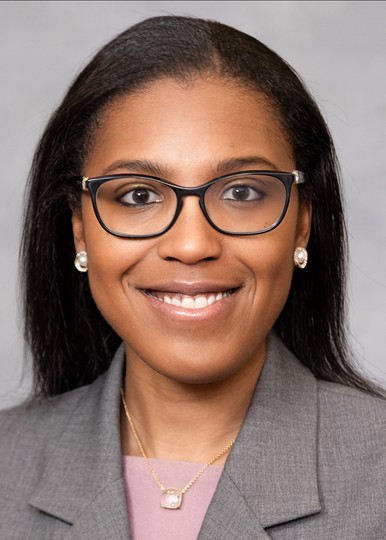
Sen. DeAndrea Salvador
Sponsored bills
Maddy summarySB 534 allocates $237.5 million in one-time state funding from the Capital and Infrastructure Fund for capital projects at two North Carolina universities. Specifically, it provides $125 million to North Carolina A&T State University for an Agricultural Research Classroom and $112.5 million to Winston-Salem State University for a Health, Physical Education, and Recreation Complex. The funding is designated for the 2025-2026 fiscal year and becomes effective July 1, 2025. This bill directly affects the operations and infrastructure development of these two public universities.
Maddy summarySB 628, the Safe Schools Transparency Act, requires North Carolina public schools to immediately notify parents or guardians about credible threats targeting their child, the school campus, weapons, or requiring law enforcement action. Schools must provide notifications via multiple methods (text, email, phone, or website) within one hour of law enforcement confirmation, including threat details and response actions. Failure to notify can result in school funding reductions ($5,000 per violation), administrative penalties, or termination for responsible staff, with repeated failures triggering corrective plans or additional training. Additionally, schools must publish annual safety reports online detailing threats, lockdowns, security measures, and safety policies for parent review.
Maddy summarySB 634, "Kayla's Act: Protecting Domestic Violence Victims," allows domestic violence victims to testify remotely in court to reduce trauma from facing their abuser. It directly affects victims in criminal cases involving domestic violence (as defined under North Carolina law), including assault, stalking, or violations of protection orders. The bill requires prosecutors to notify the defense 15 business days before remote testimony, with the defense needing to object in writing 5 days prior to prevent it. If the defense objects, a judge may still allow remote testimony if the victim would suffer serious emotional distress from testifying in person or if their communication would be impaired. The law also sets specific standards for how remote testimony must be conducted, including real-time audio/video and safeguards for cross-examination.
Maddy summaryThis bill requires most North Carolina employers to provide earned paid sick leave to workers. Employees would earn one hour of paid sick time for every 30 hours worked, with small businesses (10 or fewer employees) limited to 32 hours annually and other employers to 56 hours. Workers could use this time for their own illness, family medical care, or safety-related needs like domestic violence or sexual assault recovery. The law applies to most private-sector employees but excludes volunteers and certain exempt workers, directly affecting over 1.6 million North Carolinians currently without access to paid sick days.
Maddy summarySB 608 expands North Carolina's Work First Cash Assistance program to include pregnant women as eligible family members, increasing access for low-income households. It raises cash benefit amounts to 50% of the federal poverty level (up from 40%), increases income eligibility to 75% of federal poverty guidelines, and raises resource limits to $5,000 (with vehicle exemptions). The bill removes state-imposed time limits on assistance, keeping only federal requirements (e.g., 24-month limits for most cases), and updates definitions to clarify eligibility. These changes directly affect low-income families, particularly pregnant individuals and those with modest assets, by expanding support and reducing barriers to aid.
Maddy summarySB 597 requires North Carolina state agencies to evaluate the cumulative environmental impact of proposed permits on minority and low-income communities before granting approvals. This applies to mining, waste facilities, hazardous waste sites, and other projects requiring state permits, directly affecting permit applicants and state agencies like the Department of Environmental Quality. The bill mandates that agencies deny permits if they find the proposed project would have a disproportionate adverse impact on these communities, considering existing environmental burdens in the area. The law takes effect July 1, 2025, for all pending permit applications.
Maddy summarySB 560 establishes a state task force to address racial disparities in cases involving missing and murdered Black, Indigenous, and People of Color (BIPOC) women and girls. The task force, composed of state agency representatives and community members with lived experience, will develop policies to improve law enforcement responses, collect better data on missing persons, and create public awareness campaigns. It will specifically focus on ending the misclassification of cases (e.g., labeling Black girls as "runaways"), addressing systemic barriers in reporting, and developing culturally competent protocols for first responders. The task force must submit a report with recommendations within two years of the bill’s enactment.
Maddy summarySB 630, the School Mental Health Support Act, creates two programs to improve student mental health services in North Carolina public schools. It appropriates $50 million for a grant program to help schools hire mental health support personnel (like counselors and psychologists), prioritizing schools serving students without insurance or with disabilities. Additionally, it allocates $50 million for a loan repayment program covering 20% of student debt annually for mental health workers (e.g., counselors, psychologists) who graduated from UNC schools and work in high-need areas. Both programs require annual reporting to legislative committees on funding distribution and outcomes. The bill directly affects public school units and mental health professionals in North Carolina.
Maddy summarySB 622 requires North Carolina employers to provide earned paid sick leave, directly affecting over 1.6 million private-sector workers currently without access. Employees earn 1 hour of paid sick time for every 30 hours worked, with small businesses (10 or fewer employees) limited to 32 hours annually and larger employers to 56 hours. Workers can use this time for their own health needs, family care, or addressing domestic violence, sexual assault, or stalking. The law applies to all covered employees except certain exempt workers and volunteers, aiming to ensure workers don’t lose pay for essential health-related absences.