

Maddy summarySB 147, titled "Teacher License Reciprocity," changes North Carolina's teacher licensing rules to make it easier for out-of-state educators to work in the state. It prohibits the State Board of Education from requiring teachers licensed in other states to pass a standardized exam for a North Carolina continuing professional teaching license (CPL), provided they have at least three years of teaching experience and are in good standing with their home state. This directly affects educators seeking to move their teaching careers to North Carolina without retaking exams. The bill applies to license applications submitted on or after its effective date.
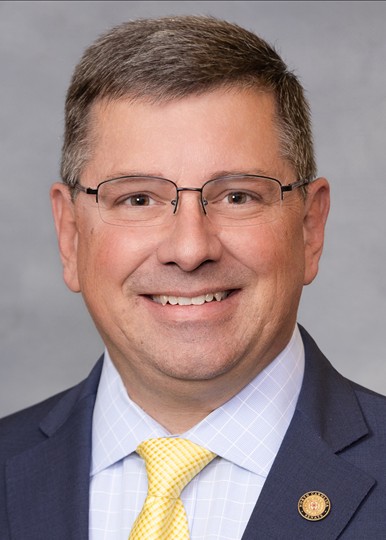
Sen. Bob Brinson
Sponsored bills
Maddy summarySB 126 requires North Carolina state agencies to create zero-based budget plans every eight years on a rotating schedule, starting in 2025. Agencies must justify all activities from a "zero" funding baseline (not building on past budgets), detailing current services, minimum service levels, potential impacts of cuts, and program outcomes. The bill specifically excludes statutory appropriations (legally mandated funds) from these plans. It affects all executive branch agencies, with the Department of Health and Human Services divisions first required to submit plans in 2025. This policy mandates agencies to justify each program's necessity and cost-effectiveness before requesting funding.
Maddy summarySB 123 requires all North Carolina public schools - including traditional, charter, regional, and university-operated schools - to display U.S. and North Carolina flags in every classroom and near school entrances, and to schedule daily Pledge of Allegiance recitation with age-appropriate historical instruction. The law explicitly states that no student or staff member may be compelled to stand, salute, or recite the pledge. It allocates $1 million (nonrecurring) for flag purchases in 2025-2026 and $100,000 annually starting in 2026-2027. This applies to all public schools beginning with the 2025-2026 school year.
Maddy summarySB 109, the Veterans Appreciation Act, increases property tax relief for disabled veterans in North Carolina by expanding the homestead exclusion to cover the value increase from U.S. Department of Veterans Affairs (VA) housing grants. It directly affects disabled veterans who receive VA housing grants for service-connected disabilities, allowing them to exclude up to $45,000 of their home’s appraised value plus grant-funded improvements from property taxes. The bill adds a prequalification process, letting veterans apply in advance of purchasing a home to confirm eligibility, with county assessors required to notify applicants within 30 days. This change takes effect for property taxes on homes owned after July 1, 2025.
Maddy summarySB 113 creates a new process for property owners to quickly remove unauthorized occupants (squatters) from residential property. Property owners or their authorized representatives must file a sworn affidavit with a court clerk or magistrate, pay a $25 fee, and provide specific details proving the occupant has no legal claim (e.g., no rent paid, not a tenant, and directed to leave). Once the affidavit is processed, local law enforcement must remove the person within 24 hours. This process does not apply to tenants with valid leases or rental agreements.
Maddy summarySB 24 requires that any new state health insurance mandate must be paired with the repeal of an existing mandate and include funding to cover the new cost. It directly affects North Carolina employers (especially small businesses) and taxpayers by targeting mandates that increase insurance premiums and state health plan expenses. Key provisions mandate that new health benefit requirements (like coverage for specific treatments or drugs) must include both a repeal of an equivalent existing mandate and recurring state funding for the new cost. The bill applies to all health insurance plans, including the State Health Plan for Teachers and State Employees, and takes effect 30 days after enactment.
Maddy summarySB 71 creates a new process for North Carolina property owners or their authorized representatives to expedite the removal of unauthorized occupants from residential properties. To use this process, the property owner must file a sworn affidavit (with a $25 fee) with a court clerk or magistrate, confirming the occupant meets strict criteria like having no lease, no rent paid, and the owner having previously requested their departure. Law enforcement must remove the occupant within 24 hours of receiving the affidavit, and the bill grants immunity to law enforcement and property owners acting in good faith. It also allows civil lawsuits against property owners for wrongful removal, with potential damages including triple the fair market rent.
Maddy summarySB 31, "The Wells Act," requires North Carolina's Legislative Library to request documentation (like membership lists, meeting minutes, and bylaws) from state boards, committees, and commissions that haven't met in the past year or failed to respond within 120 days. If inactive, these bodies are added to a list for the Joint Legislative Administrative Procedure Oversight Committee, which must recommend their repeal in the 2026 legislative session. The bill directly affects inactive state advisory bodies, aiming to eliminate those not functioning as intended. It creates a formal process to identify and eliminate redundant government structures without altering their operational rules.
Maddy summarySB 56, the Disaster Recovery Act of 2025 - Part I, authorizes the transfer of funds from North Carolina's State Emergency Response and Disaster Relief Fund (SERDRF) to the Hurricane Helene Disaster Recovery Fund. It applies to counties designated as part of the "affected area" under a federal disaster declaration for Hurricane Helene. The bill directs the General Assembly to use existing SERDRF funds for Helene recovery efforts, without creating new programs or changing eligibility. This procedural bill focuses solely on redirecting existing disaster relief funding to support recovery in Helene-impacted counties.
Maddy summaryThis bill allows students attending public, private, or homeschools without a specific sport or extracurricular program to participate at the nearest public high school offering that activity. It requires public schools to permit such participation under the same terms as enrolled students, with schools able to charge a reasonable, board-approved fee for non-enrolled students. The law mandates that school districts publish all approved participation fees online by October 15 each year. It applies beginning with the 2025-2026 school year.