

Maddy summaryThis bill requires dentists in North Carolina who administer general anesthesia or sedation to report specific adverse events to the state Board of Dental Examiners within 72 to 30 days, depending on the severity of the incident. The law defines adverse events as serious clinical emergencies such as cardiac arrest, anaphylaxis, or unplanned advanced airway placement, and mandates that dentists halt their procedures until the board approves resuming their permits after an investigation. Additionally, the bill directs a university research group to study whether a second qualified anesthesia provider is necessary when using certain deep sedation drugs and allocates $100,000 to fund this study. These changes take effect on October 1, 2026, with the research funding becoming available on July 1, 2026.
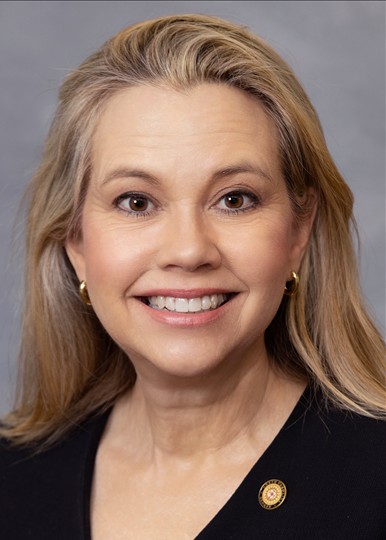
Sen. Amy Galey
Sponsored bills
Maddy summarySB 940, titled the 2026 Appropriations Act, allocates state funds for the 2026-2027 fiscal year to support the daily operations of North Carolina state agencies, departments, and institutions. The bill distributes money from the General Fund, the Highway Fund, and the Highway Trust Fund to cover essential services, including transportation maintenance, while also funding federal block grants for health and other programs. It incorporates existing budget rules and applies only to the specific fiscal year unless other laws indicate a longer duration. The legislation becomes effective on July 1, 2026, and includes standard provisions ensuring that any remaining funds revert to their original sources at the end of the year.
Maddy summaryThis bill, titled the Current Operations Appropriations Act of 2026, allocates state funding for the 2026-2027 fiscal year to cover the daily operations of North Carolina's government agencies, departments, and institutions. It distributes money from various sources, including the General Fund, the State Highway Fund, and the Highway Trust Fund, to support essential services such as transportation maintenance and federal block grant programs. The legislation also incorporates existing budget rules and specifies that its provisions apply only to the 2026-2027 period, with any unused funds reverting to the state at the end of the fiscal year.
Maddy summaryThis bill authorizes the North Carolina General Assembly to allocate funding for state agencies and departments for the 2026-2027 fiscal year. It distributes money from the General Fund, Highway Fund, and federal block grants to cover current operations and maintenance costs. Unused funds are required to revert to the state treasury at the end of the fiscal year unless otherwise specified by law. The act becomes effective on July 1, 2026, and applies specifically to the 2026-2027 budget period.
Maddy summaryThis bill appropriates $3 million from the state's General Fund to provide free hyperbaric oxygen therapy to North Carolina veterans diagnosed with traumatic brain injury or posttraumatic stress disorder. The funding is directed to a nonprofit organization called HBOT 4 HEROES, which will administer the treatment, manage the program, and conduct outcome assessments for an estimated 350 veterans. The act requires the organization to submit a detailed report to state oversight committees by June 30, 2027, covering the number of patients served, their locations, and how the funds were spent. These changes are set to take effect on July 1, 2026.
Maddy summaryThis bill authorizes the North Carolina Division of Motor Vehicles to create a special license plate called the 'America's Semiquincentennial' plate. The plate will feature the phrase 'America 250' and other designs to celebrate the 250th anniversary of the United States. Any registered vehicle owner in the state will be eligible to purchase this plate starting on July 1, 2026.
Maddy summaryThis bill expands the legal definition of an independent pharmacy in North Carolina to include community-based pharmacies owned by small groups with ten or fewer locations. The law specifically covers businesses that are not publicly traded and focus primarily on pharmacy services. Additionally, the legislation allocates $100,000 from the state's general fund to the Department of Insurance to help enforce these new rules starting in the 2026-2027 fiscal year.
Maddy summaryThis North Carolina bill directs the Department of Health and Human Services to provide new luggage, such as suitcases or backpacks, to children entering or currently in the foster care system when they are removed from a household. The legislation appropriates specific funds for this purpose and allows the department to accept additional donations, while explicitly defining new luggage as unused containers and excluding disposable bags. To ensure accountability, the bill requires an annual report detailing how often disposable bags are still used and how the new luggage inventory is managed. These changes take effect on July 1, 2026, aiming to improve the personal belongings provided to children in state care.
Maddy summaryThis bill amends North Carolina law governing owners' associations in condominiums and planned communities. It directly affects these associations and their members by setting specific limits on late fees (capping at $20 per month or 10% of an unpaid assessment) and fines (capping at $100), prohibiting managing agents from being paid based on fines collected, and requiring fair procedures for approving unit changes. The bill also mandates prelitigation mediation for disputes between associations and members and requires the Department of Justice to collect and report on related complaints. These changes aim to standardize association practices and provide clearer dispute resolution processes.
Maddy summaryThis bill revises the North Carolina Board of Dental Examiners by changing its composition and appointment process. The board will now consist of nine members: six dentists (appointed by the Governor and General Assembly), one dental hygienist, and two public consumer members. Members serve three-year terms with a two-term limit, and dental hygienists/consumer members cannot vote on issues related to their professions. This directly affects dental professionals, dental hygienists, and public consumer members who serve on the board.