

Maddy summarySB 281, the Essential Relief for Child Care Act, appropriates $50 million in nonrecurring state funds for the 2024-2025 fiscal year to continue compensation grants for child care providers. This funding directly supports licensed child care facilities across North Carolina, helping them cover operational costs and prevent closures. The bill requires the Department of Health and Human Services to maintain these grants at current 2024-2025 funding levels through the fourth quarter. It aims to address ongoing financial pressures on providers, which the bill states could lead to 20% facility closures without continued support.
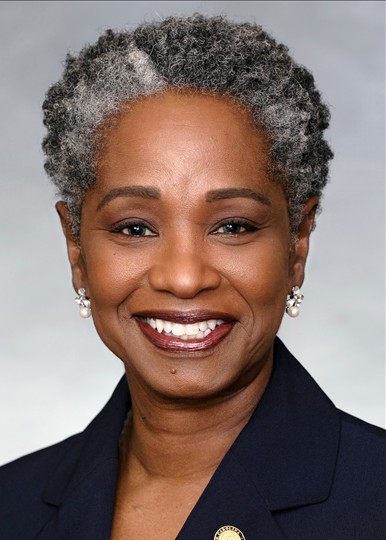
Sen. Val Applewhite
Sponsored bills
Maddy summarySB 273 requires day camps providing aquatic activities (like swimming or water instruction) for school-age children (up to age 18) to have certified lifeguards on-site. It mandates specific ratios (two lifeguards for every 25 children, plus one additional per 15 children), a 6-foot lifeguard chair, and a mandatory swim test before activities begin - requiring U.S. Coast Guard-approved life jackets for non-swimmers. The bill prohibits aquatic activities in hot tubs, spas, saunas, portable pools, and unfiltered water containers. It applies to all day camps operating for less than four months yearly and takes effect June 1, 2026.
Maddy summarySB 155 establishes the Social Work Interstate Licensure Compact to allow licensed social workers in North Carolina to practice in other participating states without obtaining separate licenses. It directly affects licensed social workers, particularly those serving military families or providing telehealth services, by removing barriers to cross-state practice. The bill creates a system where a "home state" license permits practice in all member states (called "remote states") through mutual recognition, reducing duplicate licensing requirements. Key provisions include standardized disciplinary information sharing between states and ensuring social workers comply with the laws of the state where the client is located during service.
Maddy summarySB 181 allocates $2 million annually from the General Fund for the 2025-2027 fiscal biennium to the North Carolina Department of Health and Human Services. This funding will support adding five new mobile crisis teams focused on serving communities with the highest need for mental health, developmental disability, and substance use crisis services. The bill directs these teams to operate within the state’s existing mental health framework, with implementation beginning July 1, 2025. It directly affects residents in underserved areas by expanding access to immediate crisis response through these specialized mobile units.
Maddy summarySB 167 revises North Carolina's funding for schools supporting students with limited English proficiency (LEP), requiring new allocation rules and a state study. It appropriates $16.2 million annually for 2025-2026 to schools with at least 20 LEP students or 2.5% LEP enrollment, funding classroom staff, materials, and training. Schools must use these funds to supplement, not replace, existing local spending. The bill also mandates a 2025 study to evaluate funding adequacy and recommend improvements to bilingual education programs.
Maddy summarySB 233, titled "Make Corporations Pay What They Owe," would repeal a specific provision (Section 42.2) from a 2021 law (S.L. 2021-180) that was phasing out North Carolina's corporate income tax. This bill does not create new taxes but stops the planned reduction of corporate tax rates, meaning corporations would continue paying the current rate instead of a lower rate scheduled to take effect. It directly affects corporations subject to North Carolina's corporate income tax, as the repeal prevents the phaseout from proceeding. The bill is purely procedural, with no additional provisions or mechanisms beyond this repeal.
Maddy summaryThis bill makes it a Class F felony in North Carolina to participate in a riot where someone attempts to overthrow the U.S. government, North Carolina government, or a local government (like a city or county). It also makes it a felony to incite such a riot if the incitement directly contributes to an attempt to overthrow government. The law applies only to offenses committed on or after December 1, 2025, and amends existing riot statutes to add this specific government-overthrow element as a felony trigger. It does not address past events, including the January 6, 2021, Capitol incident.
Maddy summarySB 246 increases North Carolina's Medicaid Innovations Waiver slots by 5,000 for the 2025-2026 fiscal year and another 5,000 for 2026-2027, directly serving approximately 19,000 people with intellectual or developmental disabilities (I/DD) currently on a waiting list. The bill allocates $134 million (2025-2026) and $357.34 million (2026-2027) in state funds to cover a state match for federal funds, enabling these slots to be distributed based on waitlist length. It requires that direct care workers receive at least $20 per hour and ensures unused slots are redistributed to providers meeting wage and service capacity standards. This policy aims to reduce the waiting list, support caregivers in returning to work, and stimulate local economies through new jobs and community-based services.
Maddy summarySB 211 reenacts North Carolina's state Earned Income Tax Credit (EITC), providing a cash refund to low-to-moderate income workers. It allows eligible residents to claim a credit equal to 5% of the federal EITC amount they qualify for, which is refundable (meaning they receive a cash payment even if they owe no state tax). The credit applies to taxable years beginning on or after January 1, 2025, and directly benefits working individuals and families with low earnings. The bill reinstates a previously sunsetted provision, ensuring continued state-level support aligned with the federal EITC.
Maddy summarySB 200 allocates $150 million in one-time state funds to the North Carolina Housing Trust Fund specifically for housing relief in counties affected by Hurricane Helene. This funding will support housing assistance for residents displaced or damaged by the hurricane in areas designated under a federal major disaster declaration. The bill directs the funds to be administered through existing housing program rules (Chapter 122E of state law) for the 2025-2026 fiscal year. It directly benefits hurricane-impacted homeowners, renters, and communities in designated counties. The bill becomes effective July 1, 2025.