

Maddy summarySB 458, the "KinCare Act," expands North Carolina's sick leave policy by allowing employees to use accrued sick leave for the care of family members, not just for their own illness. It defines "family member" broadly to include children, parents, domestic partners, and others with close family-like relationships, and permits up to five consecutive days of sick leave annually for this purpose. Employers must allow this use under the same conditions as sick leave for the employee's own health needs, without extending federal FMLA leave limits. The bill applies to all employers (including state/local governments) but excludes certain benefits like workers' compensation or insurance plans. It takes effect October 1, 2025.
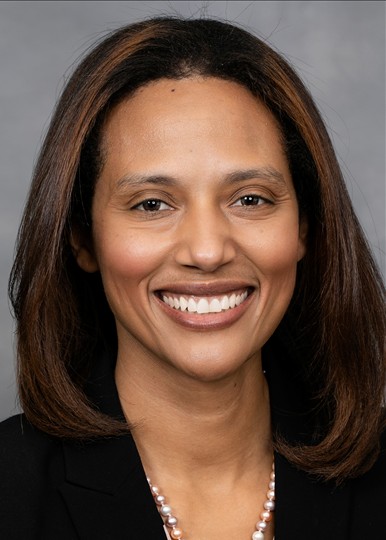
Sen. Sydney Batch
Sponsored bills
Maddy summarySB 452 raises North Carolina's minimum marriage age to 18 for all individuals, eliminating exceptions that previously allowed 16- and 17-year-olds to marry with court approval or parental consent. The bill repeals existing provisions (G.S. 51-2(a1) and G.S. 51-2.1) that permitted judicial authorization for marriages involving minors under 18, including requirements for court orders, guardian ad litem appointments, and best-interest determinations. This change directly affects minors under 18 who would have sought marriage under the previous law, removing all pathways for underage marriage except for those 18 or older. The policy shift standardizes the marriage age without exceptions, aligning North Carolina with states that prohibit marriage for individuals under 18.
Maddy summarySB 457 requires automatic voter registration for eligible North Carolina residents at driver's license offices, public agencies, community colleges, and UNC system institutions starting January 2026. Individuals applying for or renewing a driver's license, ID card, or college enrollment would be automatically registered to vote unless they explicitly decline during the process. The bill mandates clear disclosures about voter qualifications, penalties for false information, and an outreach campaign by the State Board of Elections. Registration applications submitted at these locations must meet standard deadlines (e.g., received by 5:00 PM, 25 days before an election) to be valid for upcoming votes.
Maddy summarySB 384 requires North Carolina's Commission for Public Health to establish safe limits for specific toxic chemicals in drinking water by October 2025. It targets chemicals like PFAS, PFOA, PFOS, hexavalent chromium, and 1,4-Dioxane - known or suspected carcinogens - mandating limits based on scientific evidence and ensuring they do not exceed federal EPA standards. The law also requires annual reviews of new research to update these limits as needed. This directly affects all North Carolina residents who rely on public water systems, with special consideration for children, infants, and pregnant people.
Maddy summarySB 360 requires every public school in North Carolina (including traditional, charter, regional, and laboratory schools) to have at least one full-time, permanent school nurse starting in the 2025-2026 school year. The bill appropriates $95 million in recurring state funds to the Department of Public Instruction to cover the cost of adding these nurse positions, ensuring funding supplements existing resources without replacing them. This policy directly affects all K-12 public schools across the state by mandating nurse staffing levels and providing dedicated funding to meet that requirement. The law becomes effective July 1, 2025, with implementation beginning for the 2025-2026 school year.
Maddy summarySB 383, titled "Right to IVF," protects patients' access to assisted reproductive technology (ART) like in vitro fertilization (IVF), gamete intrafallopian transfer, and zygote intrafallopian transfer. It prohibits North Carolina or its subdivisions from restricting or interfering with patients' access to ART or healthcare providers' ability to offer or perform these services. The bill also clarifies that fertilized eggs or embryos outside the uterus are not legally considered "human beings" under state law. Additionally, it allocates $500,000 annually from 2025-2027 to expand Medicaid maternal support services (the Baby Love Program), matching federal funds for this purpose. The bill directly affects patients seeking ART and healthcare providers offering these services in North Carolina.
Maddy summarySB 320 creates an additional retirement allowance for North Carolina state and local law enforcement officers who retire after meeting specific service and age requirements. Eligible officers with at least 30 years of service (or 55+ with 5+ years) under age 62 can choose between two calculation methods for their annual allowance: one based on their current pay rate and service, or one based on their pay rate at 30 years of service. The allowance, paid monthly from state funds, stops upon the officer’s death, reaching age 62 (for the first method), or meeting a time-based condition (for the second method). This change supplements retirement income without affecting other retirement benefits or salary increases.
Maddy summarySB 281, the Essential Relief for Child Care Act, appropriates $50 million in nonrecurring state funds for the 2024-2025 fiscal year to continue compensation grants for child care providers. This funding directly supports licensed child care facilities across North Carolina, helping them cover operational costs and prevent closures. The bill requires the Department of Health and Human Services to maintain these grants at current 2024-2025 funding levels through the fourth quarter. It aims to address ongoing financial pressures on providers, which the bill states could lead to 20% facility closures without continued support.
Maddy summarySB 211 reenacts North Carolina's state Earned Income Tax Credit (EITC), providing a cash refund to low-to-moderate income workers. It allows eligible residents to claim a credit equal to 5% of the federal EITC amount they qualify for, which is refundable (meaning they receive a cash payment even if they owe no state tax). The credit applies to taxable years beginning on or after January 1, 2025, and directly benefits working individuals and families with low earnings. The bill reinstates a previously sunsetted provision, ensuring continued state-level support aligned with the federal EITC.
Maddy summarySB 107 reestablishes nonpartisan elections for North Carolina's appellate, superior, and district court judges, directly affecting candidates running for these judicial positions. The bill mandates that candidates run without party labels on ballots, requires a primary to narrow candidates to two when more file, and sets specific filing deadlines (December 1-17) for notices of candidacy. It also requires candidates to be registered voters in their county and prohibits filing for multiple judicial offices simultaneously. The law aims to restore public confidence in an independent judiciary, as stated in the bill's preamble honoring Judge Joe John's advocacy for nonpartisan judicial elections.