

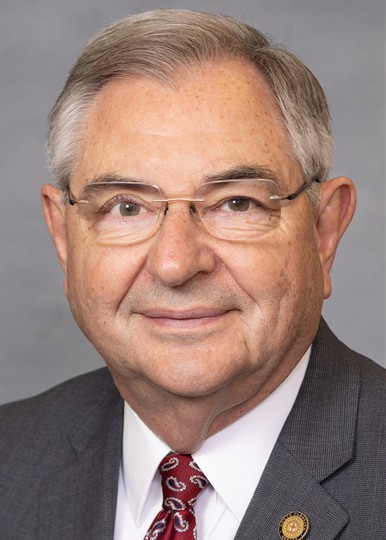
Photo of Jim Burgin
R North Carolina Senate · District 12 On the 2026 ballot

Sen. Jim Burgin

Compare
Total votes
1,773
all sessions
Attendance
92%
144 missed
Lower than 76% of chamber peers
With party
98%
of cast votes
Near the chamber average
Bipartisan score
1%
crosses aisle rarely
Near the chamber average
Sponsored
474
bills & resolutions
Higher than 84% of chamber peers
Committees
13
assignments
474 bills and resolutions

Sponsored bills

Total
474
Primary
148
Co-sponsor
326
This page
474
matching current filters
Co-sponsor SB 965
died · North Carolina Senate · Co-sponsor
DIT Consultation.

Maddy summaryThis bill requires North Carolina's Department of Information Technology to offer advisory and consultation services to state agencies that are currently exempt from its standard IT programs. To support this new requirement, the legislation appropriates $50,000 to create an interagency liaison network and takes effect on July 1, 2026. The law does not change the existing list of exempt agencies but ensures they can still access guidance on IT activities if they request it.

died May 4, 2026 1 co-sponsor
Primary SB 964
In committee · North Carolina Senate · Lead sponsor
Expanded Acc. to Doulas and Midwives/BC Lic.

Maddy summaryThis bill expands North Carolina Medicaid coverage to include doula services during pregnancy and the postpartum period while establishing a licensing system for certified professional midwives and birth centers. To support these changes, the state will seek approval from the federal government to cover doula care, create a new council to oversee midwife licensing, and appropriate funds to reimburse doulas and assist the workforce. The legislation defines specific skills doulas must possess, such as newborn care and cultural awareness, and sets up a regulatory framework that distinguishes licensed midwives from other healthcare providers like nurses and physicians.

In committee May 4, 2026 0 co-sponsors
Co-sponsor SB 961
died · North Carolina Senate · Co-sponsor
Hospital Authority Commissioner Reforms.

Maddy summaryThis bill reformulates the composition of hospital authority boards in North Carolina to ensure greater public and elected official representation. It mandates that each board include at least four public members and four elected officials, while also requiring that board meetings follow specific open meeting laws. To prevent all members from leaving at once, the law establishes a staggered term system where initial terms range from one to two years before standardizing to three years. Additionally, the state provides $50,000 in funding to assist hospital authorities with the transition to these new requirements by December 2026.

died May 4, 2026 1 co-sponsor
Co-sponsor SB 1019
In committee · North Carolina Senate · Co-sponsor
Grid Utilization.

Maddy summaryThis bill requires electric public utilities in North Carolina to submit detailed reports on how well they use their existing power grids. These reports must analyze current performance, explore ways to improve efficiency without building new lines, and outline plans for implementing these improvements. The state's Utilities Commission will review the reports and set specific targets for utilities to meet, while also establishing metrics to measure grid usage. Additionally, the bill mandates that the Commission decide within 240 days how these usage metrics will influence future decisions on approving utility investment costs.

In committee May 4, 2026 1 co-sponsor
Co-sponsor SB 938
In committee · North Carolina Senate · Co-sponsor
Privatize Spirituous Liquor.

Maddy summaryThis bill proposes to end the state and local government operation of alcohol stores in North Carolina by transitioning them to privately owned businesses. Starting in 2028, local boards must sell their store properties and inventory to private bidders, while the state will sell its remaining warehouse stock and property by 2029. The legislation also changes election rules to allow communities to vote on off-premises alcohol sales instead of traditional ABC store elections, with any profits from sales shared between the government and private operators.

In committee Apr 30, 2026 1 co-sponsor
Co-sponsor SB 941
died · North Carolina Senate · Co-sponsor
Exempt Treasurer from DHHS Review.

Maddy summaryThis bill exempts the North Carolina Department of State Treasurer from health service reviews conducted by the Department of Health and Human Services. It specifically allows the Treasurer to establish, develop, or acquire new health services without undergoing the standard approval process that other entities must follow. To support these changes, the legislation allocates $50,000 in nonrecurring state funds for the 2026-2027 fiscal year to cover related actions. The law is scheduled to take effect on July 1, 2026.

died Apr 30, 2026 1 co-sponsor
Primary SB 901
died · North Carolina Senate · Lead sponsor
CFSS Gun Prsnt. for Grade 7 and 9 Students.

Maddy summaryThis bill requires the North Carolina Center for Safer Schools to create an interactive presentation detailing the legal, medical, and emotional consequences of youth gun possession and related issues. It mandates that all public schools provide this presentation to every seventh and ninth-grade student, with parents receiving notice and the option to opt their children out at least two weeks in advance. The legislation also allocates $900,000 in recurring state funds starting in 2026 to help schools develop the necessary training and materials for delivering the program.

died Apr 30, 2026 0 co-sponsors
Primary SB 895
In committee · North Carolina Senate · Lead sponsor
Nonprofit Hospitals Tax Exemption.

Maddy summaryThis bill modifies tax exemptions for nonprofit hospitals in North Carolina by linking property tax relief directly to the cost of charity care provided to low-income patients. Under the new rules, a hospital's property tax exemption is calculated based on the actual cost of services given to uninsured or underinsured individuals with family incomes at or below 300% of the federal poverty level. Additionally, the legislation expands sales tax refunds for nonprofit hospitals, allowing them to recover taxes on over-the-counter drugs and capping the total refund at the lesser of a fixed dollar amount or the hospital's verified charity care costs. These changes are designed to ensure that tax benefits are tied to specific charitable activities rather than general operations. The provisions will take effect for tax years beginning on or after July 1, 2027.

In committee Apr 30, 2026 0 co-sponsors
Co-sponsor SB 937
died · North Carolina Senate · Co-sponsor
Marijuana and Vapor Products Reform.

Maddy summaryThis bill modifies North Carolina's marijuana laws by removing criminal penalties for possessing five grams or less of the substance and updating the state's definition of hemp to align with federal standards. It simultaneously increases penalties for manufacturing and selling marijuana and raises the minimum age for purchasing tobacco, vapor, and consumable products. The legislation also imposes higher excise taxes on vapor products and marijuana, expands the jurisdiction of alcohol law enforcement agencies to include these new categories, and allocates funds for evidence storage and disposal. Additionally, it introduces administrative changes to the vapor products directory to improve regulatory oversight.

died Apr 30, 2026 1 co-sponsor
Co-sponsor SB 913
died · North Carolina Senate · Co-sponsor
Screen Free Schools.

Maddy summaryThis bill, titled Screen Free Schools, requires public schools in North Carolina to create policies that limit the use of wireless devices like cell phones, tablets, and laptops during instructional time. Under the new rules, students in kindergarten through eighth grade must keep these devices off at all times on school property, while high school students may only use them during specific state testing periods unless a teacher grants permission for educational or emergency reasons. The legislation includes exceptions for students who need devices for individualized education plans, medical conditions, or teacher-approved learning activities. To help schools implement these changes, the state will provide $100,000 in funding for the 2026-2027 school year, and the law takes effect on July 1, 2026.

died Apr 30, 2026 1 co-sponsor
Showing 41 to 50 of 474 bills
Previous 1 … 4 5 6 … 48 Next