

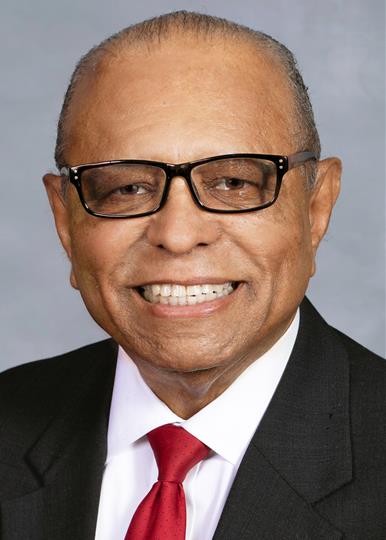
Photo of Nasif Majeed
I North Carolina House · District 99

Rep. Nasif Majeed

Compare
Total votes
2,356
all sessions
Attendance
96%
85 missed
Lower than 76% of chamber peers
With party
-
no party-line votes scored
Bipartisan score
-
no party-line votes scored
Sponsored
902
bills & resolutions
Higher than 88% of chamber peers
Committees
9
assignments
902 bills and resolutions

Sponsored bills

Total
902
Primary
21
Co-sponsor
881
This page
902
matching current filters
Co-sponsor HB 574
Passed · North Carolina House · Co-sponsor
Workforce Development Pilot Project.

Maddy summaryHB 574 establishes a Workforce Development Pilot Project in North Carolina. This bill provides funds to the Office of State Budget and Management to be allocated to the North Carolina Workforce Development Coalition (NCWDC). The NCWDC will then provide grants to eligible North Carolina-based employers, with 20 to 1,500 employees, to support employer-sponsored training programs. These grants aim to increase job creation, reduce employee turnover, improve wages, and upgrade worker skills, especially in industries with identified training gaps. Employers can receive up to 50% of eligible training costs or $2,000 per trainee, with a maximum of $40,000 annually per employer.

Passed Apr 28, 2025 1 co-sponsor
Co-sponsor HB 592
Passed · North Carolina House · Co-sponsor
Toxic-Free Medical Devices Act of 2025.

Maddy summaryHouse Bill 592, known as the Toxic-Free Medical Devices Act of 2025, aims to prohibit the use of a chemical called DEHP in certain medical devices within North Carolina. Specifically, it bans the manufacturing, selling, and distributing of intravenous solution containers and intravenous tubing that are intentionally made with DEHP. The prohibition for IV solution containers takes effect on January 1, 2030, and for IV tubing on January 1, 2035. The bill also prevents replacing DEHP with other similar chemicals in these devices and sets limits for unintentionally present DEHP, while exempting certain blood-related products. Violations of these provisions could lead to administrative penalties.

Passed Apr 28, 2025 1 co-sponsor
Co-sponsor HB 69
Passed · North Carolina House · Co-sponsor
Military and Veterans Educational Promise Act.

Maddy summaryHB 69, the Military and Veterans Educational Promise Act, provides two key benefits for military-affiliated individuals and veterans at North Carolina's University of North Carolina (UNC) schools. First, it requires UNC institutions to allow eligible military members (including reservists) and their spouses to defer admission for up to five years (for active duty) or two years (for reserve service) upon enrollment notice. Second, it establishes in-state tuition rates for honorably discharged veterans who served at least 90 days in the military, graduated from a North Carolina high school after 2004, had a North Carolina duty station, or received a Purple Heart. The bill applies to all UNC institutions beginning in the 2025-2026 academic year.

Passed Apr 16, 2025 1 co-sponsor
Primary HB 213
Passed · North Carolina House · Lead sponsor
Post NC Veterans' Benefits.

Maddy summaryHouse Bill 213, titled "Post NC Veterans' Benefits," requires employers in North Carolina to display a notice about veterans' benefits. This bill mandates that employers with five or more persons working in a room post this information in a conspicuous place. The Commissioner of Labor will provide a digital or printed form of this notice. The poster must include details on services such as benefits and claims, employment and training, housing assistance, and how to request military records, with the Department of Labor consulting the Department of Military and Veterans Affairs to create it.

Passed Apr 16, 2025 0 co-sponsors
Co-sponsor HB 833
In committee · North Carolina House · Co-sponsor
The Food Refrigeration Expansion for Safe Home-Processing (FRESH) Act.

Maddy summaryHB 833, "The FRESH Act," directs the Department of Agriculture and Consumer Services to expand its existing Home Processor Program. This expansion will allow individuals participating in the program to produce and sell refrigerated or frozen food items, as well as bakery products containing cream or cream cheese fillings, including cheesecakes. The Department is authorized to adopt temporary rules to implement these changes. All activities under the expanded program will remain subject to applicable food safety laws and inspections.

In committee Apr 16, 2025 1 co-sponsor
Co-sponsor HB 106
In committee · North Carolina House · Co-sponsor
Revive High-Need Retired Teachers Program.

Maddy summaryThis bill revives and expands a program that allows eligible retired educators to return to work in high-need schools. It defines "high-need retired teachers" as beneficiaries of the Teachers' and State Employees' Retirement System who meet specific retirement and service criteria, and are reemployed by local boards of education. A key provision ensures that earnings from this reemployment do not count against post-retirement earnings limits, allowing these teachers to receive both their full retirement allowance and a salary. The Department of Public Instruction is tasked with certifying these teachers, and local boards must report their employment status to the Retirement System.

In committee Apr 16, 2025 1 co-sponsor
Co-sponsor HB 1011
In committee · North Carolina House · Co-sponsor
NC Compassionate Care Act.

Maddy summaryThe "North Carolina Compassionate Care Act" (HB 1011) seeks to legalize the medical use of cannabis for individuals diagnosed with specific debilitating medical conditions. The bill establishes a system where qualified patients, certified by a physician, and their designated caregivers can obtain registry identification cards from the Department of Health and Human Services. It outlines a list of qualifying debilitating conditions, including cancer, epilepsy, and PTSD. This legislation also details the creation of a regulated system for the cultivation, processing, and dispensing of medical cannabis through licensed facilities. Its intent is to protect patients and their doctors from criminal and civil penalties related to the medical use of cannabis.

In committee Apr 16, 2025 1 co-sponsor
Co-sponsor HB 1008
In committee · North Carolina House · Co-sponsor
Stalking/Enhanced Penalties.

Maddy summaryHB 1008 enhances penalties for sexual battery and stalking when the perpetrator is a local government elected official. The bill specifically applies if the victim is a fellow member of the same governing board or an employee of that board. In such cases, sexual battery, which is typically a Class A1 misdemeanor, becomes a Class H felony. Similarly, stalking committed under these specific circumstances also escalates to a Class H felony. This act becomes effective on December 1, 2025, for offenses committed on or after that date.

In committee Apr 16, 2025 1 co-sponsor
Co-sponsor HB 246
Passed · North Carolina House · Co-sponsor
Liam's Law.

Maddy summaryHB 246, also known as "Liam's Law," increases penalties for specific driving offenses. The bill elevates reckless driving that causes serious bodily injury to a Class I felony. For street racing, it establishes new felony classifications for causing serious injury (Class F felony) or death (Class B2 felony), and mandates longer driver's license revocations, including permanent revocation for fatalities. Additionally, the bill increases the penalty for hit-and-run offenses that result in death to a Class D felony. These provisions directly affect drivers involved in such incidents.

Passed Apr 16, 2025 1 co-sponsor
Co-sponsor HB 114
In committee · North Carolina House · Co-sponsor
Employment Preference for Military Personnel.

Maddy summaryHB 114 (Employment Preference for Military Personnel) updates North Carolina's state employment policy to expand eligibility for hiring preference. It removes the requirement that military service must have occurred during a "period of war" and now includes active-duty service members, National Guard and Reserve members, and their spouses/dependents in the preference program. The bill ensures state departments, agencies, and institutions must grant hiring preference to qualifying individuals (including active-duty personnel during service) for all employment events like initial hires, promotions, and transfers. This change directly affects military service members, their families, and North Carolina state employers by broadening who qualifies for employment preference without wartime service restrictions.

In committee Apr 15, 2025 1 co-sponsor
Showing 101 to 110 of 902 bills
Previous 1 … 10 11 12 … 91 Next