

Maddy summaryHB 348 extends the period for carrying forward deferred property taxes on agricultural, horticultural, and forest land from three to six years. It creates local grant programs for counties and cities, using the excess tax funds generated by this change, to provide financial support to qualifying farmers for farm sustainability. The bill also requires cities to obtain county commission approval before annexing land classified under present-use value taxation. These provisions directly affect farmers who qualify for present-use value property taxation and local governments managing tax funds and annexation decisions.
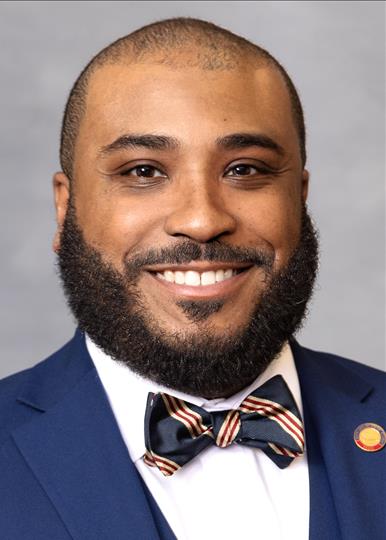
Rep. Terry Brown
Sponsored bills
Maddy summaryHB 14 allows North Carolina taxpayers who itemize deductions to claim a state income tax deduction for gambling losses, aligning with federal tax treatment. It directly affects individual taxpayers who itemize deductions on their North Carolina state tax returns and have wagering losses exceeding winnings. The bill amends state tax code to explicitly permit deducting gambling losses under Section 165(d) of the federal tax code, subject to federal rules. This change takes effect for taxable years beginning January 1, 2024. The bill does not alter federal tax rules or affect taxpayers using the standard deduction.
Maddy summaryHB 578, the Jason Flatt Act, requires all North Carolina public K-12 schools to implement suicide prevention education and training for school staff. It mandates that licensed educators complete at least one hour of annual suicide prevention training, while staff working with grades 6-12 must receive guidelines for identifying at-risk students and procedures for referrals. Schools must adopt a mental health plan including these elements, with initial staff training of six hours (within six months of hire) and two hours annually thereafter. The law applies to all public schools, charter schools, regional schools, and lab schools starting the 2025-2026 school year.
Maddy summaryHB 543 requires all applicants for athlete agent registration in North Carolina to undergo a criminal history background check as a condition of obtaining or renewing their license. This directly affects individuals seeking to work as athlete agents within the state, including new applicants and those renewing existing registrations. The bill mandates that applicants pay a $250 fee for the check (as specified in Section 2 of the bill), consent to fingerprinting, and allows the State Bureau of Investigation to conduct the check using state and federal records. All background information remains confidential and is not considered a public record under North Carolina law.
Maddy summaryHB 429 would have authorized a special license plate for North Carolina vehicle owners supporting the NC State University College of Veterinary Medicine's Turtle Rescue Team. The bill specified a $30 annual fee per plate, with $20 directly funding the Turtle Rescue Team's work rehabilitating turtles, while $10 went to a state fund. However, the bill explicitly states this plate program expired on July 1, 2016, meaning it is no longer active or available for purchase. The legislation primarily affected vehicle owners who chose to buy this specific plate, with the fees supporting the Turtle Rescue Team's wildlife rehabilitation services.
Maddy summaryHouse Bill 597 designates the osprey (Pandion haliaetus) as the official state raptor of North Carolina. This bill amends Chapter 145 of the General Statutes to formally adopt the osprey as a state symbol.
Maddy summaryThis bill designates May 17th of each year as "Lafayette Day" in the State of North Carolina. It amends the General Statutes to officially recognize this day in honor of Marquis de Lafayette's contributions to American independence and his visit to North Carolina.
Maddy summaryHB 121 provides local boards of education with additional flexibility in adopting their school calendars. It removes the current state-mandated earliest opening date for students (the Monday closest to August 26) and the latest closing date (the Friday closest to June 11). This change allows local boards to determine the specific opening and closing dates for public schools under their authority. The bill directly affects public schools and students in North Carolina and would apply starting with the 2025-2026 school year.
Maddy summaryHB 772, titled the North Carolina Student Lifeline Act, requires public schools and community colleges in North Carolina to provide students with the Suicide and Crisis Lifeline phone number. It mandates that institutions display the phrase "To reach the Suicide and Crisis Lifeline, call 988 or text HOME to 741741." in several locations. These locations include new student identification cards issued to students in grades six through 12, the school website, and the home screen of any electronic device issued to students. The information must also appear on school agendas or calendars, documents used during suicide awareness activities, and registration documents. Additionally, schools are required to annually verify the accuracy of the Lifeline contact information.
Maddy summaryHouse Bill 515, the North Carolina Economic Abuse Prevention Act, creates a new legal framework to protect survivors of domestic violence and children in foster care from "coerced debt." It defines coerced debt as debt incurred through duress, intimidation, or undue influence and provides pathways for individuals to notify creditors of such debt using specific documentation. Upon receiving adequate documentation, creditors must pause collection efforts while reviewing the claim. The bill also establishes that a person who causes another to incur coerced debt is civilly liable to the claimant for the debt amount, attorney's fees, and costs.