

Maddy summaryThis bill establishes an Interstate Compact for School Psychologists in North Carolina, allowing licensed professionals to practice in other participating states without facing repetitive licensing requirements. The legislation creates a commission to oversee the agreement and defines specific rules for mobility, including provisions for military families and standards for professional conduct. Additionally, the bill allocates funds to support a virtual training program for school psychologists. By streamlining the licensure process, the measure aims to increase the availability of qualified mental health services in schools across member states.
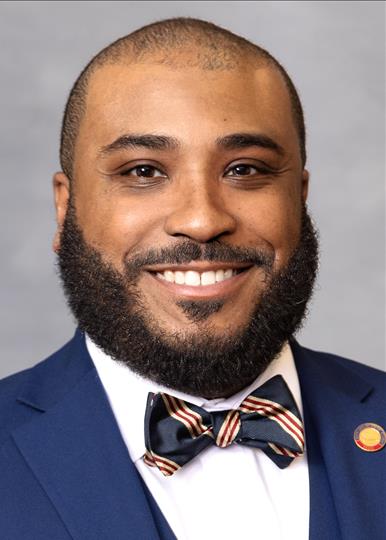
Rep. Terry Brown
Sponsored bills
Maddy summaryThis bill, known as the Mike Clampitt 1st Responder Tax Fairness Act, aims to expand tax exemptions for volunteer fire departments and rescue squads in North Carolina. Specifically, it allows these independent groups, which have two or fewer paid employees and are already exempt from state income tax, to avoid paying a highway use tax on specific emergency vehicles like fire trucks, forest firefighting units, and other emergency service vehicles. The change applies to vehicles when a certificate of title is issued on or after July 1, 2026, ensuring these organizations can acquire necessary equipment without incurring this particular tax. By broadening the existing exemption, the legislation directly benefits volunteer responders who operate outside of local government units.
Maddy summaryHouse Bill 433 allows licensed registered nurses (RNs) to serve as school nurses in North Carolina public schools. The bill prohibits the State Board of Education from requiring a four-year degree for school nurse employment. It specifies that RNs with at least two years of experience in a hospital or health clinic can work as school nurses without needing additional certifications or licenses. These qualified registered nurses will be paid under the certified school nurse pay scale.
Maddy summaryHouse Bill 390, titled "Alleviate the Dangers of Surgical Smoke," establishes new standards for surgical smoke evacuation in North Carolina. This bill requires all licensed hospitals and ambulatory surgical facilities to adopt and implement policies mandating the use of a smoke evacuation/filtering system during surgical procedures likely to generate surgical smoke. A smoke evacuation/filtering system is defined as equipment that captures, filters, and eliminates surgical smoke at its origin. The Department of Health and Human Services is authorized to take adverse action against facilities that violate these new requirements. This act is scheduled to become effective on January 1, 2026.
Maddy summaryThis bill clarifies that designating a historic district in Mecklenburg County does not count as "down-zoning" under state law. By making this distinction, the legislation ensures that local governments can create historic districts without needing the written consent of every property owner within the area, a requirement that currently applies to other types of down-zoning. The law also prohibits waiting periods that prevent applicants from resubmitting denied development requests. These changes apply retroactively to December 11, 2024, and affect only Mecklenburg County.
Maddy summaryThis bill allocates $4 million from the state's General Fund to the Lake Norman Community Development Corporation for the 2026-2027 fiscal year. The funding is divided equally, with $2 million designated for the Smithville Revitalization Plan to acquire property and build affordable homes, and another $2 million for additional affordable housing projects determined by the Corporation. Up to 15% of the total appropriation may be used for administrative expenses, and the funds become available starting July 1, 2026.
Maddy summaryHB 1145 allocates $2.5 million from the Highway Fund to the North Carolina Department of Transportation for the 2026-2027 fiscal year. These funds are designated to upgrade utilities and street infrastructure at the intersection of Highway 49 and Eastway Drive. The primary goal of this project is to improve pedestrian safety at this specific location. The legislation takes effect on July 1, 2026.
Maddy summaryThis North Carolina bill aims to increase access to quantum computing education by funding STEM programs in public schools, particularly those near military bases. It allocates $2.6 million to hire specialized teachers and create hands-on learning opportunities for students, while also establishing a $200,000 grant program for universities to partner with high schools on research projects. Additionally, the legislation creates an income tax credit for businesses that participate in these educational initiatives, though the specific details of the tax credit are not fully shown in the provided text.
Maddy summaryThis bill establishes a Child Welfare Case Escalation Team to provide an extra layer of safety review for juveniles with complex histories of abuse or neglect. The team, composed of state and local representatives, will be activated when cases meet specific risk criteria, such as multiple prior reports, patterns of medical neglect, or a history involving child fatalities. Once triggered, the team will conduct a thorough assessment of the case, identify gaps in services, and collaborate with county social services to develop improved safety plans. This new mechanism aims to ensure consistent quality assurance and better protect vulnerable children by addressing chronic issues that may have been missed in previous interventions.
Maddy summaryThis bill directs North Carolina's Utilities Commission to adjust electricity rates to reflect fuel costs that utilities incurred after a previous rate-setting period ended. It requires the commission to include these recent fuel expenses in rate calculations, provided they were reasonable and prudently spent, while explicitly excluding costs from before that earlier period. The law also mandates that any difference between what utilities collected and what they actually spent on fuel be corrected over a 12-month period with interest applied. Additionally, the bill allocates $10,000 in state funds to the commission to support the administrative work needed to implement these changes, which will take effect on July 1, 2026.