

Maddy summaryHB 671 establishes a four-year pilot program (2025-2026 through 2028-2029) that provides grants to North Carolina public high schools (grades 9-12) to form or support competitive speech and debate teams. Schools can receive up to $10,000 per team annually, covering coach stipends (capped at $2,500 for lead coaches and $1,500 for assistants) and competition expenses like travel and league fees. Participating schools must join the Tarheel Forensic League and National Speech and Debate Association, and the program allows students from schools without teams to join the nearest team (with students covering their own transportation). Funded by $500,000 yearly from the General Fund, the Department of Public Instruction will administer the program and report annually on grant usage and student academic outcomes.
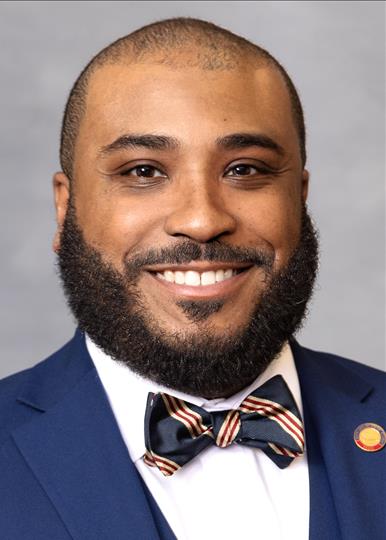
Rep. Terry Brown
Sponsored bills
Maddy summaryHB 944 appropriates $1.5 million from the state General Fund to the Department of Health and Human Services for a directed grant to Care Ring, Inc., a nonprofit community health clinic in Mecklenburg County. The funding supports the clinic’s operations to provide primary care services to medically vulnerable residents facing geographic, economic, or other barriers to care. This grant specifically targets patients who would otherwise be unable to access necessary primary care due to these challenges. The bill directs all funds to be used for the clinic’s core operations during the 2025-2026 fiscal year.
Maddy summaryHB 938, the Right to Repair Digital Electronics Act, requires manufacturers of digital electronics sold or used in North Carolina to provide independent repair shops and product owners with free access to diagnostic tools, repair information, and service parts at fair and reasonable prices. It mandates that manufacturers make available the same diagnostic software, firmware updates, and repair documentation they provide to their own authorized repair networks. The law prohibits manufacturers from forcing authorized repair providers to use proprietary formats if standardized alternatives exist, while protecting trade secrets and existing repair agreements. This directly affects independent repair businesses, owners of digital devices (like smartphones and computers), and manufacturers selling such products in the state.
Maddy summaryHB 937 allocates $11 million annually from North Carolina's sports betting tax revenue to provide salary supplements for public school athletic coaches. It requires eligible public school units to ensure each full-time coach receives a combined total of at least $3,000 per year in state and local funds, with schools maintaining prior non-state funding levels for coaches. Schools that replace state funds with local money forfeit future state allocations, and unspent funds flow to the North Carolina YMCA Alliance for youth sports programs. The bill applies to all public school athletic coaches meeting specific eligibility criteria and takes effect for the 2025-2026 school year.
Maddy summaryHB 890 requires North Carolina's Department of Public Instruction to create an Emergency Internet Service Plan (EISP) ensuring public schools can access temporary internet during state emergencies, like natural disasters. The bill establishes a dedicated Emergency Internet Service Fund with $3.9 million in initial funding for equipment and service contracts, which schools cannot be charged to activate. Key provisions include requiring the plan to cover activation conditions, equipment needs, data protection, and third-party partnerships, while ensuring the fund is nonreverting (unused money carries over). This directly affects all public school units by guaranteeing emergency internet access without requiring school-level funding. The plan must be updated annually and reported to the legislature.
Maddy summaryHB 915 reenacts a 25% tax credit for film production companies in North Carolina that spend at least $250,000 on qualifying expenses within the state. The credit applies to costs like equipment rentals, wages (excluding payments over $1 million to top earners), insurance, and employee benefits, but excludes political ads, news broadcasts, live sports events, and obscene content. The credit is capped at $20 million per feature film and requires producers to notify the North Carolina Film Office before claiming it. This reenactment makes the credit effective for qualifying expenses occurring on or after January 1, 2025, after a prior sunset clause expired in 2015.
Maddy summaryHB 943 appropriates $100,000 annually from 2025-2027 to expand North Carolina's Teacher Cadet Program (NCTCP), which targets high-achieving high school students - particularly those from underrepresented groups like people of color (42% of cadets vs. 21% of current teachers) and males (25% of cadets) - to enter teaching careers. The funds will support statewide teacher training workshops (in-person and online), prioritize expansion in counties with high teacher turnover (especially rural and low-performing schools), and develop training for underrepresented cadets using current teachers and students. This directly affects high school students in NCTCP participating in the program and their future schools, aiming to strengthen the teacher pipeline in underserved communities. The bill focuses on concrete funding for program growth, not policy changes to teaching standards or school operations.
Maddy summaryHB 957 creates a study committee to examine infrastructure challenges at North Carolina's HBCUs and MSIs, including building conditions, environmental risks, and maintenance needs. It establishes a $5 million Completion Assistance Program to provide up to $1,000 annually per student at six UNC HBCUs (Elizabeth City State, NC A&T, UNC Asheville, UNC Greensboro, UNC Pembroke, and Winston-Salem State) for tuition/fee balances, targeting students with Pell Grants who need financial aid to graduate on time. The bill also allocates specific infrastructure funds, including $5.1 million for Winston-Salem State's Hauser Hall renovations and $8 million for emergency steam repairs. These provisions directly affect students and campus facilities at the six designated institutions through financial aid and physical infrastructure support.
Maddy summaryHB 998 appropriates $5 million from North Carolina's General Fund to the Charlotte Mecklenburg Library Foundation for constructing a new main library. The funds are a one-time allocation for the 2025-2026 fiscal year, specifically designated for the library's new building project. This bill directly affects the Charlotte Mecklenburg Library Foundation as the recipient of the grant. It becomes effective July 1, 2025, and contains no policy changes beyond the funding authorization.
Maddy summaryHB 842 clarifies that North Carolina public schools may conduct vision, hearing, dental, and developmental screenings for students without requiring parental consent, but must notify parents at the start of each school year about all screenings offered and provide results for their child. This bill directly affects parents of students in public schools across North Carolina, particularly for kindergarten through third grade as noted in the bill text. Key provisions require schools to provide written notice of screenings and results to parents (instead of seeking consent for each screening), while maintaining existing requirements for other health services that do require consent. The law updates school health screening procedures under North Carolina General Statutes § 115C-76.46.