

Maddy summaryHB 546 modernizes North Carolina's Medicaid program by requiring the state to develop team-based care coordination for individuals with alcohol and opioid use disorders, including screening, medication, and recovery support. The bill also allows telehealth-only providers to enroll in Medicaid without needing a physical office in the state and mandates a statewide specialty plan for children in foster care or receiving adoption assistance, to be implemented by December 2025. These changes directly affect Medicaid beneficiaries with substance use disorders, telehealth providers, and eligible children and families. The Department of Health and Human Services must report on the implementation of the substance use care and telehealth provisions by October 1, 2025.
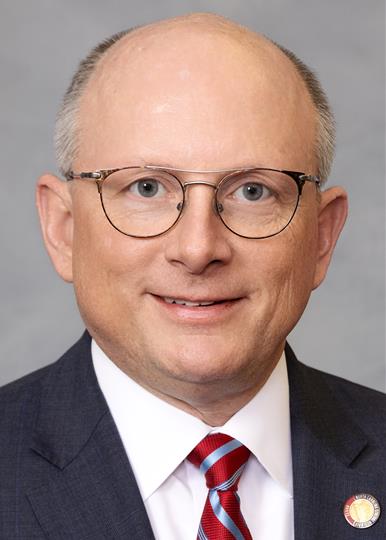
Rep. Tim Reeder
Sponsored bills
Maddy summaryThis bill establishes an Interstate Medical Licensure Compact in North Carolina, allowing physicians who meet specific qualifications to obtain medical licenses in multiple participating states through a streamlined process. The law creates an Interstate Commission to oversee the compact and sets clear standards for physician eligibility, including requirements for medical school graduation, passing licensing exams, specialty certification, and a clean disciplinary record. While the compact simplifies licensing for qualified doctors, it maintains that each state retains authority to regulate medical practice within its borders and can take disciplinary action against physicians licensed through the compact. The bill does not alter existing state medical practice laws but adds an additional pathway for physicians to practice across state lines.
Maddy summaryHB 576 makes technical revisions to North Carolina's laws governing the Department of Health and Human Services (DHHS). It designates DHHS as the agency managing school nurse funds, requiring school nurses to focus solely on health services (like health education and emergency response) rather than instructional duties. The bill extends until June 2028 the temporary use of the federal health insurance marketplace for determining Medicaid eligibility, and clarifies that Medicaid coverage for people released from prison continues for up to 12 months post-release. It also updates Medicaid provider screening rules to align with federal standards, particularly for Indian Health Program providers.
Maddy summaryHB 697 establishes North Carolina's first licensure requirements for genetic counselors. The bill creates a 5-member Genetic Counselors Licensure Board (with 3 licensed counselors, 1 physician, and 1 public member) to regulate the profession. Key provisions include defining "genetic counseling," setting standards for licensure (requiring ABGC certification or equivalent), establishing temporary licenses for interns, and granting the Board authority to issue, deny, suspend, or revoke licenses. This directly affects genetic counselors practicing in North Carolina, requiring them to obtain a license to legally provide services. The bill does not change healthcare access or funding but sets professional standards for this specific healthcare role.
Maddy summaryHB 612, the "Fostering Care in NC Act," updates North Carolina's laws governing child abuse, neglect, and dependency cases. It expands the definition of "abused juveniles" to include specific offenses like sexual crimes, human trafficking, and certain violent acts, affecting how cases are classified. The bill requires county social services directors to use either a family-centered assessment or a formal investigation when reviewing reports, and to collect military affiliation details of the juvenile's caregiver. It also clarifies that court jurisdiction over juveniles continues until age 18, emancipation, or death. These changes standardize responses to child welfare reports and improve information gathering for safety decisions.
Maddy summaryHB 373 allows University of North Carolina (UNC) institutions to offer tuition discounts to two specific groups: military students receiving federal or North Carolina National Guard tuition assistance, and students enrolled in employer-sponsored financial support programs approved by UNC. The discount covers the difference between the military/employer funding and full tuition, without creating new free tuition programs. UNC must report annually to the legislature on the number of students receiving these discounts and their financial impact on institutions. The policy takes effect for the 2025-2026 academic year.
Maddy summaryHB 480 creates a new pathway for doctors, physician assistants, and anesthesiologist assistants to obtain North Carolina medical licenses by transferring licenses from other states ("licensure by endorsement"). To qualify, applicants must have held an active license in another U.S. jurisdiction for at least five years (with two years of practice post-residency for doctors), have a verified full-time job offer in North Carolina, maintain good standing with no recent disciplinary actions, and meet practice hour requirements. The bill increases application fees for endorsement (e.g., $825 for physicians vs. $400 for standard licensure) and requires additional documentation within 180 days to keep the license active. This directly affects out-of-state medical professionals seeking to practice in North Carolina without retaking exams.
Maddy summaryHB 3 proposes several changes to local election procedures in North Carolina. It requires partisan elections for the Currituck County Board of Education (pending a 2026 referendum) and directly mandates partisan elections for the Pitt County Board of Education. The bill also standardizes municipal election timing, requiring all regular elections in Pamlico County municipalities, Simpson Village, and Monroe City to occur in even-numbered years. Additionally, it modifies vacancy procedures for Cabarrus County's Board of Commissioners. The bill is pending legislative action and requires voter approval in Currituck County for the school board change to take effect.
Maddy summaryHB 578, the Jason Flatt Act, requires all North Carolina public K-12 schools to implement suicide prevention education and training for school staff. It mandates that licensed educators complete at least one hour of annual suicide prevention training, while staff working with grades 6-12 must receive guidelines for identifying at-risk students and procedures for referrals. Schools must adopt a mental health plan including these elements, with initial staff training of six hours (within six months of hire) and two hours annually thereafter. The law applies to all public schools, charter schools, regional schools, and lab schools starting the 2025-2026 school year.
Maddy summaryHB 50 creates two new options for retired state and local law enforcement officers with at least 30 years of service or 55 years old with 5+ years of service. It allows officers retiring before age 62 to choose between two calculation methods for an annual separation allowance: either 0.85% of their most recent base pay for each year of service, or a fixed amount based on pay at 30 years of service. The allowance stops when officers turn 62 or pass away. This directly affects qualifying law enforcement officers who retire under North Carolina's state retirement system.