

Maddy summaryHB 37 standardizes monthly pension benefits for North Carolina firefighters and rescue squad workers under the state pension fund. It sets a uniform $175 monthly pension for members with 20+ years of service who reach age 55, replaces the previous $180 amount, and maintains $175 for disability benefits and line-of-duty death benefits. The bill also allows members affected by city annexations or department closures to continue contributing $15 monthly until they reach 20 years of service for pension eligibility. These changes apply to current and future members of the pension fund who meet the service requirements. The bill does not alter contribution rates or eligibility for most members but adjusts benefit amounts and extends certain provisions.
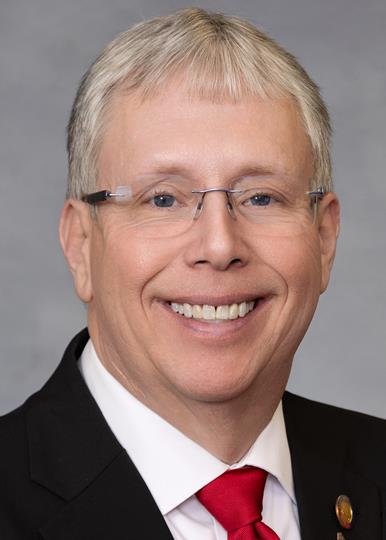
Rep. Mitchell Setzer
Sponsored bills
Maddy summaryHB 35 designates November of each year as Military Appreciation Month in North Carolina. The bill creates a symbolic recognition within state law, honoring military service members and veterans during this month. It does not establish new programs, funding, or requirements - it simply formally names November for this purpose. The bill affects the state government's official calendar and public recognition efforts, with no direct impact on individuals or organizations.
Maddy summaryHB 380 would allow North Carolina students to opt out of school vaccination requirements by submitting a written statement citing personal beliefs (a "conscientious objection"), rather than requiring proof of religious affiliation. It amends immunization reporting rules to include "conscientious objection" as a formal exemption category alongside medical and religious exemptions for public schools and colleges. Parents or guardians would need to provide this written statement instead of religious documentation to exempt their child from vaccination mandates. The policy change applies to public schools and colleges starting in the 2026-2027 school year.
Maddy summaryHB 43 designates the Carolina BalloonFest in Statesville as North Carolina's official state balloon rally. The bill amends state law to formally recognize this annual October event, which has been held since 1974 and features hot air balloon activities, entertainment, and community fundraising. This designation is ceremonial and does not create new regulations or funding, simply granting the festival official status under state statute.
Maddy summaryHB 362 prohibits the intentional release of substances or technologies within North Carolina aimed at altering weather, temperature, or sunlight - including stratospheric aerosol injection (SAI), cloud seeding, and electromagnetic emissions. It defines "atmospheric modification" broadly to cover activities affecting climate, agriculture, health, or security, while explicitly excluding licensed pesticide applications by aircraft. The law makes it illegal to intentionally inject or disperse materials for such purposes and directs the Environmental Management Commission to create implementing rules. This bill directly affects entities or individuals conducting weather-altering experiments or technologies within the state. The measure is currently in committee referral after passing its first reading in the North Carolina House.
Maddy summaryHB 343 appropriates $380,000 for 2025-26 and $397,000 for 2026-27 to create four full-time ombudsman positions within North Carolina’s Long-Term Care Ombudsman Program. This directly affects residents of nursing homes, adult care homes, and family care homes by enhancing advocacy for their rights and care quality. The bill’s key provision funds staff to move the state’s program toward national standards for resolving facility issues without formal complaints. It becomes effective July 1, 2025, with no advocacy language - only a concrete funding mechanism for expanded protections.
Maddy summaryHB 314 creates a faster legal process for property owners (or their authorized representatives) to remove people occupying their residential property without legal right, excluding tenants who have overstayed their lease. To use this process, the owner must file a sworn affidavit with the clerk of court (paying a $25 fee) proving the occupant entered unlawfully after the owner acquired the property, was told to leave, paid no rent, and isn’t a tenant. Law enforcement must remove the occupant within 24 hours of receiving the affidavit, with the owner able to change locks afterward. The bill specifically excludes occupants with valid leases or rental agreements and requires proof that no other legal agreement or payment exists.
Maddy summaryHB 304 allows Iredell-Statesville Schools to create a specialized Trades High School for grades 10-12 focused on Career and Technical Education (CTE). The school would operate under exemptions from specific state education statutes (Part 1 and Part 1D of Article 8 in Chapter 115C) and must follow teacher requirements: at least 50% licensed staff, college degrees for core subject teachers, and mandatory training for non-licensed instructors in disability support and classroom management. Students earning a Trades Diploma must complete 22 credits, with the school submitting diploma criteria to the State Board of Education before the 2025-2026 school year. This bill directly affects Iredell-Statesville students, staff, and the district’s curriculum structure.
Maddy summaryHB 280 allocates $30,000 in one-time state funds to support the North Carolina Senior Tar Heel Legislature, a program for older residents to engage with state policy. The funding, from the General Fund for the 2025-2026 fiscal year, covers operational costs for this existing program established under state law. It directly affects the Senior Tar Heel Legislature by providing financial resources for its activities. The bill becomes effective July 1, 2025, and does not create new policy but enables the program's continued operation.
Maddy summaryHB 29 would allow tribal enrollment cards issued by State or federally recognized North Carolina tribes to be used as valid ID for purchasing alcohol and tobacco. It amends existing state laws to explicitly include these cards alongside driver's licenses, passports, and military IDs when verifying a customer's age at point-of-sale. Businesses selling alcohol or tobacco would be permitted to accept tribal cards as proof of age under the same rules as other official identification. The policy change would take effect on December 1, 2025, if the bill is enacted.