

Maddy summaryHouse Bill 717 proposes changes to the North Carolina Professional Employer Organization (PEO) Act, affecting PEOs operating in the state. It updates definitions for financial terms like "tangible net worth" and "working capital," and clarifies licensing requirements for PEO groups, allowing consolidated financial reporting while mandating inter-group payment guarantees. The bill modifies PEO license application requirements, extending the timeframe for audited financial statements to 120 days and requiring applicants to demonstrate positive working capital and a minimum tangible net worth of $50,000. Additionally, it adjusts surety bond requirements for PEOs with negative working capital and allows the Commissioner to accept parent company financial statements if certain conditions, including a guaranty for obligations, are met.
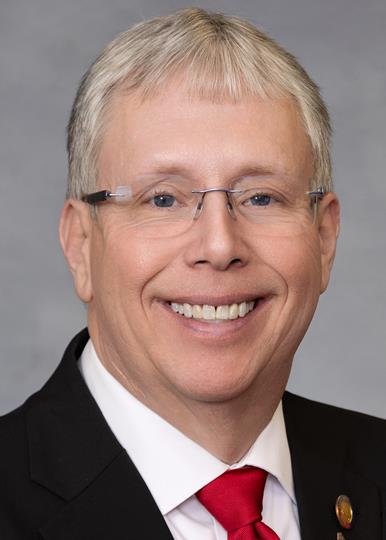
Rep. Mitchell Setzer
Sponsored bills
Maddy summaryThis bill revises North Carolina's Insurance Guaranty Association Act, affecting policyholders and the Association by adjusting how claims are handled when an insurer becomes insolvent. It clarifies that cybersecurity insurance policies are generally covered, but sets a maximum payout of $500,000 for all first and third-party cybersecurity claims arising from a single event. The bill also expands the definition of a "covered claim" to include certain transferred policy obligations, while explicitly excluding claims from very large entities and specific fines or penalties. Additionally, it enhances the Association's authority to investigate, adjust, and contest settlements or judgments made by an insolvent insurer or its insureds prior to liquidation, allowing them to defend claims on their merits.
Maddy summaryHB 163 regulates Pharmacy Benefits Managers (PBMs) to ensure fair practices for pharmacies and insured individuals. The bill prohibits PBMs from charging insurers more for a prescription drug than they pay the pharmacy (spread pricing) and requires patient out-of-pocket costs to be based on the net price after any PBM concessions. It establishes minimum reimbursement standards for pharmacies, preventing PBMs from paying less than the national average drug acquisition cost plus a dispensing fee. Additionally, it clarifies that PBMs cannot restrict accredited pharmacies from dispensing specialty drugs and strengthens audit protections for pharmacies.
Maddy summaryHB 570, the "Responsible Firefighting Foam Management Act," restricts the use of firefighting foams containing PFAS chemicals for training and testing. It prohibits any person, local government, or state agency from discharging Class B firefighting foam with intentionally added PFAS for training or practice purposes. For testing, these foams are also prohibited unless required by law or an authority, and the testing facility has implemented measures to prevent environmental releases. The bill mandates the use of non-fluorinated alternatives for training and is set to become effective on December 1, 2025.
Maddy summaryHB 822 modifies North Carolina laws governing moped operation, directly affecting moped operators. The bill presumes a moped is designed for one person unless manufacturer documentation indicates otherwise. It restricts mopeds to the right-hand side of the right-hand lane on highways with speed limits over 35 mph, except when preparing for a left turn. Furthermore, it prohibits operating a moped on any highway where the posted speed limit is greater than 35 miles per hour. Violations of these provisions would constitute an infraction, with the changes becoming effective on December 1, 2025.
Maddy summaryHB 734, titled "Modernize Debt Settlement Prohibition," aims to prohibit debt settlement and debt adjusting services in North Carolina. The bill reclassifies these activities as unfair trade practices and clarifies their definitions. It makes engaging in debt adjusting or debt settlement a Class 2 misdemeanor and expands civil remedies for debtors. The bill grants superior courts the authority to enjoin such practices and assess civil penalties. However, it exempts certain individuals and transactions, such as a creditor acting without cost to the debtor or an attorney acting within an attorney-client relationship.
Maddy summaryHouse Bill 650, titled "No Interchange Fees on Sales Tax or Tips," prohibits payment card networks, issuer banks, and acquirer banks from charging interchange fees on the sales tax or gratuity portions of electronic payment transactions. This directly affects merchants by reducing the processing fees they pay on these specific amounts. Merchants must provide the tax or gratuity data during the transaction authorization or settlement process, or submit documentation later to receive a credit for any fees charged. The bill also includes measures to prevent entities from adjusting other fees to circumvent this prohibition. Violations can result in injunctive relief, civil penalties, and refunds to affected merchants.
Maddy summaryHouse Bill 272, known as "The Sergeant Mickey Hutchens Act," allows certain law enforcement, probation/parole, and correctional officers in North Carolina to purchase additional retirement service credit. Officers who hold an advanced law enforcement or corrections certificate and have at least five years of membership service can buy up to four years of creditable service. This purchase applies to members of the Teachers' and State Employees' Retirement System or the Local Governmental Employees' Retirement System. To do so, they must pay a lump sum covering the full cost of the increased retirement system liability and an administrative fee, with the option for their employer to contribute to this cost.
Maddy summaryThis bill revives and expands a program that allows eligible retired educators to return to work in high-need schools. It defines "high-need retired teachers" as beneficiaries of the Teachers' and State Employees' Retirement System who meet specific retirement and service criteria, and are reemployed by local boards of education. A key provision ensures that earnings from this reemployment do not count against post-retirement earnings limits, allowing these teachers to receive both their full retirement allowance and a salary. The Department of Public Instruction is tasked with certifying these teachers, and local boards must report their employment status to the Retirement System.
Maddy summaryHB 966, the College Cost Reduction Act, prohibits all University of North Carolina (UNC) schools from requiring students to pay extra for mandatory course software (Learning Management Systems or LMS). It directly affects UNC students by banning any requirement for paid LMS access beyond existing, approved student fees. The bill mandates the UNC Board of Governors to create a policy ensuring professors or courses cannot force students to pay for LMS services - only free or fee-covered options may be required. The rule takes effect for the 2025-2026 academic year.