

Maddy summaryHB 13 prohibits North Carolina merchants from charging customers more for credit or debit card payments than what the merchant pays to process those transactions. It directly affects retailers and service providers in the state, requiring them to disclose any card fees clearly in advertisements if they impose them. The law mandates that merchants cannot add a markup to processing costs charged by payment networks (like Visa or Mastercard), and violations could result in civil penalties up to $5,000 per offense. The bill takes effect October 1, 2025, aiming to prevent unfair surcharges on card payments.
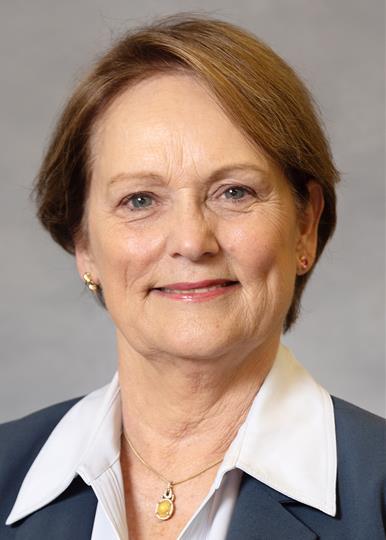
Rep. Mary Belk
Sponsored bills
Maddy summaryHB 8 requires all North Carolina state departments, community colleges, and local school systems to prioritize purchasing compostable or recyclable materials for food service and supplies, where economically feasible. It mandates annual reporting on purchases of these materials and recycling collections to the Department of Environmental Quality. The bill also directs UNC's Policy Collaboratory to study food service ware impacts and requires legislative and state park pilot programs to reduce single-use food service ware. These provisions directly affect state agencies and schools responsible for procurement and waste management, aiming to reduce single-use waste through policy changes rather than bans.
Maddy summaryHB 907 creates a new Disaster Readiness and Response Fund within the Office of the State Treasurer in North Carolina. This fund is designed to be separate from the state's General Fund and other existing reserves, providing a dedicated financial resource for disaster-related activities. The bill does not specify how the money will be used or who will administer it, leaving those details for future legislation. It applies to the state government and establishes a new financial mechanism for potential future disaster preparedness and response efforts.
Maddy summaryHB 210 establishes minimum standards for the care and maintenance of licensed cemeteries in North Carolina, directly affecting cemetery operators and license holders. The bill requires the Cemetery Commission to set these standards - covering tasks like grass cutting, grave upkeep, and facility repairs - and allows the Commission to impose $50 civil penalties for violations, with a 10-day notice period before penalties apply. It also mandates annual reports from cemetery companies detailing all care and maintenance work performed, using forms provided by the Commission. These provisions aim to ensure consistent upkeep of cemetery properties while holding operators accountable for compliance.
Maddy summaryHB 948, the P.A.V.E. Act, amends North Carolina law to allow Mecklenburg County to levy an additional 0.5% local sales tax specifically for public transportation systems. The bill defines "public transportation system" broadly to include buses, transit facilities, bike/pedestrian infrastructure, and automated transport tunnels, while excluding general roads. Funds collected must supplement, not replace, existing public transit funding and can only be used for financing, building, operating, or maintaining these systems. The tax proceeds would be distributed monthly to Mecklenburg County and its public transportation authorities per a financial plan, with the bill taking effect only if Mecklenburg levies this tax.
Maddy summaryThis bill establishes an Interstate Medical Licensure Compact in North Carolina, allowing physicians who meet specific qualifications to obtain medical licenses in multiple participating states through a streamlined process. The law creates an Interstate Commission to oversee the compact and sets clear standards for physician eligibility, including requirements for medical school graduation, passing licensing exams, specialty certification, and a clean disciplinary record. While the compact simplifies licensing for qualified doctors, it maintains that each state retains authority to regulate medical practice within its borders and can take disciplinary action against physicians licensed through the compact. The bill does not alter existing state medical practice laws but adds an additional pathway for physicians to practice across state lines.
Maddy summaryHB 612, the "Fostering Care in NC Act," updates North Carolina's laws governing child abuse, neglect, and dependency cases. It expands the definition of "abused juveniles" to include specific offenses like sexual crimes, human trafficking, and certain violent acts, affecting how cases are classified. The bill requires county social services directors to use either a family-centered assessment or a formal investigation when reviewing reports, and to collect military affiliation details of the juvenile's caregiver. It also clarifies that court jurisdiction over juveniles continues until age 18, emancipation, or death. These changes standardize responses to child welfare reports and improve information gathering for safety decisions.
Maddy summaryHB 480 creates a new pathway for doctors, physician assistants, and anesthesiologist assistants to obtain North Carolina medical licenses by transferring licenses from other states ("licensure by endorsement"). To qualify, applicants must have held an active license in another U.S. jurisdiction for at least five years (with two years of practice post-residency for doctors), have a verified full-time job offer in North Carolina, maintain good standing with no recent disciplinary actions, and meet practice hour requirements. The bill increases application fees for endorsement (e.g., $825 for physicians vs. $400 for standard licensure) and requires additional documentation within 180 days to keep the license active. This directly affects out-of-state medical professionals seeking to practice in North Carolina without retaking exams.
Maddy summaryHB 578, the Jason Flatt Act, requires all North Carolina public K-12 schools to implement suicide prevention education and training for school staff. It mandates that licensed educators complete at least one hour of annual suicide prevention training, while staff working with grades 6-12 must receive guidelines for identifying at-risk students and procedures for referrals. Schools must adopt a mental health plan including these elements, with initial staff training of six hours (within six months of hire) and two hours annually thereafter. The law applies to all public schools, charter schools, regional schools, and lab schools starting the 2025-2026 school year.
Maddy summaryHR 778 is a non-binding resolution passed by the North Carolina House of Representatives expressing support for the state's historical and economic ties with the United Kingdom. It highlights North Carolina's cultural connections (e.g., city names like Raleigh and Charlotte), economic partnerships (including $1 billion in UK investment and 218 UK-owned companies employing 43,200 workers), and trade relationships (over $2.5 billion in annual trade). The resolution urges the U.S. Congress to strengthen trade and investment cooperation with the UK and directs transmission to the UK Embassy, consulates, and North Carolina's congressional delegation. As a symbolic gesture, it does not create new laws or policy changes but reinforces existing diplomatic and economic bonds.