

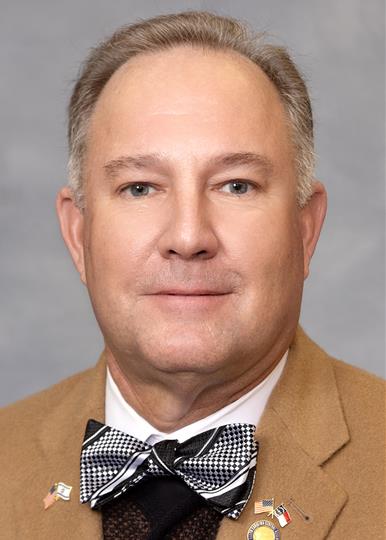
Photo of Jeff McNeely
R North Carolina House · District 84 On the 2026 ballot

Rep. Jeff McNeely

Compare
Total votes
2,089
all sessions
Attendance
98%
51 missed
Near the chamber average
With party
99%
of cast votes
Higher than 87% of chamber peers
Bipartisan score
1%
crosses aisle rarely
Lower than 89% of chamber peers
Sponsored
790
bills & resolutions
Higher than 83% of chamber peers
Committees
11
assignments
790 bills and resolutions

Sponsored bills

Total
790
Primary
57
Co-sponsor
733
This page
790
matching current filters
Primary HB 585
In committee · North Carolina House · Lead sponsor
Human Trafficking Reporting/Response System.

Maddy summaryHB 585 appropriates $300,000 in recurring funds for the North Carolina Human Trafficking Commission to develop and support a secure, technology-driven reporting and response system focused on survivor-centered care. The system will specifically target western North Carolina, where access to anti-human trafficking resources is limited, and includes funding for a regional coordinator to oversee implementation and partnerships with law enforcement. It also allocates resources for a public awareness campaign to increase system use among at-risk communities and first responders. The bill requires the Commission to coordinate this system as part of its duties under state law.

In committee Apr 1, 2025 0 co-sponsors
Primary HB 607
In committee · North Carolina House · Lead sponsor
Regulate Hemp Consumable Products.

Maddy summaryThis bill establishes new regulations for hemp-derived consumable products (like edibles, vapes, and beverages) intended for human ingestion or inhalation, limiting THC content to 0.3% or less. It requires retailers to verify ages (21+), use child-resistant "exit packages" at point-of-sale, and obtain licenses from the Alcohol Law Enforcement Division. Manufacturers must use independent labs for testing, and sellers face fines up to $2,000 or license suspension for violations like selling to minors or exceeding THC limits. The rules exclude topical products and hemp seeds, focusing solely on ingestible/inhalable items.

In committee Apr 1, 2025 0 co-sponsors
Co-sponsor HB 611
In committee · North Carolina House · Co-sponsor
Increase Assistant Principals in Public Schools.

Maddy summaryHB 611 requires North Carolina public schools to increase full-time assistant principal positions based on student enrollment, directly affecting all local school districts. It mandates funding to achieve specific student-to-assistant-principal ratios: 1:90 students in the 2025-2026 school year ($23.56 million) and 1:80 students starting in 2026-2027 ($57.57 million), with funds supplementing but not replacing existing budgets. The bill, effective July 2025, directs the Department of Public Instruction to allocate these funds through the school building administration allotment. This policy change aims to support school operations and develop future principals by expanding administrative staffing.

In committee Apr 1, 2025 1 co-sponsor
Co-sponsor HB 591
died · North Carolina House · Co-sponsor
Electronic Monitoring in Nursing/Adult Care Homes.

Maddy summaryHB 591, the G.U.A.R.D. Act, allows residents of nursing homes and adult care facilities in North Carolina to install and use their own electronic monitoring devices (like cameras or audio recorders) in their rooms at their own expense. The bill requires facilities to provide power, mounting space, and not deny admission or discharge based on a resident's request for monitoring. Recordings from these devices can be used as evidence in court, and facilities face fines or jail time for violating the law. The act directly affects residents and their families by giving them greater control over monitoring their living environment while protecting facility obligations.

died Apr 1, 2025 1 co-sponsor
Co-sponsor HB 571
In committee · North Carolina House · Co-sponsor
Posttraumatic Stress Disorder Treatment for Police Officers/Funds.

Maddy summaryHB 571 appropriates $500,000 from the state General Fund to the Department of Public Safety for a grant program treating police officers diagnosed with PTSD. It directly affects North Carolina police officers who have received a clinical PTSD diagnosis. The key provision establishes a state-funded grant program to cover treatment costs, with funds allocated for the 2025-2026 fiscal year. The program becomes effective July 1, 2025, and focuses solely on providing financial support for treatment, not on expanding eligibility or altering diagnosis standards.

In committee Apr 1, 2025 1 co-sponsor
Co-sponsor HR 563
Passed · North Carolina House · Co-sponsor
House Permanent Rules.

Maddy summaryHR 563 adopts the permanent rules for the North Carolina House of Representatives during the 2025 Regular Session. These rules establish procedural guidelines including session hours (e.g., no Friday sessions in January and February, adjournment by 10:00 PM on Mondays and 9:00 PM on other days), quorum requirements, and the order of business for legislative proceedings.

Passed Apr 1, 2025 1 co-sponsor
Co-sponsor HB 553
In committee · North Carolina House · Co-sponsor
Ensuring Patient Safety with Mail Order Medications.

Maddy summaryThis bill's title ("Ensuring Patient Safety with Mail Order Medications") does not match its actual content. The bill, formally titled "AN ACT REVISING ABORTION-INDUCING DRUG LAWS," restricts the mailing of abortion-inducing drugs in North Carolina. It prohibits mailing such drugs to pregnant women unless a qualified physician provides in-person counseling 72 hours prior, all other informed consent requirements are met, and the drugs are FDA-approved. Violations carry $5,000 fines per offense or Class H felony charges, and the bill creates civil remedies allowing women, parents, or the Attorney General to sue for damages or injunctions. The bill is currently pending in committee (referred March 31, 2025) and would take effect December 1, 2025.

In committee Mar 31, 2025 1 co-sponsor
Co-sponsor HB 554
In committee · North Carolina House · Co-sponsor
Revenue Laws Technical Changes/Bipartisan Budget Act of 2015 Changes/Peer-to-Peer Tax Parity.

Maddy summaryHB 554 makes technical adjustments to North Carolina's tax code to align with federal rules and expand tax parity for peer-to-peer car rentals. It modifies how S corporation losses are deducted, restricts certain net operating loss deductions (like capital gains carryforwards), and updates estate/trust tax calculations. The bill specifically adds peer-to-peer car rental services to the alternate highway use tax, requiring them to pay the same tax as traditional rental companies. These changes affect individual taxpayers, S corporations, estates, trusts, and peer-to-peer car rental businesses, with most provisions effective for tax years beginning in 2025.

In committee Mar 31, 2025 1 co-sponsor
Co-sponsor HB 566
In committee · North Carolina House · Co-sponsor
Principal Fellows Changes.

Maddy summaryHB 566 establishes a competitive grant program to support North Carolina's Principal Fellows Program, directly affecting school leader preparation programs and future principals. It provides forgivable scholarship loans to participants in these programs (repaid only if they don’t work in North Carolina schools) and grants to eligible entities to develop innovative principal training methods. The bill sets specific grant terms, including 2-6 year durations for loan programs and 1-year terms for innovation grants, with funding capped at $250,000 per recipient annually. Recipients must report on key metrics like program completers’ placement rates in high-need schools and their performance evaluations. The program also allocates funds for administrative costs and program monitoring, requiring public sharing of non-identifiable materials to promote best practices.

In committee Mar 31, 2025 1 co-sponsor
Co-sponsor HB 556
In committee · North Carolina House · Co-sponsor
2025 Charter Schools Review Board Omnibus.

Maddy summaryHB 556, the 2025 Charter Schools Review Board Omnibus, gives North Carolina's Charter Schools Review Board new authority over charter school regulations. The bill requires the Review Board to approve all state rules affecting charter schools, exempts them from listing class rank on student transcripts, and allows charter schools to use alternative teacher evaluations meeting state standards. Low-performing charter schools must submit improvement plans directly to the Review Board instead of the State Board of Education, and the Review Board gains power to review federal funding decisions for charter schools. The bill also creates an expedited process for remote charter academies enrolling 250+ students and grades them separately from traditional charter schools.

In committee Mar 31, 2025 1 co-sponsor
Showing 201 to 210 of 790 bills
Previous 1 … 20 21 22 … 79 Next