

Maddy summaryHB 11 would allow North Carolina taxpayers to deduct overtime pay, up to $2,500 in bonus pay (defined as cash awards for workplace dedication), and reported tips from their taxable income. It applies to individuals and married couples filing jointly, with each spouse eligible for separate deductions. The bill specifically defines "bonus pay" to exclude tips and requires taxpayers to provide documentation to claim the deduction. This policy change would take effect for tax returns filed in 2025.
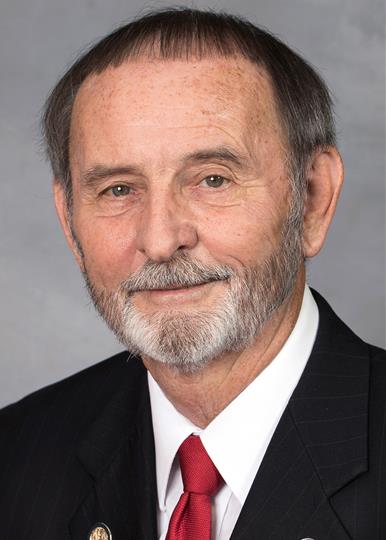
Rep. Larry Potts
Sponsored bills
Maddy summaryHB 242 adds freestanding psychiatric hospitals (licensed, Medicare-certified facilities primarily providing psychiatric care that are not state-owned) to North Carolina’s Medicaid Healthcare Access and Stabilization Program (HASP). This expands the existing program - which currently reimburses acute care hospitals - to include these psychiatric hospitals, providing them with increased Medicaid reimbursements. The funding will come from a new quarterly assessment levied on the psychiatric hospitals themselves, calculated as a percentage of their hospital costs. The bill does not change patient eligibility but alters how these specific hospitals receive Medicaid payments through the HASP program.
Maddy summaryHB 343 appropriates $380,000 for 2025-26 and $397,000 for 2026-27 to create four full-time ombudsman positions within North Carolina’s Long-Term Care Ombudsman Program. This directly affects residents of nursing homes, adult care homes, and family care homes by enhancing advocacy for their rights and care quality. The bill’s key provision funds staff to move the state’s program toward national standards for resolving facility issues without formal complaints. It becomes effective July 1, 2025, with no advocacy language - only a concrete funding mechanism for expanded protections.
Maddy summaryHB 274 appropriates $5 million from the General Fund for the 2025-2026 fiscal year to Crossnore Communities for Children, a nonprofit organization, to fund foster care services across North Carolina. The bill directs funds toward specific programs including family reunification, youth independent living, trauma resilience initiatives, and community engagement, all delivered from Crossnore's locations in Winston-Salem, Crossnore, and Hendersonville. These services are designed to support children in foster care and their families statewide. The appropriation is nonrecurring and becomes effective July 1, 2025.
Maddy summaryHB 222 appropriates $217 million from the State Emergency Response Fund to North Carolina's Office of Recovery and Resiliency (NCORR) for homeowner recovery projects related to Hurricanes Matthew and Florence. The bill requires NCORR to submit detailed monthly reports on fund usage, including expenditures and project progress, and mandates weekly financial reports to the State Auditor for oversight. It also establishes a public online dashboard tracking funds versus actual spending and includes a clawback provision to return unused funds to the Savings Reserve after projects conclude. The law revises NCORR's responsibilities, ending its role in future storm recovery programs.
Maddy summaryHB 229 adjusts North Carolina's Medicaid reimbursement rates for ambulatory surgical centers (ASCs), requiring payments to be at least 95% of the current Medicare Ambulatory Surgical Centers fee schedule. This change directly affects ASCs by increasing their Medicaid payments, with the state appropriating $10.476 million annually from the General Fund to cover the cost and match $19.135 million in federal funds each year for the 2025-2027 fiscal biennium. The bill mandates these rate adjustments to take effect on July 1, 2025, ensuring ASCs receive consistent reimbursement aligned with Medicare rates. The legislation focuses solely on establishing the new payment structure and funding mechanism, without altering eligibility or services.
Maddy summaryHB 197 appropriates $25 million annually for the 2025-2026 and 2026-2027 fiscal years to North Carolina's local health departments (LHDs) for communicable disease programs. The funding aims to address a 70% staff shortage in LHDs by enabling them to retain existing staff, hire additional public health professionals (including nurses), and expand essential services. Funds are allocated with half distributed equally among LHDs based on the number of counties served, and half distributed based on the percentage of state population each LHD serves. The bill becomes effective July 1, 2025, to support North Carolina's response to diseases like avian flu and mpox.
Maddy summaryHB 30 grants Winston-Salem/Forsyth, Stokes, and Davidson County Schools additional flexibility to set their school calendar opening date as early as August 19 (instead of the standard August 26) if they demonstrate "good cause" through documented emergency closures (8+ days in 4 of the last 10 years). It also allows these districts to administer annual student assessments earlier if their fall semester ends before December 31. The bill modifies existing calendar rules under state law and applies only to these three school systems beginning in the 2025-2026 school year. These changes aim to accommodate emergency-related school closures while ensuring minimum instructional requirements are met.
Maddy summaryHB 31 would amend North Carolina's State Human Resources Act to make every statewide general election day a paid holiday for state employees. This change would add election days to the current list of paid holidays (which includes Martin Luther King Jr.'s Birthday and Veterans Day), while maintaining the limit of 13 paid holidays per year. The bill directly affects state workers, ensuring they receive paid time off on election days without reducing the total number of paid holidays. It does not change election dates or voting procedures, only the employment benefits for state employees on those days. The legislation is currently pending in committee review.
Maddy summaryHB 61 increases penalties for assaulting certain emergency personnel with a firearm in North Carolina. It reclassifies assaults against law enforcement officers, probation/parole officers, National Guard members, detention facility staff, emergency medical technicians, medical responders, firefighters, and law enforcement telecommunicators as a Class B1 felony (instead of Class D) when committed during their duties. The bill specifically targets firearm assaults, making them punishable by more severe prison sentences. This law takes effect December 1, 2025, for offenses occurring on or after that date.