

Maddy summaryThis bill officially renames the 2023 budget law to the "Current Operations Appropriations Act of 2024" and updates funding levels for the state's education system. It directly affects various institutions, including public universities, community colleges, and the University of North Carolina system, by specifying the exact amounts of state money they will receive for the 2024-2025 fiscal year. The legislation details how much money each entity gets after accounting for their own income, ensuring the state allocates its resources according to the approved budget plan.
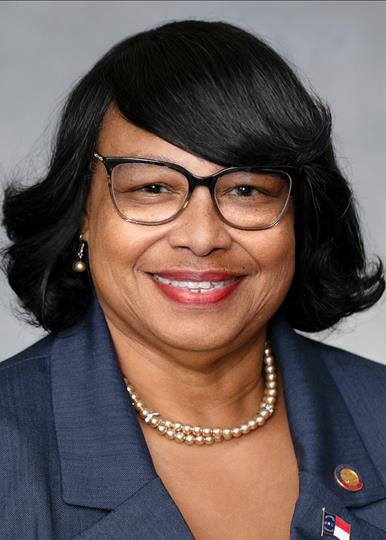
Rep. Gloristine Brown
Sponsored bills
Maddy summaryThis amendment to House Bill 207 requires school principals or their designated representatives to accept detailed eyewitness accounts of incidents that could lead to student suspensions. The bill mandates that these accounts be submitted by the end of the school day following the incident, though they can still be accepted after that deadline. Eyewitness testimony can be provided in writing or orally, with the requirement that any oral statements be transcribed into writing by the school official. This change directly affects school administrators and students by formalizing the process for collecting immediate witness statements during disciplinary investigations.
Maddy summaryThis bill, titled the Health Care Omnibus, introduces several changes to North Carolina's healthcare regulations. It requires doctors and pharmacists to inform patients receiving opioid prescriptions about the risks of overdose, prevention methods, and the availability of reversal drugs. Additionally, the legislation clarifies that Medicaid benefits will continue for a limited time after individuals are released from prison or other incarceration facilities. The bill also expands access to mental health services by allowing reciprocal licensing for marriage and family therapists, reducing regulatory hurdles for master's level psychologists, and encouraging the use of tribal health facilities.
Maddy summaryThis bill adds the drug tianeptine to North Carolina's list of Schedule II controlled substances, meaning it will be regulated similarly to other opioids. By making this change, the law aims to increase oversight of the drug, which is already associated with potential for abuse and severe dependence. The new rules will apply to anyone who commits offenses involving tianeptine on or after September 1, 2024.
Maddy summaryThis bill establishes new rules for companies in North Carolina that boot or tow vehicles from private property without the owner's consent. It requires these businesses to obtain an annual permit and maintain a public database that logs details about each tow, including the reason for removal and the fees charged. Private property owners must display specific signs at parking lot entrances listing the towing company's contact information and fees before any vehicle can be removed. The legislation also sets limits on how far a towed vehicle can be transported and prohibits booting cars that are currently occupied. Additionally, it clarifies that residential properties with four or fewer units are exempt from the mandatory signage requirements.
Maddy summaryThis North Carolina bill establishes a legal mechanism to hold manufacturers of per- and polyfluoroalkyl substances (PFAS) financially responsible for cleaning up contaminated drinking water. It defines "responsible parties" as companies that produce PFAS chemicals and orders them to pay for the actual costs public water systems incur to remove or fix contamination that exceeds safety limits. If a manufacturer refuses to pay, the state can take legal action in court to enforce the order, and the bill allows water systems to lower future customer rates if they recover these costs. The legislation also creates a special fund with initial funding to support implementation and requires the state to report annually on how these funds and enforcement orders are used.
Maddy summaryHB 935 reorganizes the Advisory Council on Rare Diseases in North Carolina by moving it from the University of North Carolina at Chapel Hill to the Department of Health and Human Services. The bill establishes a 19-member council composed of physicians, researchers, patient advocates, industry representatives, and other stakeholders to advise state leaders on rare disease research, diagnosis, treatment, and education. Key provisions include setting specific term lengths for members, providing administrative support and funding for the council's operations, and requiring annual reports on council activities and recommendations.