

Maddy summaryHB 349 updates North Carolina's requirements for healthcare powers of attorney (POA) and advance health care directives (like living wills). It clarifies witness and notary rules to prevent conflicts of interest (e.g., prohibiting facility staff from witnessing), standardizes forms for easier use, and allows electronic filing of directives with the Secretary of State’s registry. The bill directly affects residents planning ahead for medical decisions, ensuring their chosen agents or instructions are legally recognized. Key changes include revised witness eligibility criteria, simplified form language, and a new online filing option to improve accessibility. The bill does not alter medical care standards but streamlines the legal process for end-of-life planning.
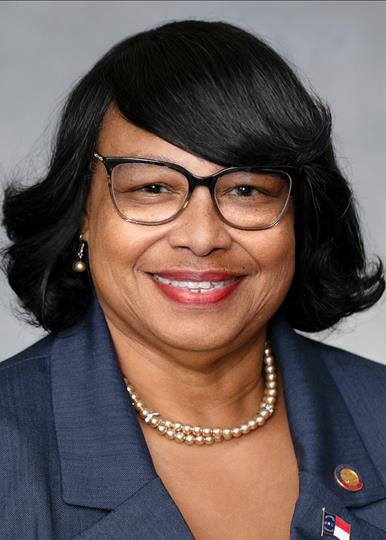
Rep. Gloristine Brown
Sponsored bills
Maddy summaryThis House Resolution honors the Carolina Hurricanes hockey team for winning the 2026 Stanley Cup and recognizes their contributions to the state of North Carolina. The bill formally acknowledges the team's historic season, including their record-breaking regular performance and playoff victory, while also praising the owner, management, and coaching staff for their leadership. It directs the Principal Clerk to send a certified copy of the resolution to the team, its owner Tom Dundon, and head coach Rod Brind'Amour. This measure serves as a commemorative gesture rather than establishing new laws or funding.
Maddy summaryHB 565 ("Check Yes, Save Lives") allows North Carolina taxpayers to register as organ donors by checking a box on their state income tax return, starting with tax returns for 2026 and later. This directly affects all North Carolina taxpayers who file income tax returns, providing a simple, automatic way to enroll in the organ donation program during annual tax filing. The bill amends tax and organ donation statutes to add income tax return enrollment as a valid method for making an anatomical gift (under Section 130A-412.7(1a)), while keeping existing options like driver's license or wills. It requires coordination between the Department of Revenue and Motor Vehicles to update the Organ Donor Registry, ensuring the tax-based enrollment is properly recorded. The policy change streamlines donor registration without altering the existing organ donation process or eligibility.
Maddy summaryHB 258, the Utility Worker Protection Act, increases penalties for assaulting utility and communications workers by designating such assaults as Class A1 misdemeanors - the highest misdemeanor level - when the worker is visibly identifiable (e.g., wearing company-logoed uniforms) and performing duties. It directly affects workers providing electricity, gas, telecommunications, or internet services, including those employed by public, private, or cooperative entities. The bill adds specific language to North Carolina’s assault statute, requiring prosecutors to apply this enhanced penalty for assaults meeting these criteria, without needing other legal provisions. The law takes effect December 1, 2025, applying to offenses committed on or after that date.
Maddy summaryHB 315 creates new criminal offenses for wrongfully entering restricted business areas (like secure storage rooms) and for stealing or fraudulently obtaining gift cards. It directly affects businesses (by protecting secure areas), gift card holders (by criminalizing theft of their cards), and individuals who commit these acts. Key provisions include classifying unauthorized building entry as a misdemeanor or felony based on prior offenses, defining gift card theft as a Class 1 misdemeanor for cards under $1,000 (or felony for higher value), and expanding "organized retail theft" to include conspiracy around gift cards with penalties tied to total value stolen. The law takes effect December 1, 2025, and applies to offenses committed after that date.
Maddy summaryThis bill authorizes the University of North Carolina system to finance specific capital improvement projects, such as dormitory renovations and new construction, using non-state funds like gifts, grants, and hospital receipts. It allows the university to issue special obligation bonds to cover these costs and includes a mechanism for the Director of the Budget to adjust project funding if necessary. Additionally, the legislation standardizes the residency determination process for admission to the North Carolina School of Science and Mathematics and revises tuition grant rules for graduates of that school and the UNC School of the Arts. These changes aim to support university infrastructure development and ensure equitable access to specialized science and arts programs for North Carolina residents.
Maddy summaryHB 1102, known as the Fuel Gas Safety Act, requires landlords in North Carolina to install and maintain fuel gas detectors in any room containing appliances powered by propane, natural gas, or liquefied petroleum gas. The bill mandates that these detectors be operational at the start of each tenancy, with landlords responsible for replacing batteries and repairing or replacing units upon written notice of defects. It also extends similar safety requirements to commercial buildings and public higher education facilities, while allowing security deposits to cover damage to these devices. Penalties of up to $500 per violation may be imposed on landlords who fail to comply with the new installation and maintenance rules.
Maddy summaryThis bill directs the North Carolina Department of Transportation to conduct a study on how well the Strategic Prioritization Funding Plan for Transportation Investments is working. The department must examine why some projects under this plan are delayed and gather input from construction partners and planning groups. By November 1, 2026, the agency will submit a report with its findings and suggestions for improving project delivery to state legislative committees. The bill does not change any laws immediately but requires an evaluation to inform future decisions on transportation funding.
Maddy summaryThis bill establishes an Interstate Compact for School Psychologists in North Carolina, allowing licensed professionals to practice in other participating states without facing repetitive licensing requirements. The legislation creates a commission to oversee the agreement and defines specific rules for mobility, including provisions for military families and standards for professional conduct. Additionally, the bill allocates funds to support a virtual training program for school psychologists. By streamlining the licensure process, the measure aims to increase the availability of qualified mental health services in schools across member states.
Maddy summaryThis bill reestablishes the North Carolina State Board of Elections as an independent state agency, shifting its budgeting authority from the State Auditor back to the Board itself. The legislation changes how board members are selected by requiring the Governor to appoint five registered voters from lists of nominees provided by the two major political parties, with a limit of no more than three members from the same party. Additionally, the bill adjusts the appointment process for county election boards, ensuring they include representatives from the two largest political parties and designating a chair appointed by the Governor. These structural changes are set to take effect on July 1, 2027, following the expiration of current board terms.