

Maddy summaryHB 447 appropriates $34 million from North Carolina's General Fund to the Town of Kernersville for the Kernersville Event Center. This funding, designated for the 2025-2026 fiscal year, is a directed grant specifically for the event center project. The bill directly affects the Town of Kernersville, which will receive the funds to support the center's development or operations. The key provision is the state allocation of nonrecurring funds to a specific local facility, effective July 1, 2025.
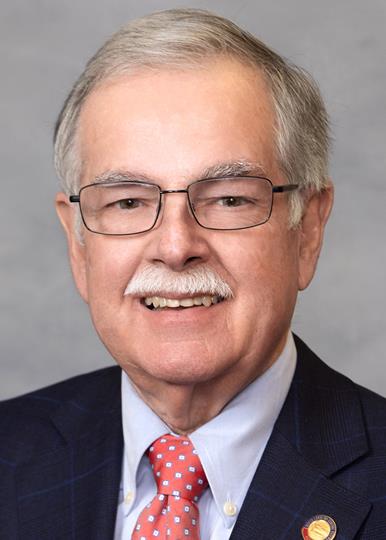
Rep. Donny Lambeth
Sponsored bills
Maddy summaryHB 453 increases Medicaid reimbursement rates for two specific services in North Carolina. It raises the rate for personal care services (e.g., help with daily tasks) to $7.50 per 15-minute increment for beneficiaries in programs like State Plan Personal Care Services and Community Alternatives programs. It also increases private duty nursing rates to $16.25 per 15 minutes for both children under 21 and adults, using state funds to match federal support. The changes, effective July 1, 2025, will directly affect Medicaid beneficiaries receiving these services through approved programs.
Maddy summaryHB 464 requires every public school in North Carolina - including traditional, charter, regional, and laboratory schools - to have at least one full-time, permanent school nurse starting in the 2025-2026 school year. The bill appropriates $95 million from the state General Fund for the 2025-2026 school year to fund these additional nursing positions, with funds designated to supplement - not replace - existing school nurse funding. It amends multiple statutes to mandate this staffing requirement across all public school units. The law becomes effective July 1, 2025, with implementation beginning for the 2025-2026 school year.
Maddy summaryHB 124 would symbolically designate the Moravian cookie as North Carolina's official state cookie. This ceremonial bill does not create new laws, regulations, or financial obligations but formally recognizes the cookie's cultural significance and economic role through tourism and sales in Winston-Salem. It directly affects the state's official designation only, with no impact on residents, businesses, or policy implementation.
Maddy summaryHB 419 appropriates $4.5 million from the state General Fund to purchase a building and improvements adjacent to Winston-Salem's Stevens Center (411 W. 4th Street) for the University of North Carolina School of the Arts. The funds, designated for the 2025-2026 fiscal year, directly support the School of the Arts' facility expansion needs. The bill becomes effective July 1, 2025, and modifies standard budgeting procedures to enable this one-time purchase. This is a direct funding allocation with no broader policy changes beyond the specified property acquisition.
Maddy summaryHB 410 directs the North Carolina Institute of Medicine to study the legalization of medical aid in dying (MAID) in North Carolina. The study will examine processes, safeguards, and impacts in states where MAID is legal, including applicant qualifications, family effects, medication options, and healthcare system impacts. The Institute must hold a public hearing and submit findings by April 2027 to state health committees. The bill appropriates $150,000 for this study but does not legalize MAID or change current law. It aims to inform future policy decisions about adding MAID as an end-of-life option for terminally ill, mentally competent adults.
Maddy summaryHB 396 establishes a Nursing Fellows Program at Winston-Salem State University (WSSU) to provide forgivable loans to nursing students. The program targets WSSU students pursuing Bachelor of Science in Nursing or Master of Science in Nursing Education degrees who commit to working as nurses or nursing instructors in North Carolina after graduation. Eligible students receive up to $5,000 per semester (or $2,500 per summer) to cover tuition, fees, and books, with loans forgiven upon meeting service requirements. Funds are managed through a dedicated Trust Fund, with specific allocations for administrative costs, mentoring, and program activities. This directly affects WSSU nursing students planning to work in North Carolina healthcare settings.
Maddy summaryHB 276 expands the definition of "killed in the line of duty" for firefighters to include deaths caused by specific cancers that previously qualified them for benefits under North Carolina's Firefighters' Cancer Insurance Program. The bill adds seven specific cancers (like mesothelioma and testicular cancer) to the list and includes any cancer diagnosis that already provided benefits under the existing program. It also formally links the Firefighters' Health Benefits Pilot Program to the Cancer Insurance Program, ensuring consistent coverage, and appropriates $2 million annually for related death benefits starting July 1, 2025. This change directly affects firefighters diagnosed with covered cancers and their families, who will now qualify for death benefits under the Public Safety Employees' Death Benefits Act.
Maddy summaryHB 242 adds freestanding psychiatric hospitals (licensed, Medicare-certified facilities primarily providing psychiatric care that are not state-owned) to North Carolina’s Medicaid Healthcare Access and Stabilization Program (HASP). This expands the existing program - which currently reimburses acute care hospitals - to include these psychiatric hospitals, providing them with increased Medicaid reimbursements. The funding will come from a new quarterly assessment levied on the psychiatric hospitals themselves, calculated as a percentage of their hospital costs. The bill does not change patient eligibility but alters how these specific hospitals receive Medicaid payments through the HASP program.
Maddy summaryHB 49, the Filial Debt Fairness Act, clarifies North Carolina's filial responsibility law by explicitly stating that adult children are **not liable for debts their parents incurred** (such as medical bills or loans). The bill amends Section 14-326.1 to clarify that while adult children may still face misdemeanor charges for failing to support a sick or unable-to-work parent (without reasonable cause), they cannot be held responsible for their parents' pre-existing debts. This directly affects adult children who might otherwise be sued for their parents' financial obligations. The law aims to prevent unintended liability for parents' debts while maintaining the existing requirement for children to support parents in need.