

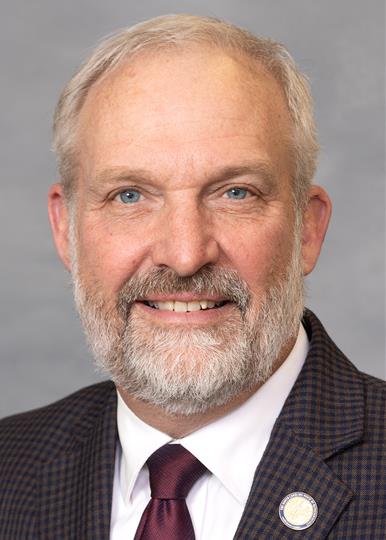
Photo of Jeff Zenger
R North Carolina House · District 74 On the 2026 ballot

Rep. Jeff Zenger

Compare
Total votes
1,056
all sessions
Attendance
98%
26 missed
Near the chamber average
With party
99%
of cast votes
Higher than 86% of chamber peers
Bipartisan score
1%
crosses aisle rarely
Lower than 89% of chamber peers
Sponsored
294
bills & resolutions
Near the chamber average
Committees
9
assignments
294 bills and resolutions

Sponsored bills

Total
294
Primary
53
Co-sponsor
241
This page
294
matching current filters
Co-sponsor HB 171
Vetoed · North Carolina House · Co-sponsor
Equality in State Agencies/Prohibition on Diversity, Equity, and Inclusion (DEI).

Maddy summaryHB 171 prohibits North Carolina state agencies from implementing diversity, equity, and inclusion (DEI) programs, including in hiring, employment practices, or training. It defines DEI broadly as any initiative influencing hiring or benefits based on protected characteristics (like race or gender) beyond merit-based processes. The bill mandates state auditor compliance audits, imposes civil penalties up to $5,000 per violation, and allows employees to file lawsuits after submitting a grievance to their agency. It explicitly excludes compliance with existing anti-discrimination laws (such as Title IX and the ADA) and protects First Amendment rights.

Vetoed Jun 24, 2026 1 co-sponsor
Co-sponsor HR 1238
Passed · North Carolina House · Co-sponsor
Honor 2026 Carolina Hurricanes Team.

Maddy summaryThis House Resolution honors the Carolina Hurricanes hockey team for winning the 2026 Stanley Cup and recognizes their contributions to the state of North Carolina. The bill formally acknowledges the team's historic season, including their record-breaking regular performance and playoff victory, while also praising the owner, management, and coaching staff for their leadership. It directs the Principal Clerk to send a certified copy of the resolution to the team, its owner Tom Dundon, and head coach Rod Brind'Amour. This measure serves as a commemorative gesture rather than establishing new laws or funding.

Passed Jun 23, 2026 1 co-sponsor
Co-sponsor HB 258
Signed into law · North Carolina House · Co-sponsor
Worker Safety Act of 2026.

Maddy summaryHB 258, the Utility Worker Protection Act, increases penalties for assaulting utility and communications workers by designating such assaults as Class A1 misdemeanors - the highest misdemeanor level - when the worker is visibly identifiable (e.g., wearing company-logoed uniforms) and performing duties. It directly affects workers providing electricity, gas, telecommunications, or internet services, including those employed by public, private, or cooperative entities. The bill adds specific language to North Carolina’s assault statute, requiring prosecutors to apply this enhanced penalty for assaults meeting these criteria, without needing other legal provisions. The law takes effect December 1, 2025, applying to offenses committed on or after that date.

Signed into law Jun 22, 2026 1 co-sponsor
Primary HB 1225
died · North Carolina House · Lead sponsor
Winston-Salem Zoning Procedure Changes.

Maddy summaryThis bill allows the City of Winston-Salem to delegate the authority for approving zoning changes directly to its planning board, rather than requiring a final decision from the city council. Under this new process, the planning board would conduct hearings and make the final ruling on rezoning requests, though the city council must still establish rules for appeals and review. The legislation applies only to Winston-Salem and takes effect immediately upon becoming law.

died Jun 17, 2026 0 co-sponsors
Co-sponsor HB 87
Signed into law · North Carolina House · Co-sponsor
Educational Choice for Children Act (ECCA).

Maddy summaryHB 87 (Educational Choice for Children Act) allows North Carolina to participate in a federal tax credit program that encourages donations to private scholarship organizations. The bill requires the State Education Assistance Authority to maintain and publish an annual list of qualifying scholarship groups operating in North Carolina, enabling donors to claim federal tax credits for contributions. These scholarships can cover elementary and secondary school costs, including homeschooling expenses, as permitted under federal law. The law becomes effective after 2026, with the Authority needing to establish necessary rules by July 2026 to comply with federal requirements.

Signed into law Jun 3, 2026 1 co-sponsor
Co-sponsor HB 1089
Signed into law · North Carolina House · Co-sponsor
Constitutional Amendment Property Tax Levy Limit.

Maddy summaryThis bill proposes a constitutional amendment that would require the North Carolina legislature to establish a statewide limit on how much local property tax levies can increase each year. The measure also mandates that any local government wanting to raise property taxes beyond this limit must first obtain approval from a majority of voters in that specific area. Because this change alters the state constitution, it will not take effect immediately but will instead be placed on the November 3, 2026, ballot for voters to decide whether to adopt. If approved by the public, the amendment would legally bind the General Assembly to create the specific tax increase caps mentioned in the text.

Signed into law May 21, 2026 1 co-sponsor
Co-sponsor HB 144
died · North Carolina House · Co-sponsor
Elect State Board of Education/Superintendent as State Board of Education Chair.

Maddy summaryHB 144 is a proposed constitutional amendment that would change how North Carolina's State Board of Education is structured. It requires voters to elect all board members (except the Lieutenant Governor and Treasurer, who are Council of State members) from districts established by the General Assembly, with terms of four years. The Superintendent of Public Instruction would automatically serve as the board's chair (ex officio member) without needing separate election. This amendment must be approved by voters in the 2026 election and would take effect for terms beginning January 1, 2029. It does not change the current composition of the board but alters how members are selected and who serves as chair.

died May 19, 2026 1 co-sponsor
Co-sponsor HB 1019
Passed · North Carolina House · Co-sponsor
Mike Clampitt 1st Responder Tax Fairness Act.

Maddy summaryThis bill, known as the Mike Clampitt 1st Responder Tax Fairness Act, aims to expand tax exemptions for volunteer fire departments and rescue squads in North Carolina. Specifically, it allows these independent groups, which have two or fewer paid employees and are already exempt from state income tax, to avoid paying a highway use tax on specific emergency vehicles like fire trucks, forest firefighting units, and other emergency service vehicles. The change applies to vehicles when a certificate of title is issued on or after July 1, 2026, ensuring these organizations can acquire necessary equipment without incurring this particular tax. By broadening the existing exemption, the legislation directly benefits volunteer responders who operate outside of local government units.

Passed May 18, 2026 1 co-sponsor
Co-sponsor HB 381
Passed · North Carolina House · Co-sponsor
On-Site Wastewater System Amendments.

Maddy summaryHB 381 amends state law concerning the approval of innovative on-site wastewater systems. This bill streamlines the approval process for manufacturers whose systems have been evaluated and approved by a nationally recognized certification body. It removes the previous requirement for these systems to have performed acceptably for at least two consecutive years under such a protocol. The Department is now directed to approve applications and issue innovative wastewater system approvals upon verifying the national certification and consistent design and installation plans.

Passed May 18, 2026 1 co-sponsor
Co-sponsor HB 1074
In committee · North Carolina House · Co-sponsor
Prescription Drug Expenses Tax Deduction.

Maddy summaryThis North Carolina bill allows taxpayers to deduct up to $5,000 of unreimbursed costs for prescribed medications and pharmacy fees from their state income tax. The deduction applies to expenses not covered by tax-advantaged accounts like Flexible Spending or Health Savings Accounts and prevents double-dipping if a federal deduction is already claimed for the same year. Effective for tax years starting on or after January 1, 2026, the measure directly affects individuals paying out-of-pocket for prescription drugs who itemize their state taxes.

In committee May 12, 2026 1 co-sponsor
Showing 11 to 20 of 294 bills