

Maddy summaryHB 89, the "University Vaccination Freedom Act," repeals North Carolina's requirement for college and university students to provide vaccination records. It removes the mandate for students to submit immunization certificates to institutions, effective for the 2026-2027 academic year. The bill retains existing religious exemption provisions (G.S. 130A-157), allowing students to opt out by submitting a written statement of religious beliefs. This change directly affects all students attending public or private colleges and universities in North Carolina.
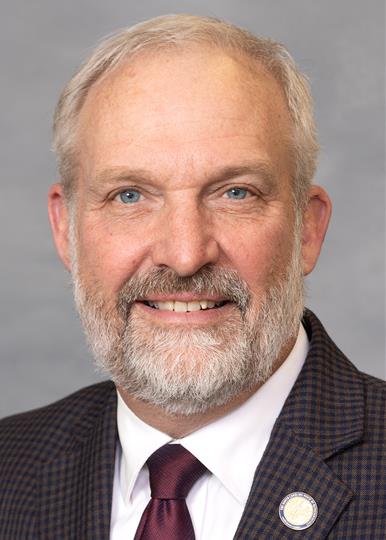
Rep. Jeff Zenger
Sponsored bills
Maddy summaryHB 46 requires that any new state law creating health benefit mandates (like coverage requirements or provider rules) must also repeal an equal number of existing mandates and include funding for the new mandate. It directly affects North Carolina legislators, employers (especially small businesses), and taxpayers by changing how health insurance rules are added or removed. Key provisions include defining "health benefit mandates" broadly (e.g., coverage requirements, cost-sharing rules) and mandating that new mandates must be paired with both repeal of existing mandates and dedicated funding. The bill applies to future legislation considered by the General Assembly, starting 30 days after enactment, and also updates rules for the State Health Plan for Teachers and State Employees.
Maddy summaryThis is a commemorative resolution (not a policy bill) honoring former North Carolina House Representative Joseph "Joe" Robert John, Sr., who served District 40 from 2017-2025 and died January 20, 2025. The resolution expresses the House's appreciation for his public service, extends sympathy to his family, and formally recognizes his contributions to North Carolina's judiciary, criminal justice, and community. It has no policy impact or new legal provisions - its purpose is solely to memorialize his career and legacy. The resolution was adopted unanimously by the House on January 29, 2025.
Maddy summaryThis bill allows patients with life-threatening or severely debilitating conditions in North Carolina to access custom-made investigational drugs, biological products, or devices that are not yet approved by the federal government. To qualify, a patient must have a doctor confirm that standard FDA-approved treatments are unlikely to help and must provide written informed consent acknowledging the risks and potential costs. The law requires that the patient or their guardian understands they are personally responsible for any expenses related to the treatment unless a separate contract states otherwise. Additionally, the bill clarifies that using these individualized treatments may temporarily remove a patient's eligibility for hospice care, though that eligibility can be restored if the treatment stops.
Maddy summaryThis bill, known as the SHALOM Act, adds a new section to North Carolina law that officially adopts the International Holocaust Remembrance Alliance's definition of antisemitism. The law requires state agencies and organizations to use this definition as a guide for training, education, and identifying hate crimes or discrimination against Jewish people. It also establishes a framework for tracking and reporting incidents of antisemitism within the state. The legislation includes a specific provision stating that adopting this definition does not violate free speech rights protected by the U.S. and state constitutions.
Maddy summaryHB 984 creates a new legal process in North Carolina that allows property owners to request law enforcement agencies to quickly remove people who are occupying their private residential homes without permission. To use this process, an owner must file a sworn complaint stating that the occupants are not tenants, have no legal right to the property, and have been told to leave, while also confirming there is no ongoing lawsuit between the parties. If a police department or sheriff's office verifies the complaint, they are required to remove the unauthorized individuals within 48 hours and may arrest them for trespassing or other offenses. The bill also establishes that property owners must pay for police time if they request officers to stay on site to help change locks or secure the property, and it provides a way for removed individuals to sue for damages if the removal was done incorrectly.
Maddy summaryThis bill amends the state constitution to eliminate the literacy test requirement for voting. By removing this specific provision, the legislation ensures that all eligible citizens can vote regardless of their reading or writing abilities. The change directly affects voters who previously might have been disenfranchised by this barrier. It does not alter other voting qualifications or the overall structure of the election process.
Maddy summaryThis bill proposes a constitutional amendment to change how North Carolina fills vacancies for seven specific state offices, including the Secretary of State, Attorney General, and Superintendent of Public Instruction. If passed by voters, the new rule would require the Governor to appoint a replacement from a list of three candidates recommended by the political party of the original officeholder, provided the party submits the list within 30 days of the vacancy. The amendment also clarifies that if an office term ends on January 1 following the next legislative election, the Governor must appoint someone to finish the term. The measure is scheduled for a vote by the public at the November 5, 2024, statewide general election.
Maddy summaryThis bill designates Jockey's Ridge in Nags Head as a unique coastal geological area of environmental concern. It establishes specific rules for development within the site, requiring permits for sand removal projects that exceed ten cubic yards per year. Any sand removed under these permits must be returned to designated areas within the Jockey's Ridge State Park. Additionally, the legislation prohibits development activities that would significantly block the natural movement of sand, with limited exceptions for essential infrastructure and maintenance.
Maddy summaryThis bill establishes a pilot program in Vance and Granville Counties to help religious institutions better support people with mental health or substance use needs. The program creates a tiered designation system where churches, mosques, synagogues, and temples can earn Basic, Intermediate, or Advanced status by completing specific training, hosting support groups, and providing mental health resources. To receive these designations, participating institutions must update their websites to show their status and ensure their staff and members complete required mental health training. The state agency responsible for mental health services will manage the application process and submit an annual report on the program's progress to the legislature.