

Maddy summaryHB 21 creates a voluntary designation on North Carolina driver's licenses for individuals with autism spectrum disorder (ASD), as defined by state law. People with a medical diagnosis of ASD can request this designation by providing acceptable documentation, such as a healthcare professional's certification, to the Division of Motor Vehicles. The designation appears only in the license record and is accessible solely to law enforcement during interactions to promote safety - no other use is permitted. Individuals may add or remove the designation at any time without affecting their license eligibility or rights.
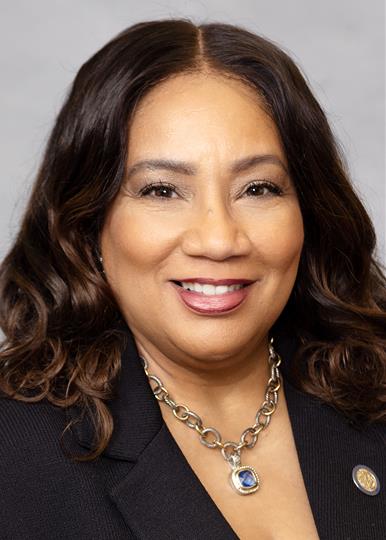
Rep. Amber Baker
Sponsored bills
Maddy summaryHB 37 standardizes monthly pension benefits for North Carolina firefighters and rescue squad workers under the state pension fund. It sets a uniform $175 monthly pension for members with 20+ years of service who reach age 55, replaces the previous $180 amount, and maintains $175 for disability benefits and line-of-duty death benefits. The bill also allows members affected by city annexations or department closures to continue contributing $15 monthly until they reach 20 years of service for pension eligibility. These changes apply to current and future members of the pension fund who meet the service requirements. The bill does not alter contribution rates or eligibility for most members but adjusts benefit amounts and extends certain provisions.
Maddy summaryHB 436 allows North Carolina counties to let property owners pay property assessments in semiannual or annual installments instead of one lump sum. Counties can choose between two payment schedules: either tied to annual property tax due dates or starting 60 days after assessment confirmation, with up to 10 semiannual or 20 annual payments allowed. This directly affects property owners in counties that adopt the option, providing more flexible payment timing. The bill amends existing law to give counties this authority and applies to assessments confirmed after it becomes law.
Maddy summaryHB 431 requires registers of deeds in North Carolina to verify the identity of individuals submitting property deeds or similar documents who are not trusted submitters (like attorneys, title companies, or banks). It mandates that non-trusted submitters present government-issued photo ID before a deed can be recorded, and allows registers to refuse recording if the ID doesn’t match the document or if the instrument appears suspicious. Suspicious instruments include those with mismatched officer records, false claims about jurisdiction, or non-compliance with state requirements. The bill also protects registers of deeds from liability when following these rules, while ensuring affected individuals can seek court action only for errors in refusing to record. This directly impacts everyday property buyers and sellers who aren’t represented by trusted entities.
Maddy summaryHB 35 designates November of each year as Military Appreciation Month in North Carolina. The bill creates a symbolic recognition within state law, honoring military service members and veterans during this month. It does not establish new programs, funding, or requirements - it simply formally names November for this purpose. The bill affects the state government's official calendar and public recognition efforts, with no direct impact on individuals or organizations.
Maddy summaryHB 418 mandates that all North Carolina public schools provide required arts education for K-5 students beginning in the 2026-2027 school year. It requires at least one 30-minute session per week in music, dance, or theatre arts (taught by a licensed instructor) and one session per week in visual arts (also taught by a licensed instructor), with classes kept at appropriate sizes. The bill directly affects every K-5 public school student and their educators across North Carolina, ensuring consistent arts instruction aligned with state curriculum standards. It does not alter funding or create new programs but sets specific instructional requirements for elementary schools.
Maddy summaryHB 416 appropriates $30,000 from the state General Fund for the 2025-2026 fiscal year to provide a directed grant to the Boys & Girls Clubs of Durham and Orange Counties. The funds will support a six-part youth development program focusing on teen recruitment, emotional safety, leadership, trauma-informed practices, cultural inclusion, and college/career readiness for area youth. This bill directly affects the Boys & Girls Clubs in those counties and the young people they serve, becoming effective July 1, 2025.
Maddy summaryHB 419 appropriates $4.5 million from the state General Fund to purchase a building and improvements adjacent to Winston-Salem's Stevens Center (411 W. 4th Street) for the University of North Carolina School of the Arts. The funds, designated for the 2025-2026 fiscal year, directly support the School of the Arts' facility expansion needs. The bill becomes effective July 1, 2025, and modifies standard budgeting procedures to enable this one-time purchase. This is a direct funding allocation with no broader policy changes beyond the specified property acquisition.
Maddy summaryHB 410 directs the North Carolina Institute of Medicine to study the legalization of medical aid in dying (MAID) in North Carolina. The study will examine processes, safeguards, and impacts in states where MAID is legal, including applicant qualifications, family effects, medication options, and healthcare system impacts. The Institute must hold a public hearing and submit findings by April 2027 to state health committees. The bill appropriates $150,000 for this study but does not legalize MAID or change current law. It aims to inform future policy decisions about adding MAID as an end-of-life option for terminally ill, mentally competent adults.
Maddy summaryHB 422, the "Beyond The Choice Act," eliminates a 12-month residency wait period for eligible veterans and their dependents at North Carolina public colleges and universities. It allows veterans who served 90+ days of active duty, their dependents, or other individuals covered under federal law (38 U.S.C. § 3679) to pay in-state tuition rates immediately upon admission, without needing to establish residency first. This change applies to all qualifying students enrolling in the 2025-2026 academic year and beyond. The bill directly benefits veterans and their families by reducing financial barriers to higher education in North Carolina.